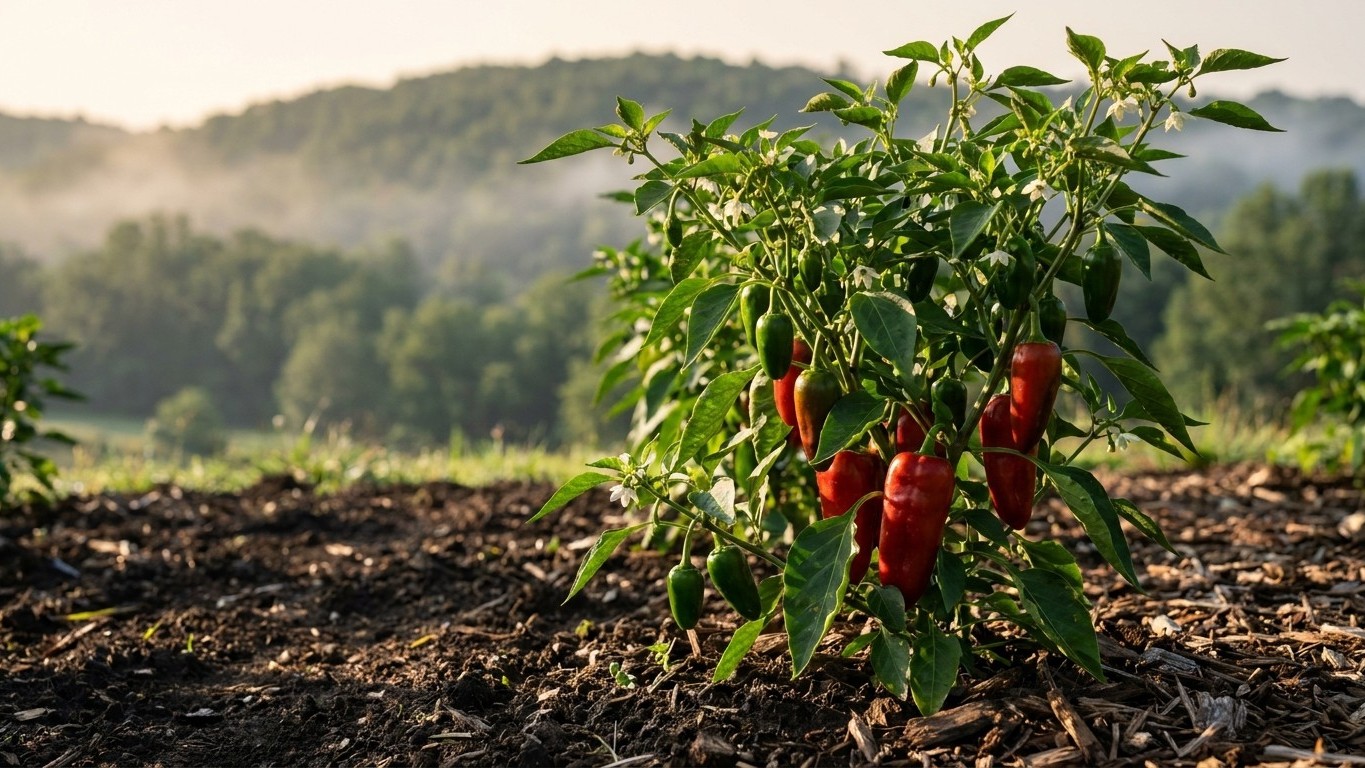

West Virginia’s pepper growers get a break most Southern states don’t: Charleston averages just 16.0 days a year at 90 F or hotter, which keeps heat-driven blossom drop a minor concern here rather than a season-defining one. The tougher question is the cool side. Pepper flowers stop setting fruit below 55 F at night, and this state’s mixed terrain means that threshold hits some counties harder than others. Timing your transplant to the frost window, and to your own nighttime lows, matters more here than fighting heat.
The short answer

Charleston’s weather station recorded an average of 16.0 days a year at or above 90 F between 1991 and 2020, according to NOAA NCEI Climate Normals. That’s a modest number by national standards. Growers in the Deep South routinely see a month or more of 90-degree afternoons, and pepper flowers there drop in bunches through midsummer. In West Virginia, a stretch of three or four 90-degree days in July can stall pollen for a short spell, but it rarely runs long enough to erase a season’s worth of fruit set the way it does farther south.
The heat side is the easier half to plan for
With 16 days a year in that range, most West Virginia gardens will see hot spells arrive in short bursts rather than long sieges. That matters because pepper flowers that abort during a heat spike aren’t gone for good. The plant keeps producing new buds, and once temperatures ease back under 90 F, fruit set resumes. Shade cloth over the hottest rows during a heat spike, and consistent watering so the plant isn’t fighting drought stress on top of heat stress, cover most of what this side of the problem requires.
The cool side is the one you have to watch yourself
Pepper fruit set fails at both ends, and the cool end is the one this article can’t hand you a number for. Utah State University Extension’s guidance on peppers states plainly that flowers abort when nighttime temperatures drop below 55 F, the same way they abort above 90 F in daylight. This site tracks daytime heat totals by county, but it does not carry summer overnight low temperatures for West Virginia. That gap is real, and it’s one you need to close on your own, because elevation changes fast across this state. For a closer look at how this cool-side threshold plays out locally, see Why Peppers Fail to Set Fruit in West Virginia. A river valley and a nearby ridge just a few miles apart can run several degrees apart at night, and no single number derived from latitude or from winter’s coldest month will tell you what your own garden sees in July. Track your own nights with a simple min-max thermometer, or check current conditions for your specific location, rather than assuming a number based on where the state sits on a map.
When to start seed here
When to Start Pepper Seed in West Virginia starts with choosing from the Pepper Varieties That Ripen in a West Virginia Season, then the timing itself is arithmetic, not guesswork, once you have two anchor points: your last frost date, and the week your soil actually warms to 60 F. West Virginia’s last spring frost, per NOAA NCEI’s 1991-2020 Climate Normals for station USW00013866, falls somewhere between April 9 and April 23 in the Charleston river valley. Higher elevations across the state freeze noticeably later into spring, so that window shifts if you’re gardening well above the valley floor.
The frost and soil temperature checkpoint
Frost passing isn’t the green light on its own. Soil warms slower than air, especially in shaded or clay-heavy beds, so a garden can sit well past its last frost date and still have soil sitting in the 50s. Pepper transplants set back hard in cold soil, sulking for weeks instead of taking off. The safer marker is soil temperature at 60 F, checked with a simple soil thermometer a few inches down, rather than the calendar alone.
Counting back for indoor seeding
Once you know roughly when you’ll transplant, indoor seeding follows Utah State University Extension’s window of 8 to 10 weeks before that date. Here’s how the count works in practice:
- Pin down your local last frost date, using the April 9 to April 23 range as a starting point and adjusting later if you’re at higher elevation than the Charleston valley.
- Add a buffer of one to two weeks past that frost date to let soil catch up to 60 F, since air clearing of frost doesn’t mean soil is ready.
- Treat that adjusted date as your transplant target.
- Count back 8 weeks from the transplant target for the earliest reasonable seed-starting date indoors.
- Count back 10 weeks from the same target for the latest reasonable seed-starting date, giving slower germinating varieties room to catch up.
- Start seed somewhere inside that 8-to-10-week window, under grow lights or on a bright windowsill, and hold transplants indoors until both frost risk and soil temperature clear.
If your county’s last frost lands near the later end of that range, closer to April 23, your indoor seeding window shifts correspondingly later too. Redo this math with your own county’s frost date rather than borrowing the Charleston range wholesale, since a garden two counties over or a thousand feet higher can run on a noticeably different clock.
What goes wrong here
Three failures tied to timing and temperature swings
- Blossom drop from a hot spell. A run of days above 90 F, even a short one given the state’s average of 16.0 such days a year, can cause flowers to drop without setting fruit. The plant isn’t damaged permanently. Keep soil moisture even through the hot stretch, add temporary shade cloth over the row during the worst afternoons, and expect fruit set to resume once temperatures ease.
- Blossom drop from a cool night. Since this region’s terrain can push nighttime lows below the 55 F threshold that Utah State University Extension identifies as the cool-end cutoff, a cold snap in late spring or an unusually cool night in a valley pocket can stall flowering the same way heat does. Track your own overnight lows rather than guessing, and hold off on setting out transplants until nights are reliably running warmer if your area tends to run cool after dark.
- Sunscald where the sun is strong. Fruit that develops on a plant with sparse leaf cover, whether from pruning, wind damage, or disease dropping leaves, can develop a pale, blistered patch on the side facing direct afternoon sun. Leave foliage intact rather than heavily pruning plants for airflow, and use shade cloth over exposed rows during the sunniest stretches of summer.
- Blossom-end rot on the fruit itself. This shows up as a sunken, dark patch at the bottom of the pepper, and it traces back to uneven water delivery to the plant rather than a soil nutrient shortage in most cases. Keep watering consistent rather than letting soil swing between dry and soaked, and mulch to hold moisture steady through hot, dry stretches.
Checking this against your own county
Everything above is built on statewide and single-station data. Your own backyard is going to differ from it in ways that only a local source can confirm, particularly on soil temperature timing and the frost date for your specific elevation. West Virginia University Extension Service maintains county-level offices across the state, and they’re the group set up to answer exactly this kind of question with local knowledge rather than statewide averages.
Before you commit to a seed-starting date or a transplant week, it’s worth a call or a visit to their site at extension.wvu.edu. They can confirm your county’s typical frost window, point you toward soil temperature trends for your area, and flag anything specific to your elevation band that a statewide climate normal can’t capture.
Common questions
Can peppers survive a light frost in West Virginia?
Pepper plants are frost-sensitive and generally don’t tolerate freezing temperatures well, regardless of how light the frost is. The safer approach is to treat any frost risk as reason to hold transplants indoors or under cover, rather than testing how much cold a plant can shrug off.
Does West Virginia’s heat ever get too intense for peppers?
Not typically, based on the state’s average of 16.0 days a year at or above 90 F. That’s enough to cause short-term blossom drop during a hot spell, but it’s far short of the sustained heat that shuts down fruit set for weeks in hotter climates.
How do I know if my nights are too cool for fruit set?
Track your own nighttime lows with a simple min-max thermometer through the growing season, since this varies by elevation and local terrain across West Virginia and isn’t captured by a single statewide figure. If you’re consistently seeing nights below 55 F during flowering, expect slower fruit set until temperatures warm.
What if my county’s last frost date differs from the Charleston range?
Use your own county’s frost date instead of the Charleston range whenever you have it, particularly if you garden at higher elevation, where frost tends to linger later into spring. West Virginia University Extension Service can help confirm the typical window for your specific area.