
By April, Florida’s growing calendar has split into two different stories depending on where you stand. In north Florida, the frost window has closed and the state is diving into full warm-season planting. In central and south Florida, the cool season is winding down and the pressure is on to finish heat-sensitive crops before summer humidity and pests take over. USDA rates the state 8b-11b, so a single “what to plant” answer doesn’t hold from Pensacola to Key West.
What goes in the ground in April

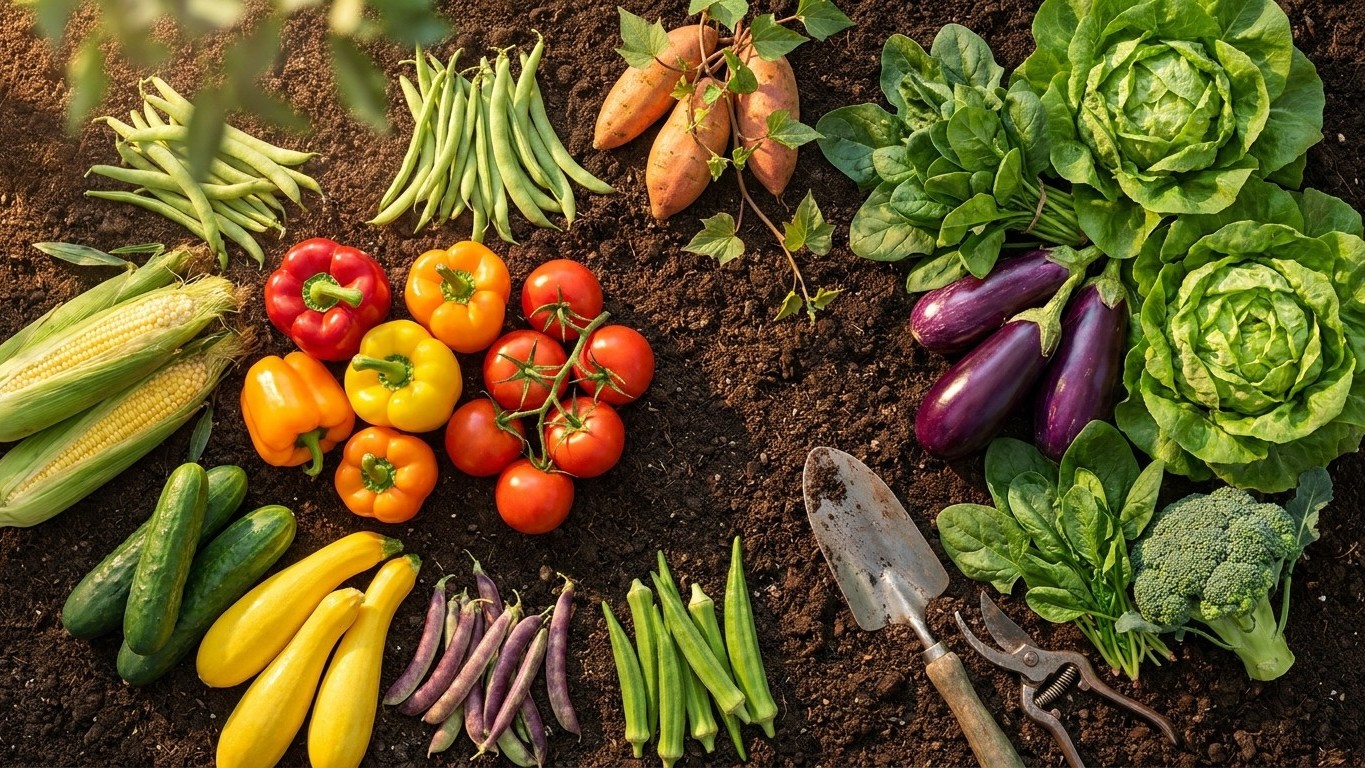
North Florida’s last spring frost, measured at the Jacksonville station (USW00013889), falls between February 16 and March 7 in NOAA’s 1991-2020 climate normals. That’s a 30-70% freeze probability window, not a single date, and it means that by April the frost risk in north Florida has essentially closed out. Warm-season crops can go straight into open ground: snap beans, sweet corn, cucumbers, summer squash, southern peas, okra, and sweet potato slips all direct-sow well this month. Tomato, pepper, and eggplant transplants that were started under cover earlier can move outside now with little frost worry.
Central and south Florida never really had a frost problem to begin with. Those regions sit far enough south that the growing calendar inverts: winter is the workhorse season, and summer heat and rain are what growers guard against. April there is a hinge month. Cool-season holdouts like lettuce, spinach, and broccoli are on their way out as temperatures climb, while heat-tolerant crops such as okra, southern peas, sweet potatoes, and malabar spinach are worth getting in the ground now, before the wet season’s disease pressure builds.
Garlic and onions planted the previous fall are bulking up statewide and shouldn’t be disturbed. Sweet potato slips are one of the more forgiving April plantings anywhere in Florida, since they root fast in warm soil and tolerate the swing from spring dryness to early summer rain.
| Region | Frost status in April | Main focus |
|---|---|---|
| North Florida (Jacksonville area) | Past last frost window (Feb 16-Mar 7) | Full warm-season planting: beans, corn, squash, tomatoes |
| Central Florida | Effectively frost-free | Transition: finish cool crops, start heat-tolerant ones |
| South Florida | Effectively frost-free | Race to plant before summer wet season and pest buildup |
What to start under cover
Since April sits at or past the last frost window even in north Florida, starting seeds indoors this month is less about dodging cold and more about staging a second wave of harvest. Melons, winter squash, and pumpkins benefit from three to four weeks under cover before transplanting, since they resent root disturbance but appreciate a head start on Florida’s compressed warm season. Start those trays now and they’ll be ready to move outside as soon as the first direct-sown round is up and growing, giving the household a longer harvest window instead of one glut.
Peppers started under cover in late winter are usually still a few weeks from transplant size in early April; keep them under lights or in a bright, wind-protected spot rather than rushing them outside too soon. The two failure modes are the same everywhere: start too early and the seedlings get rootbound and leggy in their trays before conditions are right, or start too late and they never catch up to the heat before it shuts down fruit set.
In central and south Florida, “under cover” in April often means shade cloth as much as a greenhouse. Seedlings started for a fall planting of tomatoes or brassicas need protection from direct summer sun for their first few weeks, since the intensity by late spring can scorch tender leaves that would have been fine in a north Florida cold frame in January.
What is ready to pick
North Florida gardens are harvesting strawberries at their peak, along with the last cuttings of lettuce, spinach, and other greens before rising heat pushes them to bolt. Snap peas planted earlier are finishing their run, and fall-planted onions and garlic are sizing up though not always ready to pull yet. Broccoli side shoots are often still producing even after the main head was cut weeks earlier.
Central and south Florida gardens are further along: tomatoes, peppers, cucumbers, and squash planted during the cooler months are hitting full production now, before the heat starts to knock back fruit set. This is the best harvest stretch of the year in those regions, and it’s worth picking often, since letting squash or cucumbers oversize on the vine slows down the plant’s production of new fruit.
Citrus is a statewide thread this month. Depending on variety and region, some trees are finishing their harvest window while later types are still hanging on the branch. Check stored produce, too: onions, potatoes, and winter squash held from earlier harvests should be checked for soft spots or sprouting, since Florida’s humidity speeds up storage rot compared to drier climates.
The jobs that matter this month
Mulching is the single highest-payoff task in April, and the reason is timing: lay it now, while soil moisture is still decent and before the heat really sets in, and it holds water and suppresses weeds through the toughest stretch of summer. Skip it this month and a gardener ends up watering twice as often in June with far less benefit.
Staking and trellising need to happen before plants sprawl, not after. Tomatoes, cucumbers, and pole beans put on fast growth in warm soil, and a cage or trellis installed after the vines are already tangled on the ground does much less good than one set at transplant time.
Watering rhythm shifts this month too. As temperatures climb, shallow daily watering trains roots to stay near the surface, where they dry out fastest; deeper, less frequent watering encourages roots to chase moisture downward, which pays off once summer heat arrives.
Succession sowing keeps the harvest coming instead of arriving all at once. Beans, squash, and cucumbers all do well with a second planting two to three weeks after the first. Pest scouting matters more in April than earlier in spring, since aphids, whiteflies, and early squash bugs build their populations fast in warming weather; checking the undersides of leaves weekly catches an infestation while it’s still small enough to handle by hand or with a targeted treatment rather than a broad spray.
What not to do in April
The most common mistake is trusting the calendar instead of the soil. Even after the frost window has passed, some north Florida microclimates, low spots, shaded beds, areas near water, hold cooler soil than the open, sunny parts of the same yard. Sweet potatoes and melons in particular want genuinely warm soil, not just frost-free air, to root well; a cold snap in the ground can stall them for weeks even without a frost event.
Another frequent error is pulling back mulch or row cover too early after a warm stretch, only to have a cooler night undo the head start. Florida’s spring temperature swings can be sharp even after the frost risk itself is gone, so easing covers off gradually rather than all at once protects tender new growth.
Heavy nitrogen feeding at the wrong point is a quieter mistake but a costly one. Tomatoes, peppers, and squash that get a big dose of nitrogen once they’re already flowering tend to put out lush leaves at the expense of fruit set. A better approach is feeding earlier, during vegetative growth, then easing off nitrogen and favoring phosphorus and potassium once flowering starts.
In central and south Florida, waiting too long to pull cool-season crops is its own trap. Lettuce and spinach left in the ground past their window don’t just bolt, they often turn bitter fast in the heat, and the bed sits occupied when it could already be growing something built for summer.
Checking this against your own county
A statewide month is a starting point, not an instruction. Florida runs roughly 500 miles from the Georgia line to the Keys, and elevation, distance from the coast, and simple latitude shift these windows by weeks in either direction. A garden in the Panhandle behaves nothing like one in Fort Myers, even in the same month. For a planting calendar built around a specific county, the University of Florida/IFAS Extension service is the right next stop, since local extension offices track conditions down to the county level rather than the statewide average used here.
Common questions
Is it too late to plant tomatoes in Florida in April?
In north Florida, no, April transplants still have a good stretch of warm weather ahead before summer heat slows fruit set. In central and south Florida, April is closer to the last realistic window, since rising heat later in spring makes it harder for tomato blossoms to set fruit.
Does frost still matter in Florida in April?
In north Florida, the frost window measured at the Jacksonville station typically closes between February 16 and March 7, so by April the risk is largely behind. Central and south Florida are effectively frost-free year-round, so frost isn’t part of their April planning at all.
What grows the fastest if planted in April in Florida?
Southern peas, cucumbers, and summer squash are among the quickest to reach harvest from a Florida spring planting, often producing within weeks under warm soil conditions.
Why does south Florida’s growing season work backwards from the rest of the country?
Because winter there is mild enough to grow cool-season crops comfortably, while summer brings intense heat, heavy rain, and higher pest and disease pressure, the main growing push happens through the cooler months rather than in summer.