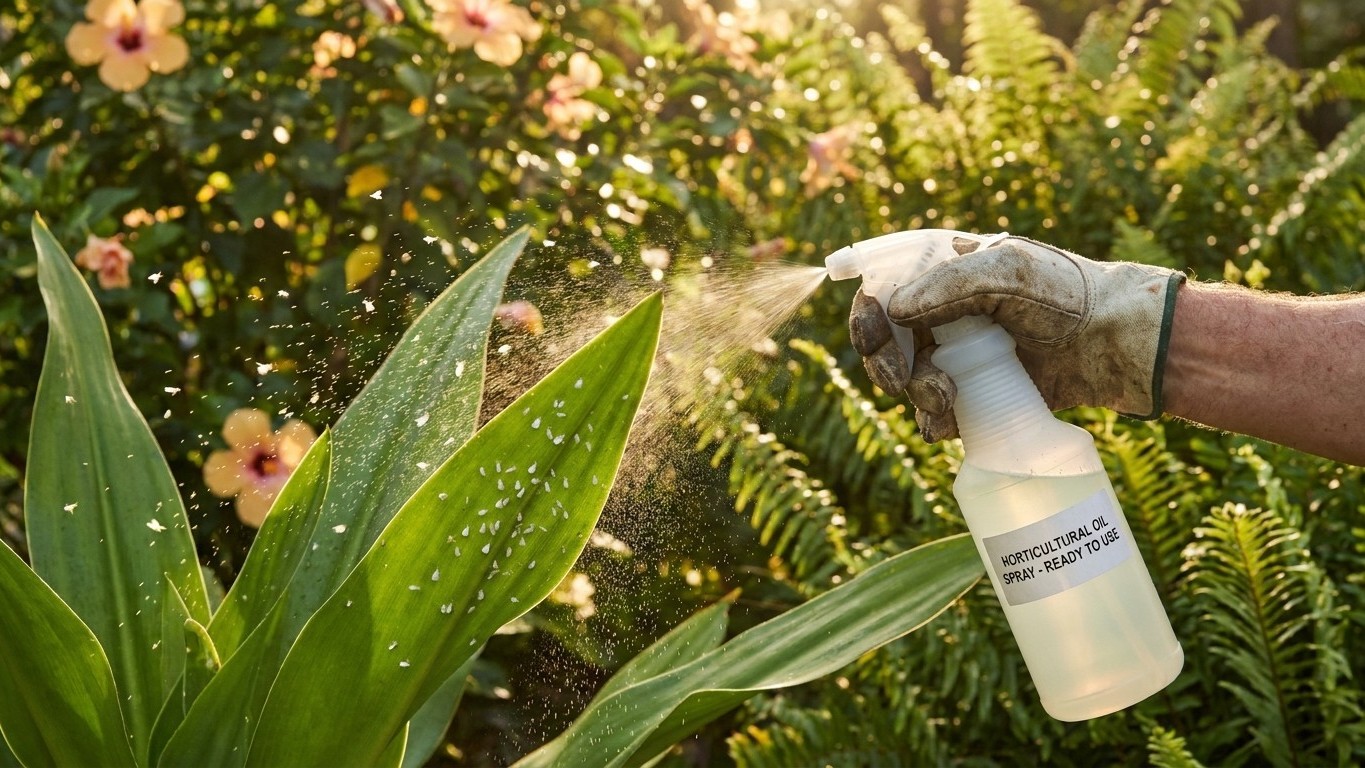

Florida’s warm, humid climate keeps whiteflies active nearly year-round in the southern part of the state, with population surges typically hitting in spring (March through May) and again in fall (September through November) when temperatures sit in that 75-85°F sweet spot. North Florida sees more of a seasonal pause, with whitefly activity slowing from December through February as nights cool. What actually stops them is a mix of natural predators, targeted horticultural oils or soaps applied to the undersides of leaves, and cutting back on the broad-spectrum insecticides that wipe out the beneficial insects keeping populations in check.
That’s the short version. The longer story involves several different whitefly species, each with its own timeline and its own favorite host plants, plus a few control tactics that work far better than others depending on where you live in the state.
Florida’s Climate Keeps Whiteflies Coming Back

Whiteflies don’t survive hard freezes well, which is exactly why they’re such a persistent problem south of Orlando and barely a nuisance in the Panhandle. Miami-Dade, Broward, and the Gulf Coast counties from Tampa down to Naples rarely see temperatures drop low enough to knock back whitefly populations for more than a few weeks at a time. A mild winter, and Florida has had several in recent years, means adults and nymphs simply keep reproducing on ornamental shrubs and shade trees straight through January.
Rain plays an odd dual role here. Heavy downpours physically knock adult whiteflies off leaves and can suppress egg-laying temporarily. But the humidity that follows a wet spell also feeds the fungal pathogens, like Beauveria bassiana, that naturally infect and kill whiteflies. Florida homeowners sometimes notice a sudden population crash after a stretch of rainy weather in late summer. That’s not a coincidence. It’s the state’s own biological control system doing quiet work in the background, something University of Florida entomologists have documented in citrus and ornamental settings for years.
Wind matters too, though it works against homeowners more than for them. Whiteflies are weak fliers on their own, but they catch breezes and can move from an infested neighbor’s hedge to a healthy one a few properties away in a single afternoon. That’s part of why whitefly outbreaks in Florida tend to spread block by block through a neighborhood rather than staying isolated to one yard.
Which Whiteflies Actually Show Up in Florida
“Whitefly” isn’t one insect here. Florida hosts at least four species that homeowners regularly deal with, and knowing which one you’ve got changes how you fight it.
Ficus Whitefly
First detected in Miami-Dade County in 2007, the ficus whitefly (Singhiella simplex) went on to defoliate ficus hedges across South and Central Florida within a couple of years. It targets ficus benjamina and related species almost exclusively, and it remains one of the most damaging landscape pests in the state’s ornamental hedge industry. Infested ficus hedges drop leaves in waves, leaving bare, twiggy sections that take a full growing season to fill back in.
Rugose Spiraling Whitefly
This one showed up in Miami-Dade in 2009 and has since spread through most of peninsular Florida. It’s easy to spot because of the distinctive spiral pattern of white, waxy egg deposits on the underside of leaves, most commonly on gumbo limbo trees, palms, and a long list of tropical ornamentals. The sticky honeydew this species produces coats sidewalks, cars, and patio furniture under infested trees, which is often how homeowners first realize they have a problem.
Silverleaf Whitefly
Bemisia tabaci is the one that matters most for anyone growing vegetables. It attacks tomatoes, peppers, squash, and dozens of other garden crops, and it’s the primary vector for tomato yellow leaf curl virus, a disease that has caused serious losses for Florida’s commercial tomato growers. Home gardeners in Central and South Florida who grow tomatoes almost always encounter this species at some point during the growing season.
Citrus Whitefly
Less of a headline pest today than it was decades ago, citrus whitefly still shows up on citrus trees statewide, particularly on new growth in spring. It’s usually a minor cosmetic issue rather than a tree-killer, though heavy infestations can weaken young trees.
What Actually Stops Whiteflies in a Florida Yard
Spraying the first product on a nursery shelf is the most common mistake homeowners make, and it’s usually the reason infestations come back worse the following season. Broad-spectrum pesticides kill the parasitic wasps (mainly Encarsia species) and lady beetles that naturally suppress whitefly numbers, leaving survivors to rebound without predators in the way.
A few approaches consistently work better across Florida’s climate:
- Horticultural oil or insecticidal soap, sprayed directly on the undersides of leaves where whiteflies feed and lay eggs, breaks down their waxy coating without leaving long-lasting residue that harms beneficial insects.
- Systemic soil drenches containing imidacloprid work well on large trees like ficus and gumbo limbo, since the insecticide moves through the plant’s tissue and reaches whiteflies feeding at the top of a tall canopy where sprays can’t reach.
- Yellow sticky traps placed near infested plants help monitor population trends and catch adults before egg-laying ramps up, useful for deciding whether a spray is even necessary.
- Pruning heavily infested branches and disposing of them (not composting on-site) removes a large share of eggs and nymphs in one step, especially effective on hedges early in an outbreak.
- Encouraging natural enemies by skipping unnecessary pesticide applications lets parasitic wasps and predatory beetles do ongoing maintenance work for free.
Timing matters more than most people realize. Treating in early spring, right as populations start climbing after winter, knocks back numbers before they hit the fall peak. Waiting until leaves are already yellowing and dropping means fighting an established infestation rather than preventing one.
Why Some Trees Never Fully Recover in One Season
Ficus hedges hit hard by whitefly defoliation sometimes take twelve to eighteen months to fill back in completely, even with proper treatment. That’s not a treatment failure, it’s just how slowly ficus regrows new leaf tissue after losing that much canopy at once. Homeowners expecting a quick turnaround after their first spray often give up on a treatment plan that’s actually working, just working on a longer timeline than they expected.
Regional Differences Worth Knowing
South Florida (Miami-Dade, Broward, Palm Beach, Monroe) deals with whiteflies essentially all year, with only brief lulls during unusually cool stretches in January. Central Florida, including the Orlando and Tampa metro areas, sees a more defined spring-to-fall season with a real winter slowdown. North Florida, from Jacksonville to Tallahassee, gets enough hard freezes most winters to reset whitefly populations almost completely, meaning infestations there tend to be smaller and more manageable by the time spring arrives.
This regional split explains why pest control advice that works great in Tampa sometimes falls flat in Miami, where the pest simply never gets the seasonal reset that helps knock numbers down naturally. Homeowners in South Florida generally need a more consistent monitoring routine, checking the undersides of susceptible plants monthly rather than just reacting when honeydew shows up on the patio furniture.
One detail that surprises a lot of Florida homeowners: the sooty mold that often gets blamed as “the whitefly problem” isn’t caused by the insects directly. It’s a fungus that grows on the honeydew whiteflies excrete, and while it looks alarming coating leaves and sidewalks in black film, it washes off with soap and water once the underlying whitefly population is under control.