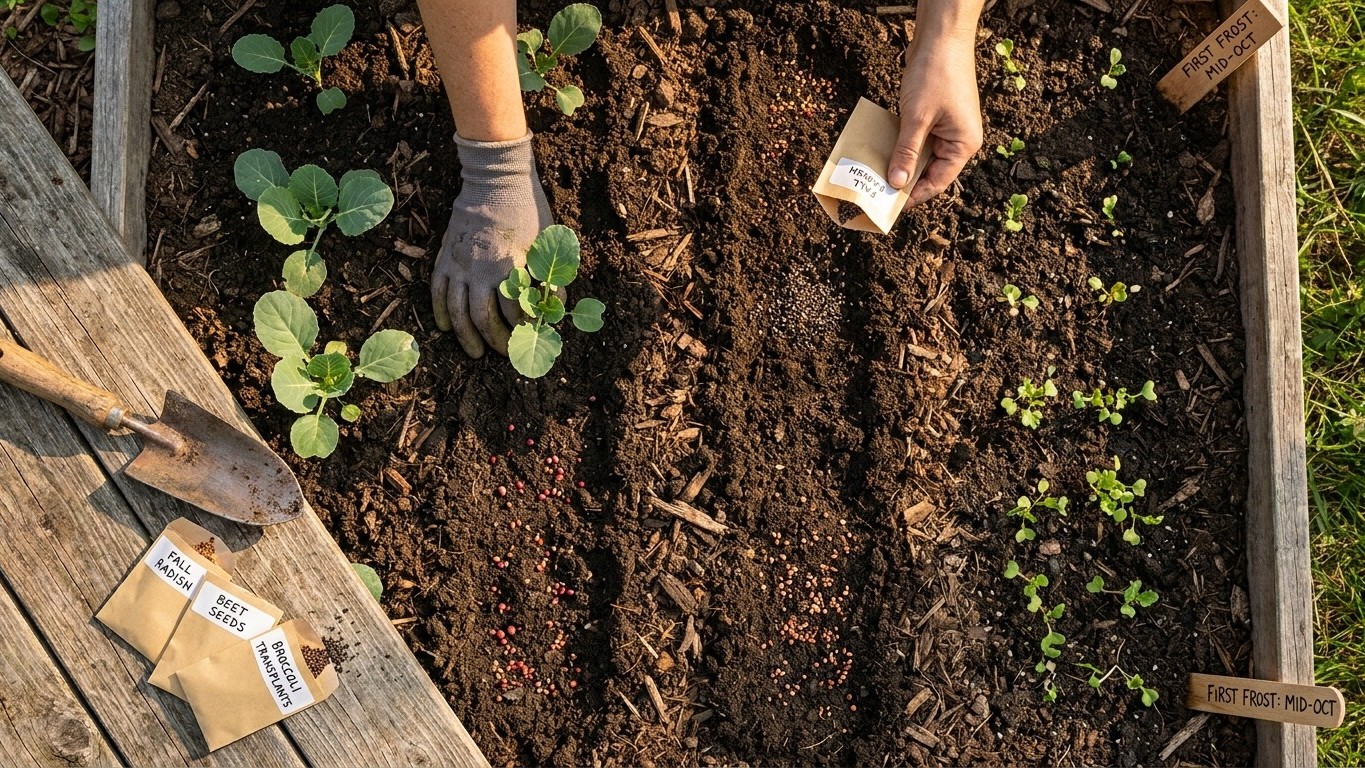

August in Illinois is a pivot point, not a pause. Direct-sow fast fall crops like beets, radishes, bush beans, and leafy greens while the soil is still warm from summer, and slide broccoli or cabbage transplants into open ground early in the month. Skip pumpkins and winter squash started from seed now. Count backward from the first fall frost window (October 24 to November 3) instead of trusting the calendar page alone.
What goes in the ground in August

Soil temperature is not the obstacle this month. Illinois ground in August runs warm, often too warm for cool-season seed to germinate cleanly without a little shade or evening watering. The real constraint is arithmetic: how many days a crop needs to mature, measured against how many days remain before the first fall frost lands somewhere between October 24 and November 3. A radish needs 25 to 30 days. A carrot wants 60 to 75. That gap is what decides whether a seed packet still makes sense in August or belongs in a drawer until next spring.
Bush beans are the classic edge case. They mature in 50 to 55 days but die at the first real frost, so early August sowing works fine in central and southern counties, while northern gardeners are already pushing their luck by mid-month. Beets, kale, collards, and turnips are more forgiving. All of them tolerate a light frost, some actually taste better after one, which buys extra weeks that beans do not get.
| Crop | Days to Maturity | August Window | Note |
|---|---|---|---|
| Bush beans | 50-55 | Early August (north); through mid-August (south) | Frost-tender, needs full days before the first freeze |
| Beets | 50-60 | All month | Tolerates light frost |
| Carrots | 60-75 | Early to mid-August | Growth slows as daylight shortens |
| Kale, collards | 50-60 | All month | Flavor improves after light frost |
| Bolt-resistant lettuce | 45-55 | All month, afternoon shade helps | Bolts in sustained heat |
| Radishes | 25-30 | All month, sow every 2 weeks | Fast enough to fill any gap |
| Fall peas | 60-70 | Early August, northern counties only | Needs a cool finish |
| Turnips | 40-60 | All month | Roots and greens both usable |
Transplants earn their keep here too. Broccoli, cauliflower, and cabbage started under cover in July are ready to go into open ground in the first week or two of August, giving them a head start that direct-seeded versions of the same crops cannot match this late in the season.
What to start under cover
Counting backward from the frost window matters more this month than any other, because the margin for error keeps shrinking. Take onions grown for overwintering, a crop many Illinois gardeners start from seed under cover in August for a spring harvest. Seedlings need roughly 8 to 10 weeks of growth before they are sturdy enough to move into a cold frame or mulched bed in September. Start the arithmetic from the frost window itself: sow in early August, transplant by mid to late September, and the plants have enough root mass to sit through winter without heaving.
Spinach and lettuce destined for a cold frame follow a shorter clock. Started under cover in late August, they reach transplant size in four to five weeks, land in the frame by late September or early October, and still get several weeks of growth before the frost window closes things down for the season.
Two ways this goes wrong. Start too early in the month and seedlings sit in trays through the last stretch of August heat, stretching for light and turning leggy before they ever reach the garden, then sulk for a week after transplant instead of growing. Start too late and there simply is not enough daylight or warmth left to size them up before the cold locks in, leaving stunted plants that never really establish. The window for cover-started fall crops in Illinois is narrower than it looks on a seed packet, and it only moves in one direction as the month goes on.
What is ready to pick
August is the harvest month, full stop. Tomatoes, peppers, sweet corn, cucumbers, summer squash, snap beans, and melons are all coming in at some point this month across most of the state, and the harder question is usually storage capacity, not availability.
Ripeness signs matter more than the calendar here. Tomatoes should have full color and give slightly to a gentle squeeze. Sweet corn is ready when the silk has browned and a punctured kernel releases milky, not clear or dry, sap. Melons tend to slip cleanly from the vine with light pressure, and a hollow-sounding thump on a watermelon usually means it is ripe, though that trick works better with practice than with certainty.
Garlic planted the previous fall was likely pulled in July and should be curing somewhere dry and shaded through most of August, necks fully dried and outer skins papery before it goes into long-term storage. Check that cured garlic and any stored onions from earlier in the season for soft spots or sprouting, since a single compromised bulb can spread rot to its neighbors in a storage bin faster than most gardeners expect.
The jobs that matter this month
Watering rhythm does more work than any other single task in an Illinois August. Established vegetable beds need roughly 1 to 1.5 inches of water a week, delivered at the soil level rather than overhead, and preferably in the morning so foliage dries before evening humidity sets in. Skip that discipline during a hot, dry stretch and tomatoes split, squash abort blossoms, and lettuce bolts straight to seed.
Succession sowing has a hard deadline this month, not a soft one. Every two weeks without a fresh round of radishes, lettuce, or beets in the ground is two weeks of fall harvest that simply will not happen, because there is no going back once the frost window arrives.
Pest populations peak in August across Illinois, which makes this the month scouting pays off most. Japanese beetles skeletonize leaves in days, squash vine borers hollow out stems from the inside before wilting gives them away, and tomato hornworms can strip a plant overnight. Checking the undersides of leaves every few days and hand-picking early is far cheaper than losing a plant to an infestation that got a two-week head start.
Mulching, staking, and clearing spent spring crops round out the list. A fresh layer of mulch on exposed soil holds moisture through the hottest stretch of the month and keeps weed pressure down while fall seedlings establish. Sprawling tomato and pole bean vines need support reinforced now, before their own weight and August rain knock them into contact with wet soil and rot. And any bed that finished its spring crop should be cleared and lightly amended within days, not weeks, since every empty bed in August is wasted fall-growing space.
What not to do in August
The most common mistake is starting long-season crops from seed this month because the weather still feels like early summer. Pumpkins, winter squash, and watermelon need 90 to 100-plus days and simply cannot finish before the frost window closes between October 24 and November 3, no matter how warm the soil feels underfoot. If those crops are not already well established, seed started now is a loss.
Feeding tomatoes and peppers a high-nitrogen fertilizer late in the season is another trap. It pushes leafy growth at exactly the point when the plant should be putting energy into ripening fruit, delaying harvest right when the clock is working against it. A lower-nitrogen, higher-potassium feed, or none at all, serves the plant better this late.
Overwatering during Illinois’s humid August spells invites fungal trouble faster than underwatering does. Early blight and powdery mildew spread readily on wet foliage, so watering at the soil line rather than overhead, and doing it in the morning, cuts that risk considerably.
Sowing lettuce or spinach without accounting for heat is the last common misstep. Standard varieties bolt straight to seed and turn bitter in sustained August warmth. Choosing a bolt-resistant variety, or giving seedlings afternoon shade with a simple cover, keeps a fall greens crop from failing before it even gets started.
Checking this against your own county
A statewide frost window is a starting point, never an instruction. Illinois spans USDA Plant Hardiness Zones 5a to 7b, and elevation, lake effect near Lake Michigan, and the sheer distance between the northern and southern borders shift real planting windows by two weeks or more in either direction from the reference figures used here. A garden in the far north of the state should expect frost sooner than the statewide window suggests, while a garden well south of it can often push later.
The University of Illinois Extension publishes county-level guidance and its own planting calendar, and it is worth checking against local frost records before locking in a fall planting date based on a statewide range alone.
Common questions
Can I still plant tomatoes in Illinois in August?
Not from seed. Tomatoes need 60 to 80-plus days to fruit, which does not leave enough time before the first fall frost window of October 24 to November 3. Established transplants already in the ground should keep producing through the month.
What vegetables can I direct sow in Illinois in August?
Beets, kale, collards, turnips, radishes, and bolt-resistant lettuce all work through most of the month. Bush beans and fall peas have a narrower window, generally early August, and mostly favor the northern part of the state for peas.
When should I plant fall garlic in Illinois?
Garlic goes in the ground in October, not August. August is the month to finish curing the previous harvest and to prepare the bed with compost so it is ready when planting time arrives.
Is August too late to start a fall garden in Illinois?
No, but the window for direct-seeded crops is closing fast for anything that needs more than about 60 days to mature. Fast crops like radishes and quick greens, and transplants of broccoli or cabbage, still have time to produce before frost.