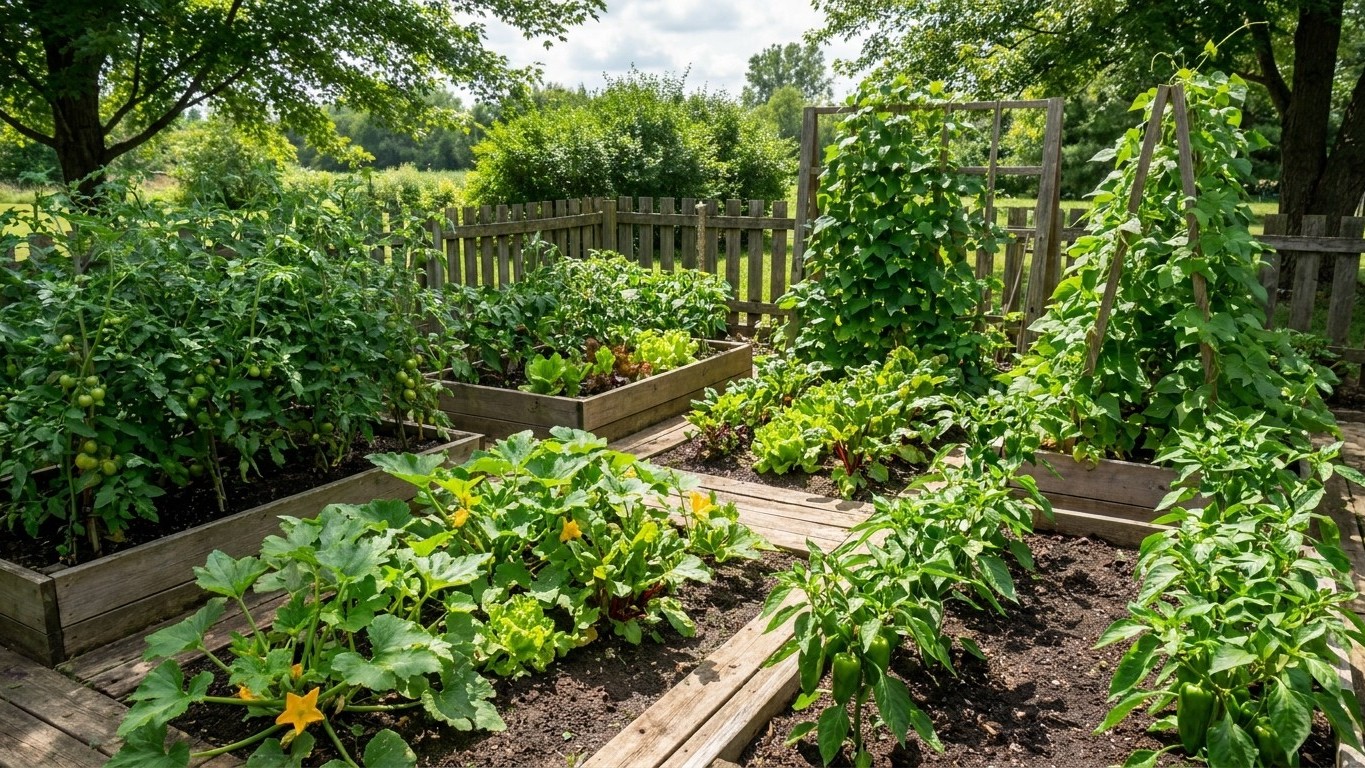

June in Indiana sits well past the frost line: Indianapolis clears its last spring freeze between April 9 and April 21, so by June the soil has had six to eight weeks of steady warmth. That means the answer is close to everything: tomatoes, peppers, squash, beans, corn, melons, and sweet potatoes all go in now, alongside fresh rounds of lettuce and beets for later summer eating.
What goes in the ground in June

The calendar stopped mattering back in April. What decides June planting now is soil temperature and how long it’s held steady, not a date on a seed packet. Clay-heavy ground in central Indiana takes longer to warm than sandy loam in the south, but by June nearly every county has crossed the threshold where warm-season seeds germinate reliably instead of rotting in cold, wet dirt.
Direct-sown crops belong in the ground now without hesitation: bush and pole beans, cucumbers, summer and winter squash, melons, okra, and sweet corn planted in short blocks rather than single rows for better pollination. Pumpkins for autumn harvest go in by early June so they have the full run of the season. Gardeners who want continuous corn or beans through late summer should stagger plantings every two to three weeks rather than putting the whole crop in at once.
Transplants move outside now too: tomatoes, peppers, eggplant, and basil, all of which sulk or die in cold soil but take off once nights stay reliably above the mid-50s. Sweet potato slips go in only after soil has held warm for a stretch, since a cold snap at planting can stunt them for weeks. Purdue’s own caution about a lingering 10% chance of freeze after the published spring date applies to May, not June; by this point that risk has passed for essentially every county in the state.
There is still room for cool-season crops if the timing is right: a fast round of bush beans and a final planting of beets or carrots for late-summer roots. Lettuce and spinach are riskier this late since rising heat pushes them straight to bolting, but heat-tolerant lettuce varieties and quick-maturing radishes still work in partial shade.
What to start under cover
June is when fall crops get their start indoors, and the arithmetic runs backward from the first fall frost rather than forward from spring. Indianapolis sees that first freeze between October 21 and October 30. A fall broccoli or cabbage crop needs roughly two months from transplant to harvest, plus four to six weeks as a seedling before it goes outside. Counting back from late October lands the outdoor transplant date in mid-to-late August, which pushes the indoor seed-starting date to early or mid-June.
The same logic applies to Brussels sprouts and fall-maturing leeks, both of which need a long runway and benefit from a head start indoors rather than being direct-sown into July heat. Starting too early is the more common mistake: seedlings held too long under lights get leggy and rootbound, sulking for weeks once transplanted instead of growing on schedule. Starting too late is just as costly, since a fall crop that misses its window by even ten days can run straight into frost before it matures.
Gardeners in the northern third of the state, closer to Lake Michigan’s cooling influence, should lean toward the earlier side of this window, since their effective frost date often lands ahead of the Indianapolis average. Southern Indiana has more slack and can push seed-starting a week or two later without risk.
What is ready to pick
June is a genuine harvest month, not just a planting one. Garlic scapes curl and are ready to snap off, which also redirects the plant’s energy into bulb growth. Shelling and snap peas hit their peak early in the month, best picked while pods are plump but before they turn tough and starchy. Spring-planted lettuce and spinach are still edible early on but should be pulled before they bolt in the heat; once a seed stalk starts forming, the leaves turn bitter fast.
Strawberries come in heavy through the first half of the month, and early raspberries start by the end of it in many counties. Broccoli planted in early spring often heads up now, and the trick is cutting the central head before it loosens into yellow flowers, which happens quickly once June heat sets in. Baby beets and carrots thinned from spring sowings are ready for pulling too, sweeter and more tender than they’ll be later in the season.
Anyone with an asparagus bed should be winding down harvest by mid-June, letting the remaining spears grow into ferns that feed the root system for next year. Cutting past that point weakens the bed for seasons to come.
The jobs that matter this month
Mulching pays off more in June than almost any other month, since rising heat pulls moisture out of bare soil fast and weed pressure peaks right alongside it. A few inches of straw or shredded leaves around tomatoes, squash, and peppers holds water in the root zone and cuts down on the hours spent pulling weeds later.
Staking and caging need to happen now, before plants sprawl. Tomatoes set into cages after they’ve already flopped over end up with broken stems and fruit rotting on the ground. The same goes for peas and pole beans, which need their trellis in place before the vines have anywhere to grab.
Watering rhythm matters more than volume. A deep soak of roughly an inch to an inch and a half per week, delivered in one or two sessions rather than a daily sprinkle, encourages roots to grow down instead of staying shallow and vulnerable to drought stress. Inconsistent watering is also the leading cause of blossom end rot in tomatoes and peppers, so evening out the schedule now heads off a problem that shows up in July.
Pest scouting starts in earnest this month. Squash vine borer moths lay eggs at the base of squash and pumpkin vines in June, and catching the damage early, before the vine collapses, means the difference between losing one plant and losing the whole patch. Japanese beetles and Colorado potato beetles also emerge now, and a few minutes checking the undersides of leaves each week catches an infestation before it spreads.
Corn benefits from a side-dress of nitrogen once it reaches knee height, timed to fuel the growth spurt before tasseling. Thinning direct-sown carrots, beets, and beans also needs to happen early, since crowded seedlings competing for space rarely catch up later in the season.
What not to do in June
The most common mistake left over from earlier spring is skipping the hardening-off step for transplants started indoors. Even in June, a tomato or pepper seedling moved straight from a warm, sheltered windowsill into full sun and wind can scorch or stall within days. A few days of graduated outdoor exposure before transplanting avoids that setback entirely.
Heavy nitrogen fertilizer applied to tomatoes and peppers now is a classic overcorrection. It produces lush, dark green foliage at the expense of flowers and fruit set, leaving gardeners with a jungle of leaves and little to show for it by August. A balanced fertilizer at transplant, followed by a lighter, lower-nitrogen feeding once fruit begins to set, keeps plants productive instead of just leafy.
Inconsistent watering does more damage in June heat than in any other month. Letting soil dry out completely and then flooding it during the next watering session is what splits ripening tomatoes and triggers blossom end rot, not a lack of calcium as many gardeners assume. Steady, even moisture matters more than any amendment.
Row covers and cold frames still protecting late spring plantings should come off by June in most of the state, but gardeners in the far north near Lake Michigan should check nighttime lows before pulling covers on the most tender crops, since lake-effect cooling can linger longer than it does farther south.
Checking this against your own county
A statewide picture of June is a starting point, not a fixed instruction. Indiana’s growing conditions shift with elevation, with the cooling influence of Lake Michigan in the north, and with a north-south spread that runs two weeks or more between the earliest and latest counties. The USDA hardiness zone range for the state, 5b to 7a, reflects that spread; Indianapolis sits toward the middle of it, but a garden in the far north or the Ohio River counties in the south can run meaningfully earlier or later than the reference dates used here.
The most reliable way to fine-tune any of this is through Purdue Extension, which tracks county-level frost data and planting guidance specific to local conditions rather than a single statewide average.
Common questions
Is it too late to plant tomatoes in Indiana in June?
No. June transplants still have a full season ahead of them before the first fall frost lands between October 21 and October 30 in Indianapolis, though earlier transplanting gives a longer harvest window.
Can you still plant corn in June in Indiana?
Yes, and successive plantings through early June extend the harvest. Corn planted too late risks not maturing before cooler fall nights slow it down, so mid-to-late June is generally the cutoff for a full-season variety.
What vegetables can I direct sow in Indiana in June?
Beans, cucumbers, summer and winter squash, melons, okra, sweet corn, and a final round of beets or carrots all direct sow well this month, since soil temperatures are reliably warm statewide.
When should I start fall crops in Indiana?
Broccoli, cabbage, and Brussels sprouts for fall harvest are typically started indoors in early-to-mid June, counting back roughly two months of growing time plus four to six weeks of seedling age from the first fall frost window.