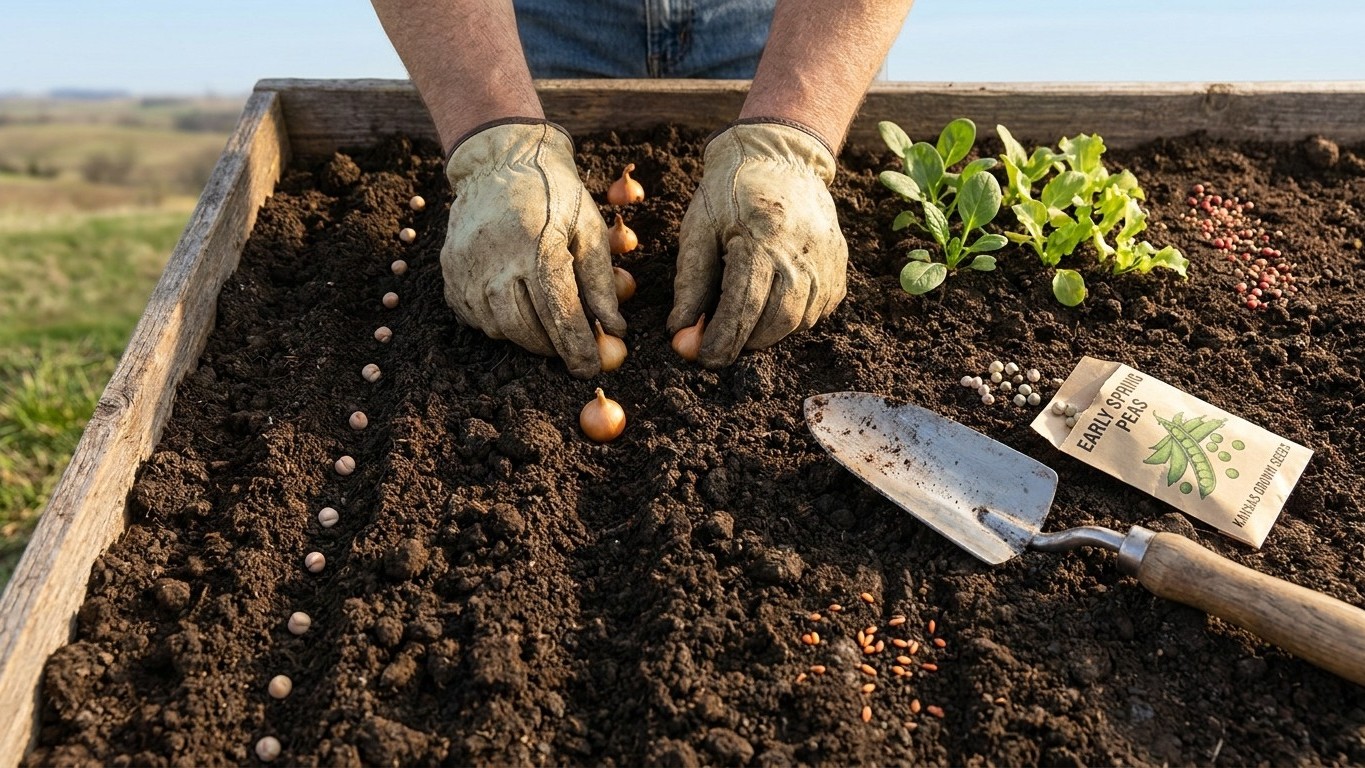

Kansas gardeners can put peas, onions, spinach, lettuce, radishes, and other cold-hardy crops in the ground for most of April, but the safe window for anything tender depends on where the state’s frost band falls that spring. Tomatoes, peppers, and squash still need to wait. The dividing line isn’t a date on the wall, it’s whether the soil and the air have actually caught up with the calendar.
What goes in the ground in April

The number that matters more than the date on your phone is the last spring frost window, and for the reference weather station behind these averages, that window runs from April 4 to April 18. That’s a 1991-2020 average based on 32°F freeze probability, not a promise. Early April sits inside that band for most of the state, which means frost is still a real possibility, not a fluke. Late April is a different story in most years, once that window has closed.
Cold-hardy crops that can go in now
Peas, spinach, lettuce, radishes, carrots, beets, and turnips handle a light frost without much trouble, so these can go in as soon as the soil can be worked, even before the frost window closes. Onion sets and transplants, along with seed potatoes, are April staples across Kansas and tolerate a cold snap better than most gardeners expect. Brassica transplants, broccoli, cabbage, and kale, can go out toward mid to late April once hardened off, ideally timed to the back half of the frost window rather than the front.
Asparagus crowns and rhubarb divisions are also an April job, planted while they’re still dormant. Garlic planted the previous fall keeps growing through this month and needs nothing but weeding.
What to hold off on, and how the state splits
Warm-season crops are the gamble. Tomatoes, peppers, beans, corn, cucumbers, melons, and squash need both warm soil and a frost-free sky, and neither is guaranteed in April even after the average window closes. Kansas spans USDA hardiness zones 5b through 7a, and that range isn’t decorative. The colder end of it tends to sit in the northwest of the state, at higher elevation, while the warmer end runs through the southeast. A gardener near the Colorado border should treat the frost window as a starting point that likely runs later than the reference figures above, not a fixed date to plant by.
What to start under cover
Seed packets that say “start 6 to 8 weeks before last frost” are telling you to count backward from that April 4 to April 18 window, not from any fixed calendar date. Tomatoes and peppers following that math should already be growing under lights by early to mid February for a mid-April transplant target. If that window has already passed for the season, it’s still worth starting a batch now for a slightly later transplant date, or plugging the gap with purchased starts rather than skipping the crop entirely.
Where the timing actually breaks down
Warm-season crops that transplant fast and hate root disturbance, cucumbers, squash, melons, are usually started indoors only 3 to 4 weeks ahead of their outdoor date, which for most of Kansas lands in early to mid April for a May transplant. Start too early and you get leggy, rootbound plants that sulk for weeks after transplant instead of taking off. Start too late and there isn’t enough season left before the first fall frost, which for this same reference station runs October 23 to November 2, to bring a full harvest home. Both mistakes cost real yield, and neither shows up until it’s too late to fix.
What is ready to pick
April is a thin month at the harvest end of things, but not an empty one. Asparagus that’s been established for a couple of seasons starts sending up spears once soil temperatures climb, and picking every couple of days keeps the bed producing rather than going to seed. Rhubarb stalks thick enough to snap cleanly are ready to pull, leaving the leaves behind since they’re not edible.
What’s coming from earlier plantings
Green onions from sets planted a few weeks earlier can be pulled young for scallions well before the bulb fully forms. Overwintered spinach and kale, if they made it through under mulch or row cover, put on fast new growth this month and are worth harvesting hard before they bolt in the coming heat. Radishes from the earliest March sowings mature in as little as three to four weeks, so April is often the first real radish harvest of the season.
It’s also worth a walk through the root cellar or pantry. Stored potatoes, onions, and winter squash held since fall start to soften or sprout as spring temperatures rise, and pulling the ones going soft now keeps them from taking the rest of the bin with them.
The jobs that matter this month
Soil that’s workable and dry enough to crumble in your hand, rather than clump, is ready for beds. Working wet Kansas clay now compacts it into something closer to brick than garden soil, and that mistake follows you for the whole season. A soil test done this month still leaves time to correct pH or nutrient gaps before the main planting push in May.
Structures and maintenance before things get away from you
Staking, caging, and trellising go up far easier on bare or barely-sprouted beds than around plants that have already flopped over. Setting supports now, even for crops that won’t need them for weeks, saves a frustrating afternoon of untangling stems later. Any dormant pruning of fruit trees and berry canes that didn’t get finished should wrap up before buds break open, since cutting into active growth stresses the plant and invites disease.
Row covers and cold frames earn their keep this month, buffering the cold-hardy crops already in the ground against the swings that come with a frost window this wide. Compost turned now, weeds pulled while they’re small, and irrigation lines checked for winter cracks are all cheap insurance against problems that get expensive by June.
What not to do in April
The classic April mistake in Kansas is trusting the air instead of the soil. A run of 70°F afternoons feels like permission to set out tomatoes, but soil temperature lags behind air temperature by days or weeks, and cold soil stunts warm-season transplants even when frost never touches them. Check soil temperature at planting depth, not the forecast, before committing tender crops to the ground.
Uncovering too soon, feeding too early
A mild stretch tempts gardeners to strip row covers and cold frame lids off entirely, right before the frost window’s later edge, April 18 on average for this reference station, arrives and undoes weeks of protection in one night. Keep covers within reach through the back half of the window rather than storing them the moment things warm up. Nitrogen fertilizer applied too early, before transplants have real roots to use it, pushes soft leafy growth that frost and pests both exploit. Hold heavier feeding until plants are established and actively growing.
Checking this against your own county
Everything above is a state-wide starting point, and Kansas is too wide and too uneven in elevation for one frost window to fit every county equally. Higher ground in the west, low spots that pool cold air, and simply being tucked away from a city’s heat island all push the safe planting date later than the reference figures suggest. The Kansas State University Research and Extension service publishes county-level guidance and a planting calendar built for these local differences, and it’s worth checking before betting a flat of transplants on state-wide averages.
Common questions
When is the last spring frost in Kansas?
For the reference weather station behind the NOAA averages used here, the last spring frost typically falls between April 4 and April 18. Rural and suburban gardens away from that station often see frost linger later, sometimes by one to two weeks.
Can I plant tomatoes in Kansas in April?
Only near the end of the month at the earliest, and only once both the frost window has closed and the soil itself has warmed, not just the air. Tomatoes set into cold soil stall regardless of the forecast.
What vegetables can I direct sow in April in Kansas?
Peas, spinach, lettuce, radishes, carrots, beets, and turnips all tolerate the frost risk still present through early and mid April, along with onion sets and seed potatoes.
Is Kansas one hardiness zone or several?
Kansas spans USDA zones 5b through 7a, with the colder end concentrated in the higher-elevation northwest and the warmer end in the southeast, so a single statewide date doesn’t apply evenly everywhere.