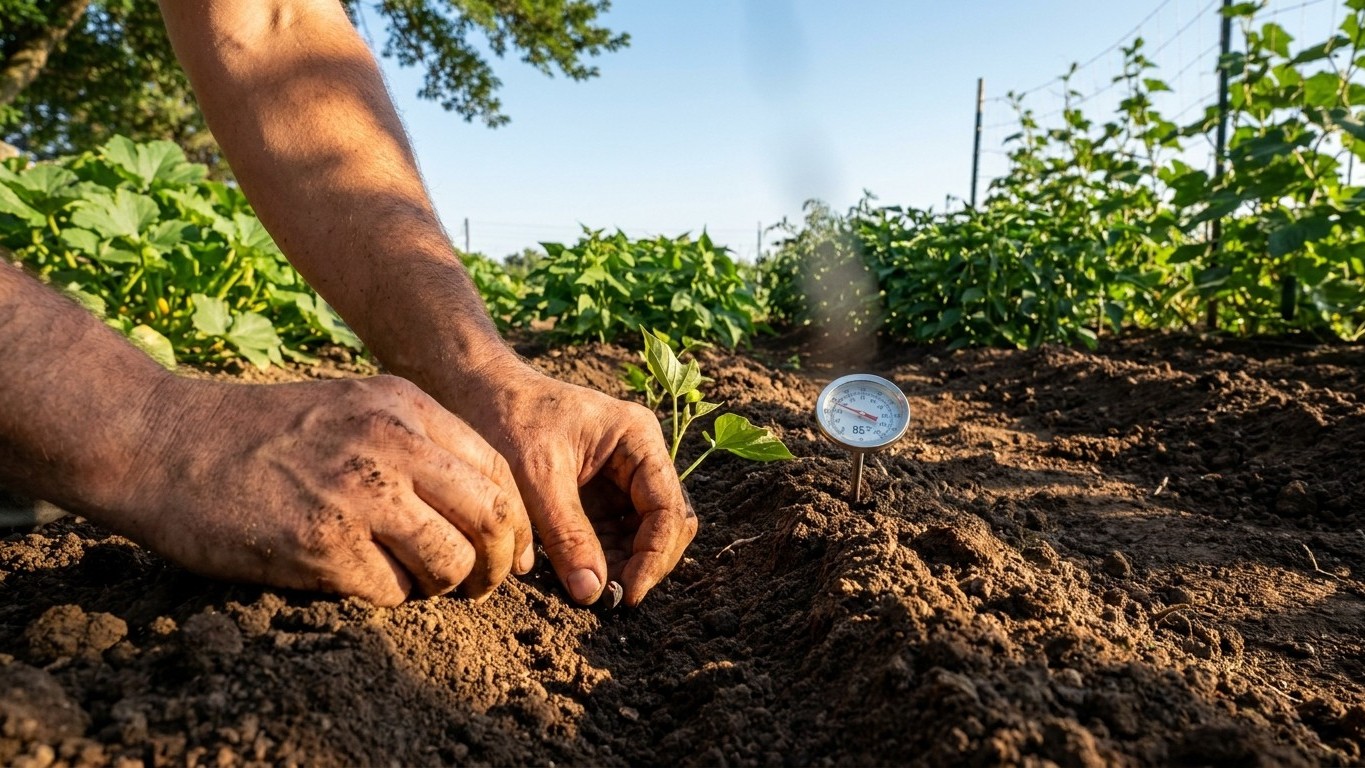

July in Kansas isn’t a planting-shutdown month, but it’s a heat-management one. The window for spring crops closed months ago, and the state’s first fall frost (October 23 to November 2, per NOAA NCEI 1991-2020 Climate Normals) is still far off. That gap is exactly what makes July useful: it’s the last real chance to get heat-loving crops into the ground and the first real chance to start the fall garden.
What goes in the ground in July

Kansas soil in July is hot, often north of 80°F at planting depth, which is exactly what okra, southern peas (cowpeas), and sweet potato slips want. If sweet potatoes didn’t go in back in late May or June, early July is still workable in most of the state, especially south of I-70. Okra seed germinates faster in this heat than it ever will in spring, and a July sowing still has time to produce before frost.
Succession plantings matter more than new crops this month. Bush beans sown now will crop in about 50 to 60 days, landing well before the October frost window. The same goes for a last round of summer squash and cucumbers, useful insurance against squash vine borer or bacterial wilt taking out the June planting. Sweet corn is trickier: a July 4th-ish sowing of a fast variety can still make it, but push much past mid-month and the math against that October 23-November 2 frost gets tight.
Pumpkins and winter squash for fall harvest are a July specialty here. Most varieties need 90 to 120 days, so counting back from the earliest edge of the frost window (October 23) means seed should be in the ground by early July at the latest, and sooner in northern Kansas where cooler nights arrive first.
What doesn’t belong in open soil this month: lettuce, spinach, peas, and other cool-season crops sown directly. Soil temperatures in the 85-95°F range common in July send these straight into bolt mode or simply keep them from germinating at all. Save the seed packet for late summer.
Transplants need a different clock than seed
If setting out tomato, pepper, or eggplant transplants that got a late start, do it at dusk rather than midday, and water them in heavily. Roots planted into 95°F soil at noon can suffer transplant shock that seed sown at the same time never faces.
What to start under cover
July is the month Kansas gardeners start counting backward instead of forward. With the first fall frost landing somewhere between October 23 and November 2, a fall broccoli or cabbage crop needing roughly 65 to 75 days from transplant means those transplants need to go into the garden by mid-to-late August. Working back from that transplant date, seed for broccoli, cabbage, cauliflower, and kale should go into cell trays sometime in mid-to-late July, four to six weeks ahead of the planned transplant.
The complication is heat, not cold. Brassica seed germinates poorly above 85°F, so trays need shade cloth, a cool basement, or an air-conditioned porch rather than a sunny windowsill. Starting too early in full outdoor heat produces stressed, leggy seedlings that stall once transplanted. Starting too late, waiting until August to sow, leaves too few days before frost for the crop to mature, especially in northern counties where the growing window closes sooner than in the south.
Brussels sprouts are the outlier: they need closer to 90 to 100 days, which pushes their start date to the very beginning of July or even late June to have any real shot at a harvest before hard freeze.
Lettuce and other quick greens can also be started under cover now, in trays kept out of direct afternoon sun, for transplanting once nighttime temperatures start easing in late August or September.
What is ready to pick
July is peak harvest, not a lean month. Tomatoes planted in May start coming in by mid-to-late July across most of the state, with color and a slight give at the stem end the simplest ready signals. Peppers follow close behind, though full-color bell peppers take longer than the green stage most gardeners pick at.
Summer squash and zucchini need daily checking. Fruit left two extra days in July heat can go from tender to baseball-bat-sized and seedy. Cucumbers follow the same rule: pick small and often to keep the vine producing.
Sweet corn from an early planting is often ready by mid-July. The classic test is pulling back the husk on one ear: kernels should be plump and release a milky (not clear or thick) liquid when pressed.
Garlic planted the previous fall is usually ready to pull in July once the lower third to half of the leaves have browned. Pull, don’t dig if the soil allows, and cure bulbs somewhere dry and shaded for a couple of weeks before storing. Onions follow a similar signal: tops flopping over means it’s time to lift and cure them, too.
Brambles (blackberries, raspberries) and early apple varieties are also coming on for many Kansas growers this month.
The jobs that matter this month
Water is the single biggest lever in a Kansas July. Most vegetable gardens need about 1 to 1.5 inches per week, and in a month that regularly hits the 90s and can flirt with 100°F, that water needs to go on deep and infrequent rather than a light daily sprinkle, which just encourages shallow roots that fail the moment a heat wave hits.
Mulch does double duty here: 2 to 3 inches of straw or shredded leaves keeps soil moisture from evaporating and keeps root zones several degrees cooler, which matters directly for fruit set on tomatoes and peppers. Blossoms on both crops commonly drop when nighttime temperatures stay above roughly 75°F, a heat response rather than a feeding problem, so more fertilizer won’t fix it.
Staking and caging need to happen before, not after, plants sprawl. A tomato plant loaded with July fruit that topples in a thunderstorm loses fruit to rot and sunscald that a cage would have prevented.
Pest scouting pays off weekly this month. Squash vine borer moths are active, laying eggs at the base of squash stems; catching this early means removing eggs by hand before larvae bore in. Japanese beetles show up on beans, roses, and grapes in July and are easiest controlled by hand-picking into soapy water in the cool of morning, when they’re sluggish. Spider mites thrive in hot, dry conditions and show up as stippled, dusty-looking leaves, usually worse on plants already stressed by drought.
Succession sowing beans, squash, and cucumbers now, as noted above, is as much a July task as a planting one: it’s the difference between one harvest wave and a garden that keeps producing into September.
What not to do in July
The most common mistake is treating warm air temperature as a green light for cool-season seed. Air can feel pleasant in the morning while soil a few inches down is still baking; lettuce, spinach, and pea seed sown into that soil either fails to germinate or germinates weak and bolts within days. Wait for the shade-cloth start described above instead.
Heavy nitrogen feeding on tomatoes and peppers in July is another classic misstep. Plants respond with lush green growth and fewer flowers, exactly the wrong trade when the goal is fruit set. A balanced or lower-nitrogen feed, or simply skipping the fertilizer and focusing on consistent watering, usually does more good.
Letting mulch pile directly against stems is a smaller error with outsized consequences: in humid July heat, that contact point becomes a breeding ground for stem rot and slug damage. Keep mulch pulled back an inch or two from the base of each plant.
Finally, skipping a week of garden checks during vacation season is understandable but costly. A squash vine borer infestation, a zucchini gone to baseball-bat size, or a week of missed watering during a heat spell can undo a season’s work faster in July than in almost any other month.
Checking this against your own county
A statewide July calendar is a starting point, not an instruction. Kansas hardiness zones range from 5b in the northwest to 7a in the south (USDA Plant Hardiness Zone Map 2023, based on 1991-2020 normals), and that spread alone shifts planting and frost timing by weeks. Elevation, local microclimates, and simply being in a rural garden rather than near an airport weather station push real frost dates later in spring and earlier in fall than the reference figures above. For county-level guidance, the Kansas State University Research and Extension service is the most reliable next stop.
Common questions
Is it too late to plant tomatoes in July in Kansas?
Transplants set out in early July can still produce before the October frost window, especially with a fast-maturing variety, but expect a shorter harvest than a May planting. Direct-seeded tomatoes started this late rarely have enough time.
Can I still plant sweet corn in July?
Only in the first week or two of the month, and only with an early-maturing variety. Later plantings risk running into the first fall frost (October 23 to November 2) before the crop finishes.
Why are my tomato and pepper blossoms falling off in July?
Extended nighttime heat above roughly 75°F commonly causes blossom drop. It’s a temperature response, not a nutrient deficiency, and adding fertilizer typically won’t solve it.
When should I start fall broccoli and cabbage seed?
Count back from the local first fall frost. With Kansas’s frost window falling October 23 to November 2 and these crops needing about 65 to 75 days from transplant, seed usually goes into trays mid-to-late July, kept out of direct heat until it germinates.