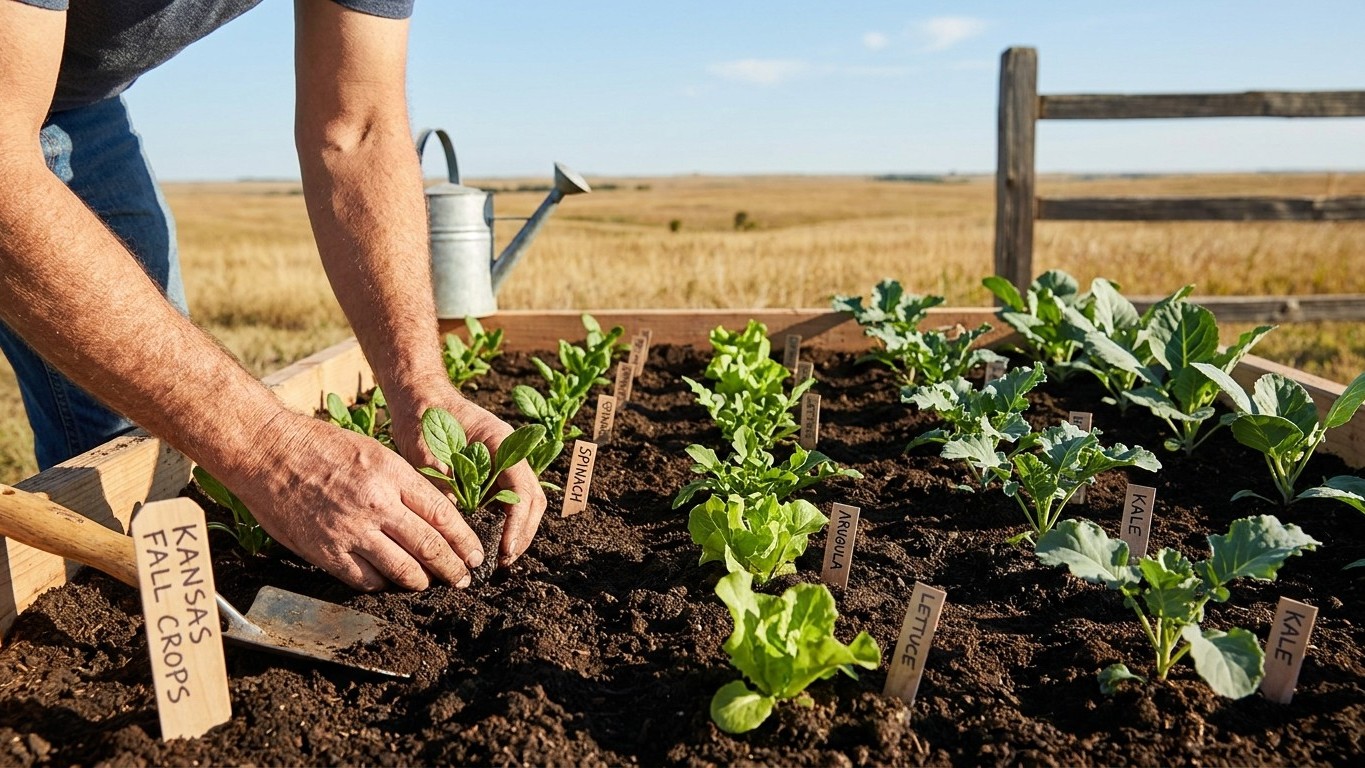

September in Kansas is the pivot point between summer’s last harvest and the fall garden’s second wind. With the first frost still six to nine weeks out across most of the state, there’s real time to get cool-season crops into the ground, start transplants for a late-season push, and set up the beds that will carry you into winter.
What goes in the ground in September

The calendar matters less than the soil and the clock ticking toward frost. Kansas sits in USDA Hardiness Zone 5b-7a, and the reference city’s first fall frost lands somewhere between October 23 and November 2. That gives most gardeners a six-to-nine-week window from early September before cold shuts things down, and the trick is matching each crop’s days-to-maturity against that window rather than against a date on a wall calendar.
Quick-maturing greens are the safest bet right now. Spinach, lettuce, arugula, radishes, and turnips can all go from seed to harvest in 30 to 45 days, which means seed sown in the first half of September still has time to mature before a hard freeze shuts the garden down. Mustard greens and Asian greens like tatsoi and mizuna behave the same way and actually improve in flavor once nights turn cool.
Kale and collards planted now will size up before frost and then hold in the garden through several light freezes, since cold actually sweetens their leaves. Garlic and shallots are a different story: most Kansas growers hold off planting cloves until October, when soil temperatures have dropped enough to delay top growth until spring, but early September is exactly the right time to prep those beds with compost so they’re ready when planting time arrives.
| Crop | Days to maturity | Plant by (approx.) |
|---|---|---|
| Radishes | 25-30 | Late Sept |
| Spinach | 35-45 | Mid Sept |
| Lettuce (loose leaf) | 30-40 | Mid Sept |
| Turnips | 40-55 | Early-mid Sept |
| Kale | 50-60 | Early Sept |
Anything with a longer runway, like broccoli or cabbage transplants, needed to go in during August to size up before frost. If you missed that window, the greens above are your fallback, not a consolation prize.
What to start under cover
Starting seed indoors or under row cover in September is less about getting ahead of spring and more about squeezing one more cycle out of the current season. Count backward from that October 23 to November 2 frost window: a lettuce or spinach transplant needs three to four weeks indoors before it’s ready to go into a cold frame or under a low tunnel, which puts the ideal sowing date in the first two weeks of September for most of the state.
Cold frames and low tunnels extend the season by trapping heat and blocking wind, effectively pushing your usable growing window a few weeks past that first frost date. Seedlings started now and transplanted under cover by early October can keep producing salad greens well into the colder weeks, sometimes past Thanksgiving in a mild year.
The two ways this goes wrong are predictable. Start too early, say in mid-August with no protection ready, and seedlings sit too long in small containers, get rootbound, and stall out once transplanted. Start too late, past the third week of September, and there simply isn’t enough daylight and warmth left for the transplants to establish roots before growth slows for the year. The window is real but it’s narrow, and it closes faster than most gardeners expect once nights start dropping into the 40s.
If cold frames aren’t part of your setup, simple wire hoops with frost cloth or plastic sheeting do the same job for far less money and can be assembled in an afternoon.
What is ready to pick
September carries the tail end of the summer garden alongside the first of the fall crops, which makes it one of the more generous harvest months of the year. Tomatoes are still coming in, though production slows as nights cool; pick anything showing color and let it finish ripening on a windowsill if frost threatens early. Peppers, both sweet and hot, are typically at their peak color and flavor now, and eggplant should be harvested while the skin is still glossy, since a dull skin means the seeds inside have started to harden.
Summer squash and cucumbers are winding down but still producing if the vines haven’t succumbed to powdery mildew. Sweet corn planted in early summer is likely finishing up; ears are ready when the silks have browned and a kernel popped with a thumbnail releases milky liquid rather than clear.
Melons are trickier to judge. A ripe watermelon has a dull, not shiny, rind and the spot where it sits on the ground turns from white to a creamy yellow. Cantaloupes will slip cleanly from the vine when they’re ready, which is a far more reliable signal than color alone.
Early apples and fall raspberries also come into their own this month. Apples should be picked when a gentle upward twist releases the fruit easily from the branch; forcing it usually means it’s not ready. Fall-bearing raspberry canes will keep producing in flushes until frost knocks them back, so check the patch every few days rather than assuming one pass clears it out.
The jobs that matter this month
Soil, succession, and cleanup
Succession sowing of quick greens pays off directly this month, since every week you wait shrinks the window before frost. Pull spent summer crops as soon as they stop producing rather than letting them sit; blighted tomato vines and squash plants riddled with vine borers are a disease reservoir if left in place over winter, and clearing them now reduces next year’s pest pressure.
Bare beds left empty after cleanup shouldn’t stay bare. A quick cover crop of winter rye or crimson clover sown now will hold soil through winter, suppress weeds, and add organic matter back in spring. If cover cropping isn’t practical, a heavy layer of shredded leaves or straw does similar work at a fraction of the effort.
Watering, dividing, and transplanting
Watering rhythm still matters even as temperatures drop. Fall seedlings and transplants have shallow roots and dry out fast in warm early-September afternoons, so don’t assume cooler weather means less frequent watering until nights are consistently below 60 degrees.
September is also one of the best times of year to divide perennials and transplant shrubs and trees. Soil is still warm enough to encourage root growth, but the cooling air reduces stress on the plant compared to a summer transplant. Peonies, daylilies, and hostas all divide well now, and the roots have weeks to settle in before the ground freezes.
Finally, if garlic is part of your plan, this is the month to source seed garlic and finish amending the bed with compost, since good varieties sell out before October planting time arrives.
What not to do in September
The most common mistake is planting warm-season crops because a warm afternoon feels like summer isn’t over. Tomatoes, peppers, and squash seeded or transplanted in September in Kansas will not mature before the October 23 to November 2 frost window, no matter how mild the days feel. Soil temperature and the shortening daylight matter more than the thermometer reading at 2 p.m.
Feeding nitrogen heavily this late in the season is another trap. Nitrogen pushes soft, leafy new growth, and that tender growth is exactly what gets hit hardest by the first frost. Perennials, shrubs, and trees should be easing toward dormancy now, not being pushed toward a new flush of growth they won’t have time to harden off.
Don’t assume a stretch of warm weather in late September means frost risk has passed. The frost window given here is a range, not a guarantee that comes after the latest date; a cold snap can arrive early in some years, and uncovering cold frames or pulling row covers off tender crops too soon after one mild week is a good way to lose a planting overnight.
Last, don’t neglect stored produce from earlier in the season. Onions, winter squash, and potatoes already in storage should be checked now, since soft spots or a sweet smell mean rot has started and that item needs to be pulled before it spreads to the rest of the batch.
Checking this against your own county
Everything above is a starting point built from one reference weather station, not a fixed instruction for every yard in the state. Elevation, local microclimates, and simple north-south distance across Kansas can shift the first fall frost by a week or two in either direction, and a low spot in your own yard can trap cold air well before the rest of the neighborhood feels it. Before committing to a planting date, check current conditions and local guidance through the Kansas State University Research and Extension service, which tracks regional variation the reference station can’t capture.
Common questions
Is it too late to plant tomatoes in September in Kansas?
Yes, for outdoor planting. With the first fall frost arriving between October 23 and November 2 across most of the state, there isn’t enough frost-free time left for tomatoes to mature from seed or even from a young transplant.
Can I still plant grass seed in September?
Cool-season lawn work isn’t covered by the crops above, but the same logic applies: cooler nights and still-warm soil in September make it a strong window for lawn establishment, well ahead of the first frost.
What vegetables can handle a light frost in Kansas?
Kale, spinach, collards, and turnips all tolerate light frost and often taste better afterward, since cold triggers the plant to convert starches to sugars.
When should garlic actually go in the ground?
Most Kansas growers plant garlic cloves in October, after soil temperatures have dropped enough to delay top growth until spring. September is the month to prep the bed, not plant the cloves.
Gardeners who plant by the Moon can check the September 2027 moon planting calendar, a tradition rather than a proven method.