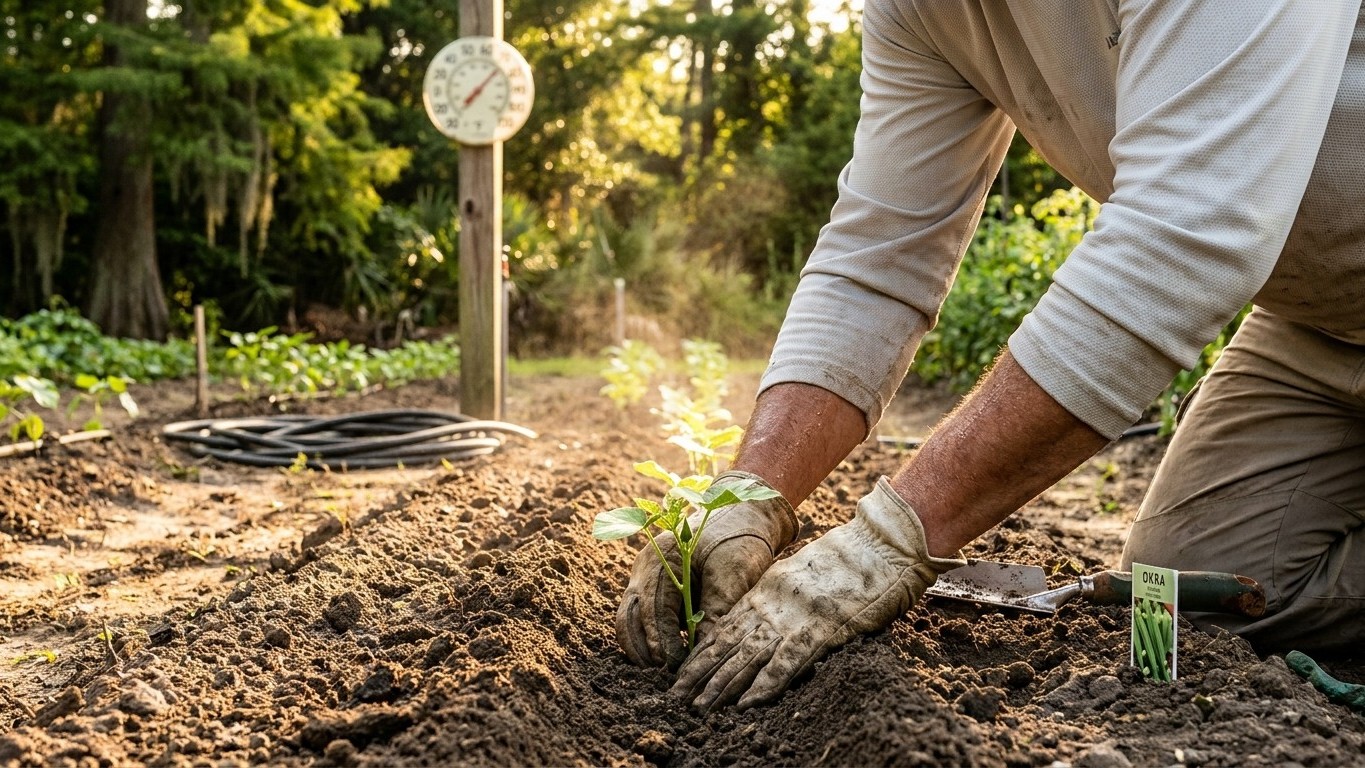

August in Louisiana means one thing above all else: heat, not frost, decides what goes in the ground. With soil temperatures regularly above 85°F and afternoon highs pushing past 95°F across most of the state, this month is less about planting a spring garden and more about launching the fall one. What matters now is what tolerates the swelter today while quietly setting up a harvest for October and November.
What goes in the ground in August

Louisiana sits in USDA Hardiness Zones 8a through 10a, a range wide enough to cover everything from the Arkansas border to the Gulf coast marshes near New Orleans. That spread matters more in August than almost any other month, because the state’s growing calendar right now is governed by heat tolerance and day length, not by the last frost date. Frost is a non-issue here until deep into fall, and in the southern parishes it barely shows up at all in some years.
Early in the month, north Louisiana gardeners still have a short window to direct-sow okra and southern peas for a late crop, and sweet potato slips can go in through the first week or two if the ground is workable and irrigation is reliable. Pumpkins destined for a Halloween harvest are typically seeded in south Louisiana during the first half of August, timed so the roughly 90 to 120 days to maturity land before the weather turns wet and cool.
Cucumbers and summer squash planted now, for a fall crop, often outrun the squash vine borer and pickleworm pressure that plagues spring plantings, since populations tend to thin out by late summer. Cowpeas and yard-long beans remain a safe, heat-shrugging choice through the entire month across the state.
What does not belong in the ground yet: broccoli, cabbage, lettuce, and other cool-season transplants. Soil temperatures this high will stall germination or push brassica seedlings straight into bolting once they’re finally in open ground. Those crops have their place this month, just not outdoors (see the next section). Garlic, similarly, waits for the soil to cool well past August before it goes into a Louisiana bed.
What to start under cover
The arithmetic for August starts is counted backward from the first fall frost window, which at the reference station used for this page falls between December 17 and January 8. That’s an unusually late window by national standards, and it’s the reason Louisiana gardeners get a longer fall-start season than almost anywhere else in the country. But the caution attached to that data matters: this station sees a 32°F freeze in only 86.8 percent of years, meaning roughly one winter in seven brings no hard freeze at all. Treat the frost date as a planning guide, not a guarantee.
Counting back from early to mid-December, broccoli, cabbage, and cauliflower need roughly 60 to 100 days from transplant to harvest, which puts their seed-starting window squarely in August, under cover where an air conditioner or shade cloth can hold the temperature down enough for germination. Tomato and pepper seed for a fall crop should already be seedlings by now in most of the state; started too late in August, they won’t size up before the shortening days and cooler nights slow fruit set.
The two ways this goes wrong run in opposite directions. Start brassica and lettuce seed too early in August heat and the seedlings stretch into leggy, weak-stemmed plants before they ever see a real bed. Start them too late and the fall frost window, whenever it lands, arrives before the plants have matured, leaving a half-grown crop caught by the season’s first cold snap. Splitting a sowing across two or three dates in the second half of the month hedges against both mistakes.
What is ready to pick
Tomatoes are winding down but not finished. Fruit that set in the cooler weeks of early summer keeps ripening through August, though blossom drop from nighttime temperatures staying above 75°F often means no new fruit is setting right now. Okra, on the other hand, is at its peak: pods should come off the plant at 3 to 4 inches long, checked every day or two, since a missed pod turns fibrous within 48 hours in this heat.
Southern peas, eggplant, and hot peppers are all producing steadily this month, and figs are dropping fast enough in south Louisiana that daily picking is the only way to beat the birds and the split-skin rot that humidity brings on. Watermelon and cantaloupe reaching maturity should sound hollow when thumped and, for melons, show a dried tendril at the stem closest to the fruit.
Muscadine grapes begin coloring up in many parts of the state through August, and unlike table grapes, they ripen unevenly on the vine, so a weekly pass through the arbor picking only the bronze or purple-black fruit outperforms a single harvest date. Sweet corn planted earlier in the summer is also finishing up; the silks should be brown and dry, with a milky (not watery or doughy) liquid from a punctured kernel confirming it’s ready.
The jobs that matter this month
Water is the job that matters most in August, and the rhythm matters more than the volume. A deep soak two or three times a week, delivered early in the morning, does more good than a light daily sprinkle, which mostly evaporates before it reaches the root zone. Mulch, 2 to 3 inches of it, is what makes that watering schedule work; bare soil in Louisiana August sun can swing 20 degrees hotter than mulched soil, enough to stress or kill shallow-rooted seedlings.
Pest scouting can’t wait until damage is obvious. Fall armyworms move through Louisiana lawns and gardens fast in late summer, often stripping a bed of young greens within days, and stink bugs concentrate on ripening tomatoes and peppers exactly when those crops are most valuable. A five-minute walk through the garden every couple of days catches both before populations explode.
Succession sowing keeps the fall garden staggered instead of dumping the entire harvest at once. Bush beans, summer squash, and cucumbers sown in early and again in late August spread out the yield and provide a buffer if one planting fails to a pest or a hot spell. This is also the month to finish ordering seed for fall brassicas and greens, since the popular varieties at Louisiana suppliers tend to sell out by early September.
Beds that held spring tomatoes or squash benefit from a round of compost worked in now, ahead of the fall transplants going in over the coming weeks. Testing soil pH and nutrient levels before that fall planting, rather than after, is the difference between a bed that performs and one that needs a second round of amendments mid-season.
What not to do in August
The single most common mistake this month is sowing cool-season seed straight into open ground because the calendar says it’s almost fall. Lettuce, spinach, and brassica seed sown directly into 90°F soil either fail to germinate at all or come up and bolt within days, wasting both the seed and the planting window. Start those under cover, as described above, and transplant only once the seedlings are established and the worst of the heat has started to break.
Nitrogen-heavy feeding is the second trap. Pushing a high-nitrogen fertilizer on tomatoes, peppers, or squash during peak summer heat encourages soft, leafy growth at exactly the moment plants are already struggling to manage water loss through their leaves, and it can suppress fruit set even further. A lighter, balanced feed, or none at all until the weather cools, serves these crops better right now.
Skipping mulch after a rainy stretch is another quiet failure. A few days of rain can make the soil look moist enough to go without mulch, but Louisiana August sun dries that top layer out again within 24 to 48 hours, and the temperature swing at the soil surface stresses roots even when moisture briefly looks fine. Keep the mulch layer in place all month, rain or not.
Finally, resist transplanting fall seedlings straight into full midday sun without hardening them off first. A few days of increasing outdoor exposure, starting in shade and moving toward morning sun only, prevents the transplant shock that otherwise sets fall crops back by a week or two right when the season is shortest.
Checking this against your own county
A statewide picture of August is a starting point, not a set of instructions for a specific yard. Elevation, proximity to the Gulf, and the simple distance between the Arkansas border and the coast shift both the summer heat load and the fall frost window by weeks across Louisiana. North Louisiana freezes reliably most winters; the far south sometimes doesn’t freeze at all. For a planting calendar tuned to a specific parish, the LSU AgCenter publishes county-level guidance and is the reference to check before locking in a fall planting date.
Common questions
Is August too late to plant a fall garden in Louisiana?
No. Because the first fall frost typically doesn’t arrive until between December 17 and January 8 in south Louisiana, there’s still time in August to start fall brassicas and greens under cover for transplant in September.
Can tomatoes still be planted in August in Louisiana?
Only if seedlings were already started earlier in summer. New seed started in August rarely matures enough fruit before shortening days and cooler nights slow production, so transplants, not fresh seed, are the realistic option this month.
Why won’t my lettuce or spinach germinate in August?
Soil temperatures above roughly 80°F suppress germination in most lettuce and spinach varieties. Starting the seed indoors or in a shaded, cooler spot, then transplanting once soil temperatures ease, solves the problem.
Does Louisiana really need to worry about frost dates in August?
Not for this month specifically, but the fall frost window matters for backward-planning fall crops. Given that a 32°F freeze occurs in only 86.8 percent of years at the reference station, it’s worth treating the date as a planning range rather than a hard deadline.