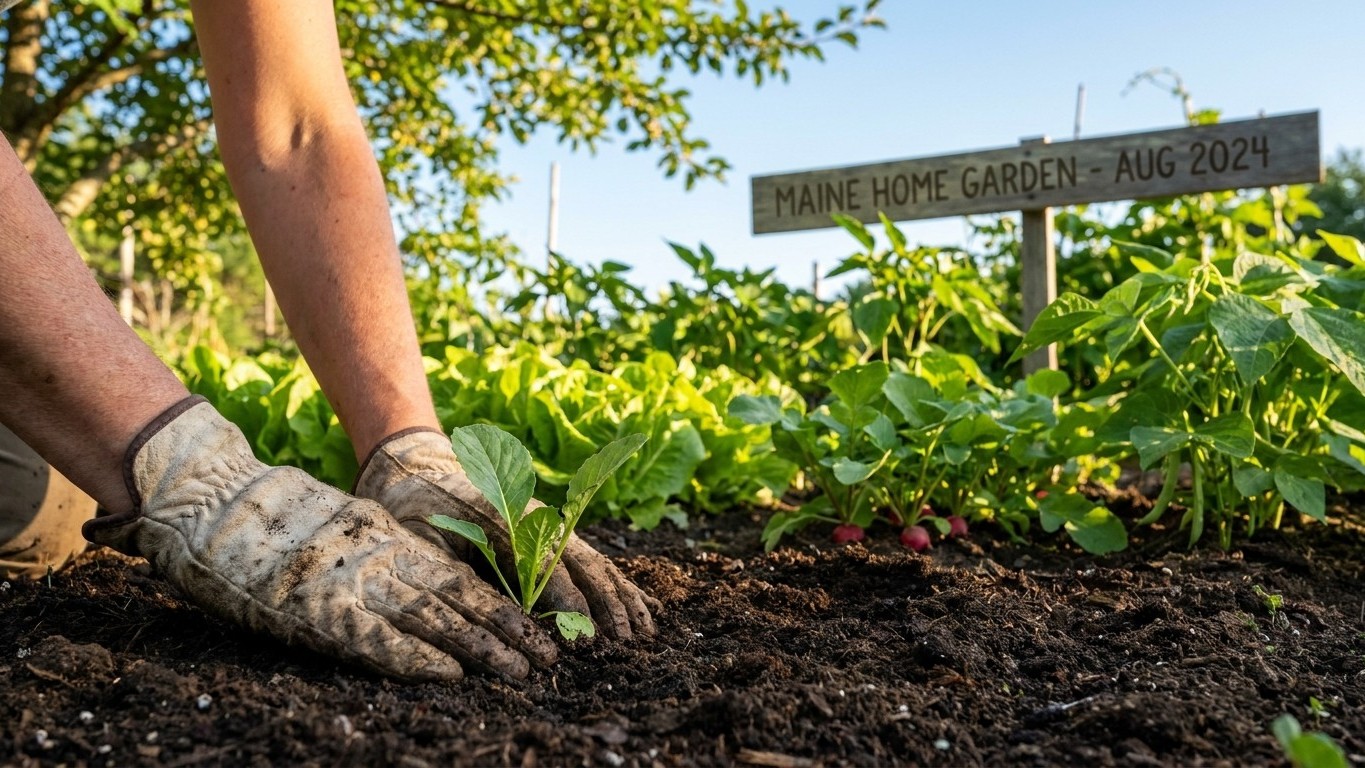

August in Maine sits in the thick of the growing season, past the spring frost window and still weeks from the first fall freeze. That gap is what decides everything this month: quick-maturing greens, roots, and beans still go in the ground, garlic waits for its true fall slot, and the real work shifts toward keeping the harvest coming while starting the crops that will carry the garden into October.
What goes in the ground in August

The last spring frost in the Portland area falls between April 22 and May 1, and the first fall frost arrives between October 9 and October 21, according to NOAA’s 1991-2020 climate normals. By August, that spring window is long gone. The number that actually governs planting decisions now is the days remaining until that fall frost band, not the calendar page or how warm the afternoon feels.
Count from early August to October 9 and you get roughly ten weeks. Count to October 21 and it stretches closer to eleven and a half. That’s the budget. Anything you direct-sow needs to reach a harvestable stage inside that window, with a little slack built in because the first frost date is a 30 to 70 percent probability band, not a hard wall.
That budget favors fast crops. Bush beans with a short maturity window, radishes, turnips, arugula, mesclun mixes, spinach, and loose-leaf lettuce all fit comfortably. Peas sown now for a fall crop can work too, especially shorter-season varieties, since cooler nights in September actually suit them better than the heat of midsummer. Kale, collards, and Asian greens sown in the first half of August have time to size up before frost slows them down.
Garlic and shallots are the crops gardeners most often try to rush into the ground too early. In Maine those go in later in fall, closer to the first hard frosts, not in August. Planting them now wastes the bulbs on premature top growth that won’t survive winter dormancy properly. Warm-season crops are the other trap: corn, squash, and tomatoes started from seed in August simply won’t mature before the frost window closes, regardless of how mild the weather feels. If you want more of those, you’re looking at next spring, not this month.
Cold frames and low tunnels are worth setting up now if you haven’t already, even though they won’t matter until the greens inside them need protection later in fall. Building the structure in August, while the weather is cooperative and the ground still workable, beats scrambling to assemble one in a September cold snap.
What to start under cover
Starting seedlings under cover in August is mostly about squeezing one more round of fall greens into the season, and the math works backward from that October frost window rather than forward from today’s date.
Take a crop like kale or Swiss chard with roughly 50 to 60 days to maturity. Started under cover in early August, transplanted out two to three weeks later, it can still reach a usable size before the October 9 threshold, with the later October 21 date giving inland gardeners in warmer pockets extra room. Push the same seeding a month later and the arithmetic stops working, because the plant simply runs out of daylight and warmth before it sizes up.
The two ways this goes wrong are mirror images of each other. Start too early under cover, with no clear transplant date in mind, and you end up with rootbound, leggy seedlings sitting in trays far longer than they should, stressed before they ever reach soil. Start too late, treating August as if it still behaves like June, and the seedlings never catch up to a frost that’s closing in faster than the calendar suggests.
Lettuce and scallions are forgiving candidates for this approach, tolerant of a slightly rushed transplant and quick to recover. Broccoli and cabbage started under cover now, for transplant as the weather cools, can also work in the milder coastal zones, though gardeners farther inland or north should treat that as an optimistic bet rather than a safe one, given how much earlier frost tends to arrive away from the coast.
What is ready to pick
August is when the garden earns its keep. Tomatoes color up steadily through the month, and the test isn’t the calendar but the fruit itself: full color, slight give under gentle pressure, and a stem that releases with a light tug rather than resistance. Sweet corn signals readiness through the silks, which turn brown and dry while the husk stays green; a quick peek at the kernels, checking for a milky rather than watery liquid when pierced, confirms it.
Summer squash and zucchini need almost daily checking this time of year, since a fruit that looks perfect one morning can be oversized and seedy within 48 hours. Cucumbers follow a similar rule: pick before the skin turns yellow and the seeds inside get tough. Green beans come off the vine while still snapping cleanly, before the pods swell and turn fibrous.
Garlic planted the previous fall is typically already harvested and curing by this point in Maine’s season, so August is more about checking on those curing bulbs, hanging in a dry, airy spot, than pulling anything fresh. Blueberries, both wild lowbush and cultivated highbush varieties that do well across the state, are usually at peak picking through the month, along with early apple varieties in the milder parts of the state and raspberries on everbearing canes putting out their second flush.
Potatoes planted in spring can be dug for “new potatoes” now if the tops have started to yellow and die back, though full-size storage potatoes usually wait until the foliage has died back completely later in the season.
The jobs that matter this month
Watering rhythm matters more in August than almost any other month, because dry spells combined with high water demand from fruiting plants can stall tomatoes and stress newly transplanted fall greens right when they need steady growth. Deep, less frequent watering beats a quick daily sprinkle, since it encourages roots to grow down rather than staying shallow and vulnerable.
Mulching pays off doubly now: it holds soil moisture during dry stretches and keeps soil temperatures from swinging too hard between hot afternoons and cooling nights, which matters for anything freshly transplanted under cover. Staking and tying should already be done for tomatoes and pole beans, but August is the last realistic window to catch anything that’s started sprawling before it becomes a tangled mess that’s harder to manage and more prone to rot where stems touch damp soil.
Succession sowing is the single job most likely to slip through the cracks this month, precisely because the garden already looks full. Gaps left by early lettuce or spent pea vines are exactly where a quick radish or another lettuce sowing belongs, and every week that gap sits empty is a week of harvest lost later.
Pest scouting deserves real attention too. Japanese beetles peak in August across much of the Northeast, skeletonizing leaves on roses, beans, and fruit trees. Squash vine borer damage often shows up now as sudden wilting in otherwise healthy-looking squash plants, worth checking at the base of the stem before assuming it’s just heat stress. Late blight on tomatoes and potatoes can move fast in humid stretches, so a quick daily look at foliage, checking for dark, water-soaked spots, catches it before it spreads through the whole patch.
What not to do in August
The most common mistake this month is starting warm-season crops from seed because the weather still feels like summer. Corn, squash, and beans sown now in most of Maine simply run out of runway before frost, no matter how warm the air is in early August. Warmth in the air doesn’t extend the calendar; it just delays the realization that the crop won’t finish.
Heavy nitrogen feeding is another trap, particularly on tomatoes, squash, and peppers that are already fruiting. A dose of nitrogen-heavy fertilizer this late pushes leafy growth at the expense of fruit set and ripening, exactly backward from what the plant needs as the season winds down. If feeding is needed at all now, a lower-nitrogen, higher-potassium approach supports the fruit that’s already forming rather than starting a new round of foliage.
Letting harvest slide is a quieter mistake with real consequences. Zucchini left two extra days becomes a baseball bat instead of dinner, and beans left on the vine toughen and signal the plant to stop producing more. Regular picking, even when the kitchen is already overwhelmed with produce, keeps the plant in production mode.
Skipping water during a dry stretch because “it rained last week” is another quiet failure. August dry spells in Maine can stress fall transplants and stall tomato ripening fast, and by the time wilting is visible, some damage is already done.
Checking this against your own county
These frost windows come from one reporting station near Portland, and Maine’s geography stretches that range considerably. Elevation, distance from the coast, and position north versus south all shift both the spring and fall frost dates by weeks in either direction. Inland valleys and northern counties typically see frost arrive well before October 9, while sheltered coastal spots can push past October 21.
The University of Maine Cooperative Extension is the right next stop for anyone who wants numbers specific to their own county rather than a statewide average, along with planting guidance built around Maine’s actual growing conditions rather than a generic national calendar.
Common questions
Can I still plant tomatoes in Maine in August?
No. Tomatoes started from seed in August won’t mature before the first fall frost, which arrives between October 9 and October 21 in the Portland area and earlier inland. Any tomato planting for the season should already be established well before August.
Is it too late to plant garlic in August?
Yes, and it’s also too early. Garlic in Maine goes into the ground later in fall, closer to the first hard frosts, not in August. Planting now risks premature top growth that won’t survive the winter dormancy period properly.
What vegetables can I direct-sow in August in Maine?
Fast-maturing crops fit the roughly ten-week window before frost: bush beans, radishes, turnips, arugula, spinach, loose-leaf lettuce, and shorter-season peas. Anything with a long days-to-maturity count is a gamble this late.
Why is my August tomato harvest slowing down even though the weather is warm?
Late-season nitrogen feeding is a common cause, since it pushes leaf growth over fruit set. Uneven watering during dry spells also stresses ripening fruit. Checking feeding schedule and watering rhythm usually explains a slowdown before assuming it’s weather or disease.