
Late summer heat in Maine hides a fast-closing window. The first fall frost lands somewhere between October 9 and October 21 depending on where you garden, and that six-to-eight-week runway is what actually decides what belongs in the ground this month, not whether the afternoon still feels like July.
What goes in the ground in September

The math starts with that frost window. Count backward from October 9 (the early end, safer to plan around if you’re inland or north) and you get roughly five to seven weeks of open-ground growing time left in the first half of the month. That’s enough for anything that matures in 30 to 40 days, and tight for anything slower.
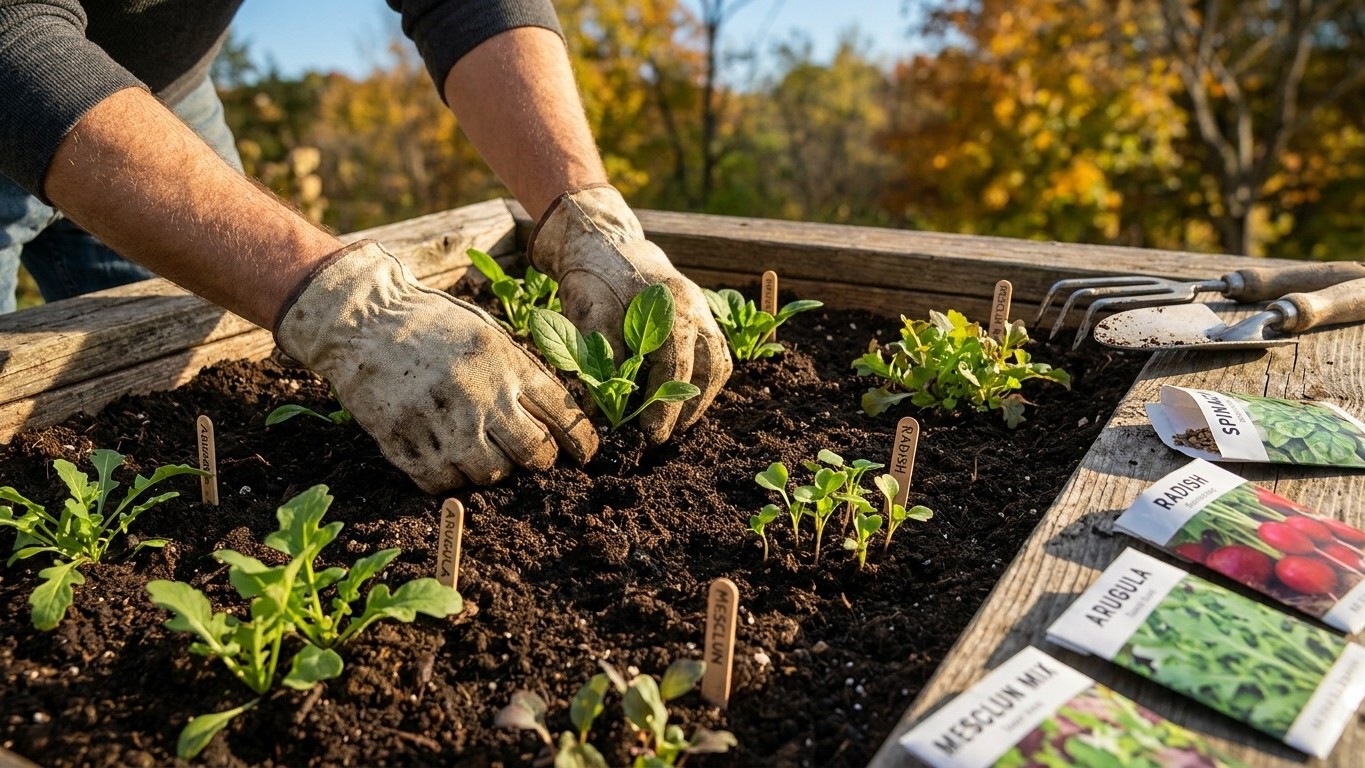
Direct-sown spinach, arugula, mesclun mixes, radishes, baby turnips, and quick mustard greens all fit comfortably if sown in the first two weeks of September. Their cool tolerance is the other half of the equation: these crops don’t just survive a light frost, several of them (spinach especially) taste better after one, since the plant converts starches to sugars when nights cool.
Cover crops are the other real September planting. Winter rye, oats, and crimson clover sown now have time to germinate and put down roots before the ground locks up, and they do more for the soil over winter than a bare bed ever will. This is the single most useful thing you can plant this month if you have any cleared space.
Garlic and shallots are often assumed to be a September job because they’re a fall-planted crop. In Maine they’re usually not. Growers here tend to wait until the soil has cooled further, closer to mid-to-late October, so the cloves don’t push top growth before winter. September’s job with garlic is bed prep, not planting, unless you’re gardening in the mildest coastal pockets near the Portland reference zone (USDA zone 6a under the 2023 map), where the ground stays workable longer.
Spring bulbs, daffodils, tulips, crocus, can go in starting late September in the state’s warmer south. Farther north and inland, where USDA zones run as cold as 3b, hold off a few more weeks until soil temperatures drop further.
What to start under cover
Row cover and cold frames don’t change the calendar, they buy time against it. A cold frame typically adds two to three weeks of protected growing at the tail end of the season, which matters because several worthwhile crops sit right at the edge of what open ground can finish.
Spinach is the clearest example. Sown direct in open ground on September 1, a 45-day variety reaches maturity around mid-October, right inside the October 9-21 frost window, with no margin for a cold snap. Add a cold frame or a simple low tunnel over the same bed and that margin turns into a buffer, letting you keep sowing spinach and other hardy greens through the middle of the month instead of stopping in the first week.
| Crop | Typical days to maturity | Cuts it close without cover? |
|---|---|---|
| Mesclun / baby lettuce | 25-30 | No, finishes early enough on its own |
| Radish | 25-30 | No |
| Spinach | 40-45 | Yes, cover recommended for later sowings |
| Arugula | 30-35 | Fine for early-month sowings |
Two mistakes show up every year. The first is starting too early under cover, which for fall transplants usually means brassicas held indoors past their prime, going rootbound and leggy in trays because there’s no outdoor slot left to move them into. The second is starting too late, sowing hardy greens in the last week of September expecting germination, when soil temperatures have already dropped enough to slow seeds down or stop them cold. Both mistakes trace back to skipping the backward count from the frost window and going by feel instead.
What is ready to pick
September is peak harvest in most of the state, not a lean month. Tomatoes, peppers, cucumbers, and summer squash keep producing until frost actually hits, so there’s no reason to pull healthy plants early out of caution. Winter squash and pumpkins, though, are a different story: they’re ready when the skin resists a thumbnail push and the stem has started to dry and corky. Leave them on the vine to finish curing in the field as long as frost isn’t imminent, since a few extra sunny days improve storage life.
Potatoes are ready to dig once the tops yellow and fall over, usually a signal that arrives right in this window. Apples across Maine orchards ripen on a staggered schedule through the month depending on variety, and the simple test holds: a ripe apple twists free with a gentle upward turn, an unripe one hangs on.
Carrots and beets left in the ground actually improve now, sweetening as nights cool, so there’s an argument for leaving root crops in place a little longer rather than rushing the whole bed out at once. The one real deadline is tender crops ahead of the first frost signal: basil, tomatoes still on the vine, and any squash not yet cured should come in before a cold night catches them, since even light frost damages fruit quality even where the plant itself would survive.
The jobs that matter this month
Curing and storage come first. Winter squash, pumpkins, and onions all need a dry, airy spot for one to two weeks after harvest before they go into long-term storage, and skipping this step is the single biggest reason stored crops rot early.
Watching the weather matters more in September than almost any other month, because the frost window is wide (October 9-21) and the early end of that range can arrive while gardeners further south or on the coast still expect weeks of margin. Keep row cover or old sheets on hand from the first week of the month onward, especially if you garden inland or at higher elevation, where frost typically arrives ahead of the coastal average.
Bed cleanup earns its place here too. Pulling spent squash vines, blighted tomato plants, and finished bean rows now reduces the pest and disease load that would otherwise overwinter in the debris. Anything showing squash vine borer damage or blight should go to the trash, not the compost pile.
Staking tall, late-season plants before fall storms roll through prevents a lot of broken stems for very little effort. This is also a sound month to pull a soil test, since results come back in time to plan amendments before the ground freezes rather than scrambling in spring. And if garlic is on next month’s list, now is when seed stock at local suppliers starts selling out, so ordering ahead avoids being stuck with whatever’s left.
What not to do in September
Warm afternoons are the classic trap. A string of 70-degree days in early September doesn’t mean it’s safe to start a second round of beans or squash. There isn’t enough season left before the frost window opens, and a warm day tells you nothing about what the night will do three weeks later.
Skipping frost protection because the forecast looks mild is the second common misstep. The frost window is a range for a reason: some years the first hard frost lands on the early side of October 9, catching gardeners who assumed they had until the 21st. Keep cover on hand rather than betting on the later date.
Pulling mulch back too early, thinking the garden needs to “breathe” before winter, strips away the insulation that protects perennial roots right as nights start cooling. Leave it in place and add to it later once the ground actually starts to firm up.
Feeding nitrogen this month is a mistake with shrubs and perennials alike. A high-nitrogen fertilizer in September pushes soft new growth that has no time to harden off before frost, leaving that growth more vulnerable to winter dieback than if you’d fed nothing at all. If feeding is needed, a lower-nitrogen, higher-potassium formula supports root development instead of top growth.
Checking this against your own county
Everything above is built around Portland’s climate normals, the mildest reference point in the state. Inland counties, higher elevations, and anywhere north of the coastal belt see both frost dates shift, later in spring and earlier in fall, sometimes by several weeks. Lake effect and local terrain can move things further still on a very local scale.
For a planting calendar built around your specific county, the University of Maine Cooperative Extension publishes guidance tuned to conditions across the state.
Common questions
Is it too late to start a vegetable garden in Maine in September?
Not for quick crops. Anything maturing in 30 to 40 days, like radishes, arugula, or mesclun, sown in the first half of the month still has time to finish before the frost window opens between October 9 and October 21.
Should I plant garlic in September in Maine?
Most Maine growers wait until mid-to-late October, once soil has cooled further, to avoid premature top growth before winter. September is better spent prepping the bed than planting cloves.
Do I need to cover my garden every night once September starts?
No. Cover is only necessary once frost is forecast or once you’re gardening deep into the second half of the month in an inland or northern county, where the early end of the frost window applies.
What’s the biggest mistake gardeners make in a Maine September?
Assuming a run of warm days means the season has more room left than it does. The calendar keeps moving toward the frost window regardless of what the thermometer says on any given afternoon.
Gardeners who plant by the Moon can check the September 2027 moon planting calendar, a tradition rather than a proven method.