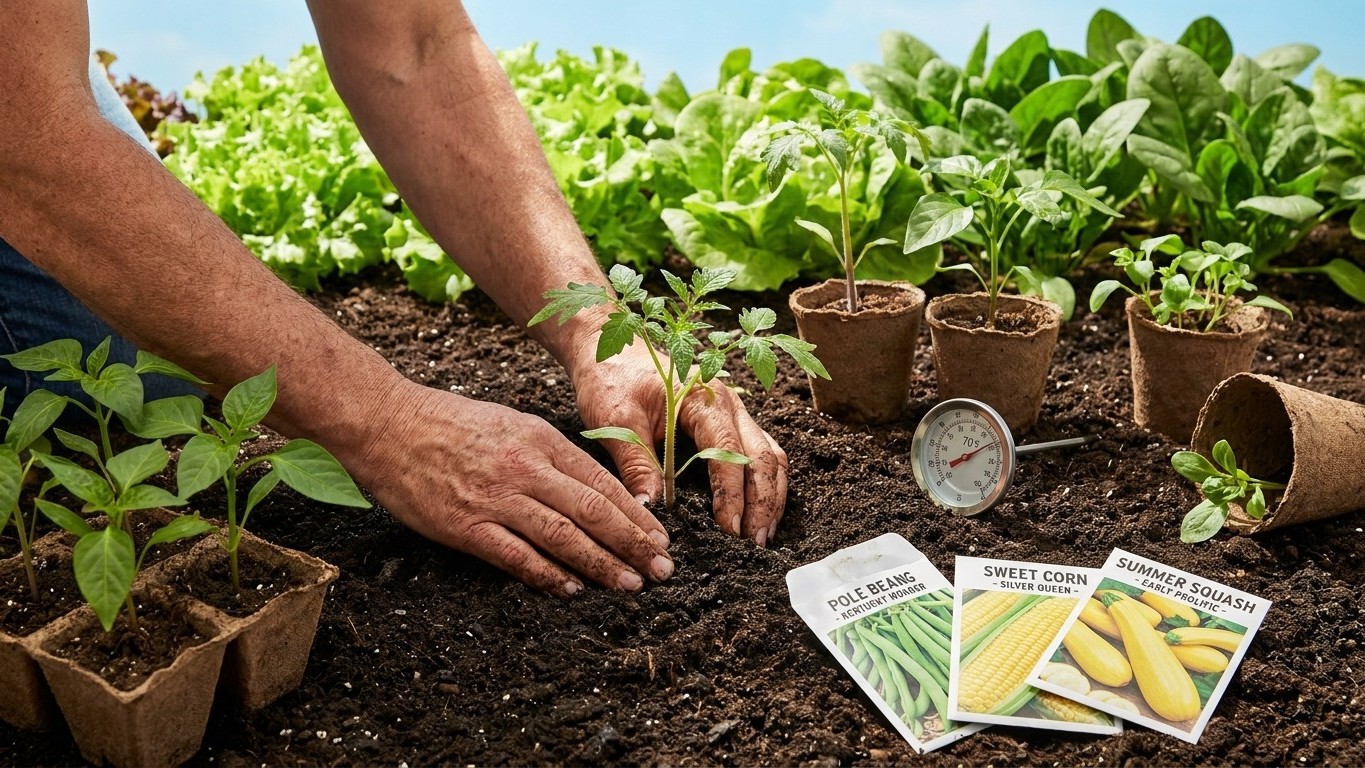

May is Maryland’s turning point: the frost window that runs April 3 to April 16 across most of the state is behind you by the time the month opens, and the garden shifts from cool-season hedging to full warm-season planting. Tomatoes, peppers, beans, squash and corn all go in this month. The one exception is the higher ground of Garrett and Allegany counties, where cold air still lingers into May and pushes every date back.
What goes in the ground in May

The calendar says frost is over almost everywhere in Maryland by May 1, but soil temperature is the real gatekeeper, not the date on the wall. A 70-degree afternoon means nothing to a tomato root sitting in soil that’s still cold from a wet April. Warm-season crops stall, sulk, or simply rot if they go in before the ground itself has caught up with the air.
By early-to-mid May, most of the state’s soil has warmed enough to direct-sow snap beans, sweet corn, cucumbers, summer squash and melons. Transplants of tomatoes, peppers and eggplant can go out once nights stay reliably above the mid-40s, which for the Baltimore-Washington corridor and the Eastern Shore is usually settled by the first two weeks of the month. Basil and other tender herbs follow the same rule as peppers: they hate cold feet.
What’s still finishing from spring
Cool-season crops don’t disappear just because summer planting has started. Lettuce, spinach, arugula and radishes sown in April are still producing early in May, and there’s time for one more quick round of radishes or baby greens before the heat shuts them down. Peas planted in March or early April are climbing and starting to set pods. Onions and garlic planted the previous fall are bulking up underground and don’t need touching yet.
Western Maryland runs later
Garrett and Allegany counties sit at higher elevation, and the same NOAA data that gives the April 3 to April 16 frost window for the rest of the state notes that mountainous ground lags weeks behind. Gardeners there should treat early May the way the rest of Maryland treats mid-to-late April: hold warm-season transplants back, and lean on cold-hardy greens and alliums a little longer.
What to start under cover
Most of the classic “start indoors” work for spring, tomatoes, peppers, early brassicas, already happened in March and April. May’s indoor sowing is aimed further out: it’s the month to start crops that need a long runway to be ready for a mid-summer transplant and a fall harvest. Count backward from the first fall frost, which lands between October 26 and November 5 across most of the state, and the arithmetic gets simple.
Brussels sprouts and late-season cabbage need roughly 90 to 100 days from transplant to harvest, plus the weeks they spend as seedlings first. Starting them indoors in May puts a strong transplant in the ground by mid-to-late June, well ahead of that fall frost window, with enough season left for the plant to size up before cold weather hits. The same backward math works for storage-type winter squash if you want a second, later planting behind an earlier direct-sown crop.
The two ways this goes wrong are predictable. Start too early under lights with no room to pot up, and the seedlings get rootbound and leggy before the ground is even ready for them. Start too late, and the plant runs out of daylight and warmth before it finishes sizing up, leaving you with small heads or sprouts that never tighten. Splitting the difference by working backward from the fall frost date, rather than a fixed spot on the calendar, keeps the timing honest for whichever part of the state you’re gardening in.
What is ready to pick
May is a genuinely productive harvest month in Maryland, not just a planting one. Asparagus crowns that have been in the ground a few years are in full spear production, and the rule for picking stays the same everywhere: cut or snap while spears are still pencil-thin to finger-thick, before they start to fern out. Once the plant starts putting energy into feathery foliage instead of new spears, that flush is winding down.
Spring greens sown in March and April, lettuce, spinach, arugula, mustard, are at their peak through the first half of the month before rising temperatures push them toward bitterness and bolting. Radishes started in early spring are ready in a tight window; a radish left in warm soil a few days too long turns woody and hot fast. Rhubarb stalks are thick and ready to pull, and overwintered kale, if it was left in the ground, is finishing its last usable leaves before the plant bolts.
Late in the month, the earliest strawberry varieties in central and southern Maryland start coloring up, a few weeks ahead of the Eastern Shore’s slightly warmer microclimate or behind it, depending on the specific planting site and how it’s sheltered. Peas planted in late March are close behind, with pods filling out and ready within a few weeks of a hot stretch.
The jobs that matter this month
Staking and support work has a real deadline in May: put cages around tomatoes and trellises up for peas, cucumbers and pole beans before the plants sprawl and tangle. Doing it after the fact means fighting through foliage and risking broken stems, and a tomato that’s already flopped over is much harder to train upright again.
Mulching pays off the moment soil has warmed, not before. Mulch laid too early traps cold in the ground and slows exactly the warming that lets warm-season crops thrive; laid in May, after the soil has come up to temperature, it holds moisture and suppresses the first flush of summer weeds. That timing matters more than people think, since a two-inch layer of straw or shredded leaves put down in April can undo weeks of soil warming.
Watering rhythm shifts here too. Seedlings and new transplants need frequent, shallow watering to establish roots, while anything already established benefits more from deep, less frequent soaking that pushes roots downward instead of keeping them shallow near the surface. Succession sowing keeps the harvest coming: another round of beans, a fresh block of lettuce in a shadier spot, more radishes, all sown now rather than waiting for the first round to finish.
Pest scouting starts in earnest in May. Asparagus beetle shows up on emerging spears, Colorado potato beetle appears on young potato foliage, and squash vine borer moths start laying eggs at the base of squash plants right as vines get going. Catching any of these early, by hand-picking beetles or using row cover until flowering, is far easier than dealing with an established infestation in July.
What not to do in May
The most common mistake in Maryland gardens this month is trusting the air temperature over the soil. A warm, sunny stretch in early May can feel like summer, but if the ground underneath is still cool and wet from spring rain, tomatoes and peppers set out into it will sit stalled for weeks, sometimes with a purplish tinge from cold stress, even if no frost ever touches them. Waiting a few extra days for the soil itself to warm costs less than replanting a stunted bed.
Uncovering cold frames, row covers or newly hardened-off transplants too early after a mild spell is the second classic error, especially in Garrett and Allegany counties where a warm afternoon can still be followed by a cold night into early May. Pulling protection off at the first nice day, then getting caught by a late cold snap, undoes weeks of careful hardening.
Nitrogen timing trips people up too. Heavy nitrogen feeding on tomatoes and peppers right as they’re getting established pushes lush green growth at the expense of flowers and fruit. Established, actively fruiting plants can handle it later, but a young transplant fed heavily in May often turns into an oversized plant that sets fruit late, if at all. A modest feed at planting, then a side-dress once flowering starts, works better than front-loading nitrogen in hopes of a fast start.
Checking this against your own county
A statewide May is a starting point, not an instruction. The USDA Plant Hardiness Zone Map puts Maryland across zones 5b through 8a, and that range alone tells you how differently a garden in the mountains behaves compared to one near the Chesapeake Bay. Elevation in Garrett and Allegany counties pushes both the last spring frost and the first fall frost weeks later than the state average, while the Eastern Shore’s milder microclimate often runs ahead of it.
| Region | Typical timing vs. state average |
|---|---|
| Western Maryland (Garrett, Allegany) | Weeks later, both spring and fall |
| Central Maryland / Baltimore-Washington corridor | Close to state average |
| Eastern Shore | Slightly milder, often a bit earlier in spring |
For a planting window tuned to a specific county, the University of Maryland Extension (extension.umd.edu) publishes local guidance worth checking against anything read here.
Common questions
Is it safe to plant tomatoes outdoors in Maryland in early May?
In most of the state, yes, since the April 3 to April 16 frost window has passed. The bigger risk in early May is cold soil rather than frost itself, so a warm, settled stretch of weather is a better signal than the date alone. In Garrett and Allegany counties, hold off longer since frost risk lingers into the month.
What can still be direct-sown in Maryland in May?
Snap beans, sweet corn, cucumbers, summer squash and melons all do well sown directly once soil has warmed. A second round of radishes, lettuce or spinach also works early in the month before heat sets in.
Why did my May-planted tomatoes stall instead of growing?
Cold soil is the usual culprit. Air temperature can feel warm while the ground several inches down is still cool from spring rain, and a tomato root system in that soil simply stops making progress until it warms.
Is May too late to start seeds indoors for a fall harvest?
No. Brussels sprouts, late cabbage and similar long-season crops are often started indoors in May precisely because they need to be transplanted by mid-summer to mature before the first fall frost, which lands between October 26 and November 5 across most of the state.