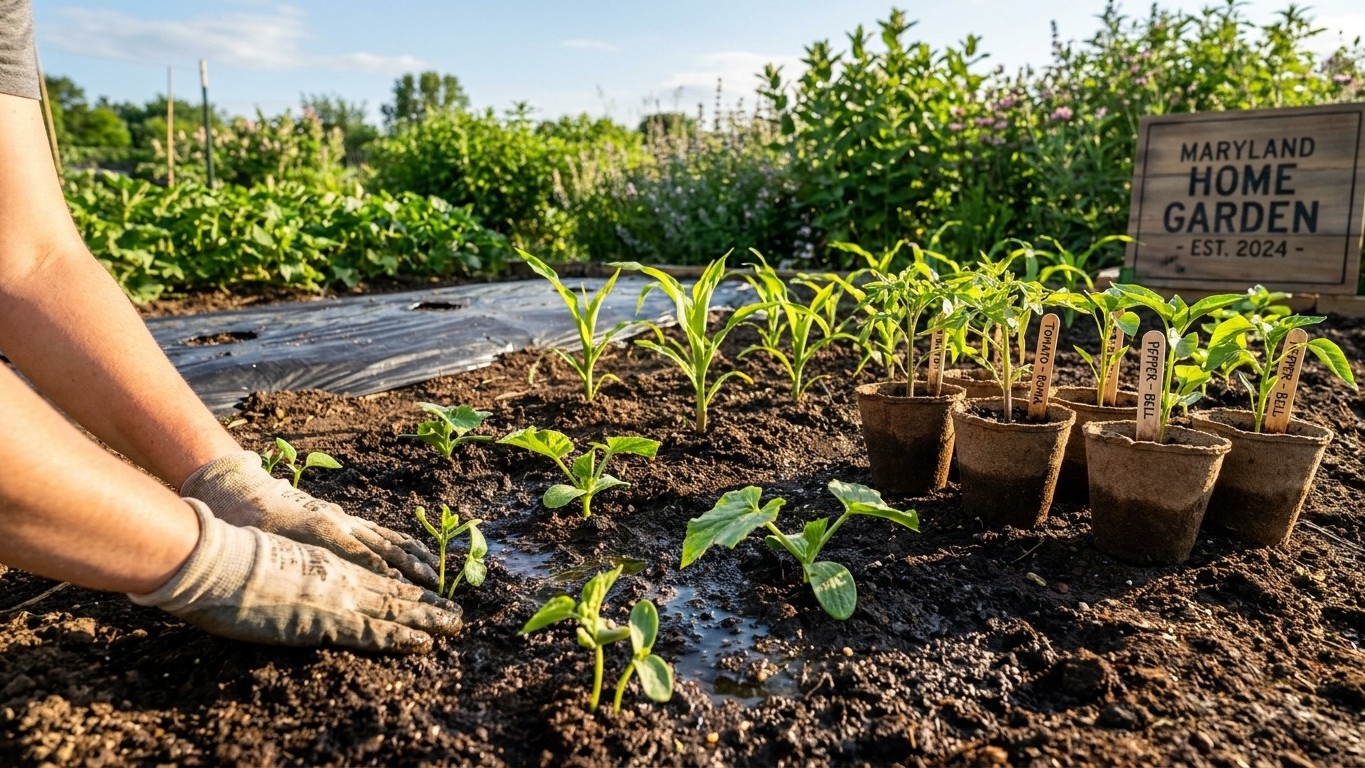

June in Maryland means the frost window is behind you. With the last spring frost falling between April 3 and April 16 in most of the state, the soil has had weeks to warm, and this is the month to get warm-season crops into the ground: beans, squash, cucumbers, melons, sweet corn, and sweet potato slips, along with a second wave of heat-tolerant greens.
What goes in the ground in June

The calendar isn’t what decides this month, soil temperature does. By June, ground temperatures across most of Maryland sit well above the 60F to 65F threshold that warm-season seeds need to germinate reliably. That’s a wide margin past the April 3 to April 16 last-frost window recorded for the state, which means the risk calculus has flipped: the danger now isn’t cold, it’s heat stress on cool-season crops that lingered too long.
Direct-sow bush beans, pole beans, sweet corn, cucumbers, summer squash, winter squash, pumpkins, and okra straight into garden beds. These germinate fast in warm soil and don’t transplant well anyway, so seeding in place is the standard approach. Melons and cantaloupe can also go directly into the ground if the bed has been pre-warmed with black plastic or simply left to bake for a week or two.
Transplants are the other half of the picture. Tomatoes, peppers, eggplant, and basil should already be hardened off and ready to move outdoors if that hasn’t happened yet. Sweet potato slips go in now too, pressed into loose, well-drained soil where they’ll have the full length of the season to bulk up. Herbs like basil, dill, and cilantro can be direct-sown or transplanted; cilantro will bolt fast in June heat, so treat it as a quick, short-lived crop rather than a season-long staple.
One caution on timing: winter squash and pumpkins need a long runway, often 90 to 120 days to maturity, so seeding them in the second half of June instead of the first can push harvest dangerously close to the first fall frost window of October 26 to November 5. Earlier in the month is safer for anything with a long maturity count.
Gardeners in Garrett and Allegany counties, where elevation delays warming, should watch their own soil rather than assume the statewide window applies exactly. A soil thermometer pushed 3 to 4 inches deep gives a better answer than the date on the wall.
What to start under cover
June is when fall brassicas get their start indoors or in a shaded nursery bed, and the math runs backward from the first fall frost rather than forward from spring. With the first frost landing between October 26 and November 5, and broccoli or cabbage needing roughly 60 to 100 days from transplant to harvest depending on variety, seeds started indoors in mid-to-late June and transplanted out in July land right in that window with room to spare.
Cabbage, broccoli, and cauliflower for a fall crop should be started under cover now, ideally somewhere shaded during the hottest part of the day since these seedlings resent heat stress at the germination stage. A cold frame with the lid propped open, or a shaded corner of a porch, works better than a sunny windowsill in June.
The two ways this goes wrong are worth naming plainly. Start too early, in the heart of the month’s heat, and seedlings stretch into leggy, weak plants that struggle once transplanted. Start too late, past the first week or two of July, and the maturity clock runs out before the fall frost arrives, leaving heads that never fully form. Splitting the difference by starting in the back half of June, with transplanting planned for mid-July, gives the safest buffer on both ends.
Fall lettuce and spinach can also be started under cover now if you have a spot that stays cooler than open garden soil, since both germinate poorly once soil temperatures climb into the 80s.
What is ready to pick
June is a transition harvest month in Maryland, closing out the spring crops while the first warm-season vegetables are still weeks away. Garlic planted the previous fall often signals its readiness late in the month when the lower leaves begin to yellow and dry, a sign it’s time to stop watering and prepare to pull bulbs for curing.
Spring greens like lettuce and spinach are on borrowed time once June heat sets in. Harvest them promptly, since both bolt and turn bitter once daytime temperatures push consistently into the 80s. Peas, especially snap and shelling types planted in early spring, typically finish their run in June; pods that snap crisply and fill out fully are ready, while ones left too long turn starchy.
June-bearing strawberries hit their peak here, with berries fully red (not just blushed) and pulling free from the stem with a gentle tug being the sign to pick. Early cabbage and kale planted in spring can also be harvested through the month, with kale improving in flavor once nights are still cool early in June but turning tougher as heat builds.
Garlic scapes, the curling flower stalks that hardneck garlic sends up, are worth cutting in early-to-mid June regardless of when the bulbs themselves will be ready. Removing them redirects the plant’s energy into bulb size, and the scapes themselves are edible, with a milder garlic flavor good for cooking.
The jobs that matter this month
Staking and caging need to happen now, before tomato and pepper plants sprawl past the point where support can be added without damaging stems and roots. A tomato staked in June grows upright and stays disease-free longer than one left to flop onto damp soil later.
Mulching is just as time-sensitive. Applying 2 to 3 inches of straw, shredded leaves, or wood chips around warm-season crops now locks in soil moisture before the hottest stretch of summer arrives and suppresses the weeds that compete hardest with young transplants. Skipping this step in June often means fighting both drought stress and weeds simultaneously by midsummer.
Watering rhythm matters more in June than almost any other job. Deep, infrequent watering, roughly 1 to 1.5 inches per week delivered in one or two sessions rather than daily light sprinkles, trains roots to grow deep and makes plants more resilient when July heat arrives. Shallow, frequent watering does the opposite, encouraging roots to stay near the surface where they dry out fast.
Pest scouting starts in earnest this month. Japanese beetles typically begin emerging in June and will target beans, roses, and grapevines first. Squash vine borer moths lay eggs at the base of squash stems around this time too, so checking stem bases weekly and handpicking eggs catches the problem before larvae bore in. Colorado potato beetle larvae also show up on potato foliage now and are far easier to manage by hand-picking in June than after populations explode in July.
Succession sowing keeps the harvest coming. Reseeding bush beans and sweet corn every two to three weeks through June extends the picking window well into late summer instead of producing one large glut followed by nothing.
What not to do in June
The classic June mistake in Maryland is treating cool-season crops as if they still have time. Lettuce, spinach, and peas left in the ground past their window bolt, turn bitter, or stop producing altogether once daytime highs settle into the 80s. Pull them and replace the space with something heat-tolerant rather than hoping they’ll rally.
Overwatering is the second trap. June’s warmth tempts gardeners into watering daily “just in case,” but soil that stays consistently wet invites fungal disease, particularly on tomatoes and squash where damp foliage sits overnight. Watering at the base of the plant in the morning, rather than overhead in the evening, cuts that risk substantially.
Nitrogen timing trips people up too. Heavy nitrogen fertilizer applied to tomatoes and peppers once they’ve started flowering pushes lush green growth at the expense of fruit set. A soil test, rather than a routine feeding schedule, tells you whether nitrogen is even needed at this point in the season.
Transplanting during the hottest part of the day is another avoidable error. Moving seedlings into the ground at midday in June sun stresses them badly; late afternoon or an overcast day gives roots a chance to settle before facing full sun. And skipping the hardening-off process, moving seedlings straight from indoor conditions to full outdoor sun and wind, often results in scorched or wind-damaged transplants that take weeks to recover, if they recover at all.
Checking this against your own county
A statewide frost window is a starting point, not a guarantee for any specific yard. Maryland’s geography stretches from the mountains of Garrett and Allegany counties, where frost lingers weeks longer than the state average, to the milder Eastern Shore, where the growing season often opens earlier and closes later. Elevation, proximity to the Chesapeake Bay, and even which side of a hill a garden sits on can shift these dates meaningfully.
The University of Maryland Extension publishes county-level guidance and planting calendars that account for these local differences far than any statewide figure can. Checking their resources for your specific county is worth doing before locking in a planting date based on general averages alone.
Common questions
Is it too late to plant tomatoes in Maryland in June?
No. Tomato transplants set out through June still have plenty of season ahead of them before the first fall frost between October 26 and November 5, though earlier in the month gives more buffer for a full harvest.
Can I still direct-sow beans in Maryland in June?
Yes, and succession sowing every two to three weeks through the month keeps a steady harvest going rather than one large flush followed by a gap.
Why is my spinach bolting in June?
Spinach and lettuce bolt once daytime temperatures push consistently into the 80s, which typically happens in Maryland by mid-to-late June. This is a heat response, not a sign of poor soil or care.
When should I start fall broccoli seeds indoors?
Starting in the second half of June, for transplanting outdoors in July, generally lands broccoli’s maturity window safely before the first fall frost recorded between October 26 and November 5.