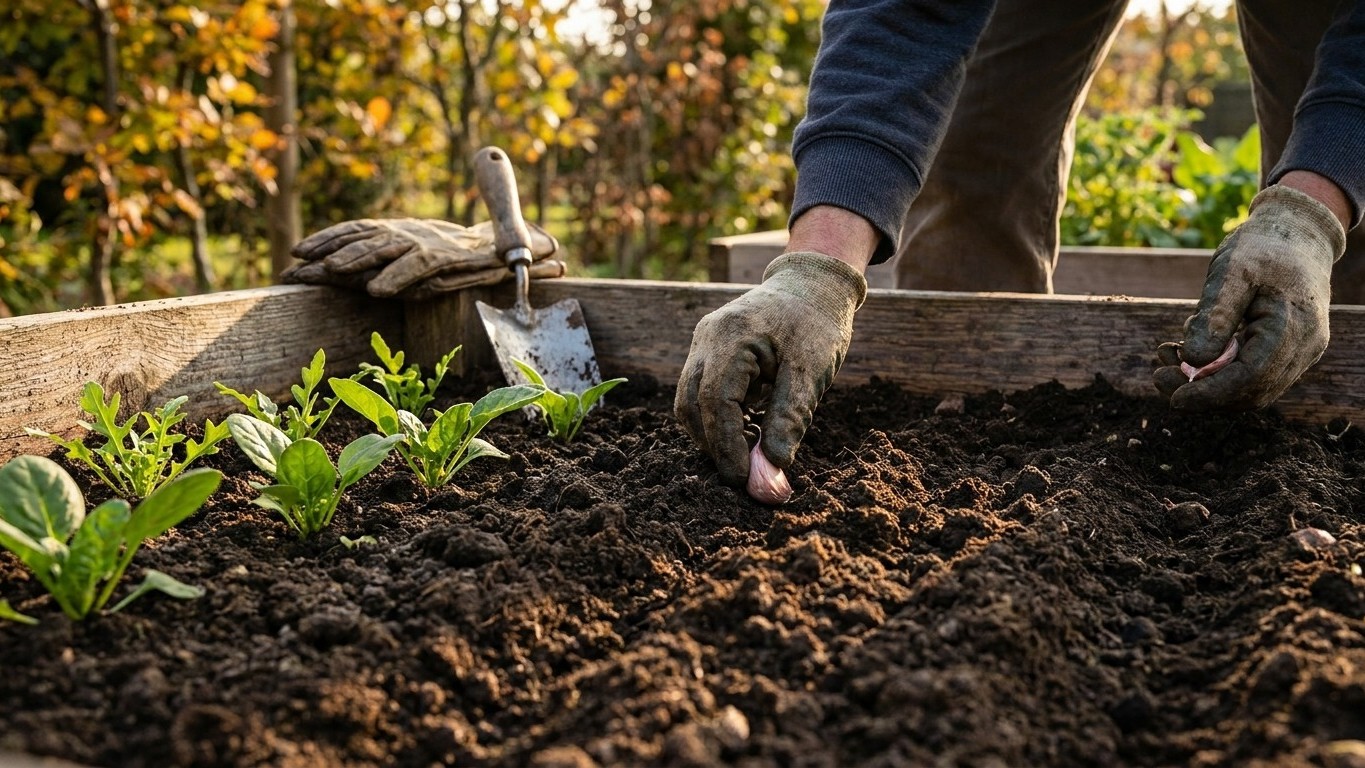

September in Michigan sits in the final stretch before the first fall frost, which lands between October 6 and October 21 in zone 6a according to MSU Extension’s Michigan Garden Calendar. That gap of roughly five to seven weeks still allows quick-maturing greens, fall garlic, and cover crops to go in the ground, while anything that needs a full season is done for the year.
What goes in the ground in September

The frost date does the deciding here, not the calendar page. Count backward from the first fall frost window of October 6 to October 21 and you get somewhere between five and seven weeks of open-ground growing time left, depending on where in the state you garden. Crops that mature in 30 to 45 days still have a real shot. Crops that need 60 days or more are a gamble unless you plan to cover them.
Spinach, arugula, mustard greens, radishes, and baby lettuce all fall into the safe category. Direct-sow them now and most will be ready to cut before the cold settles in for good. Turnips and beets sown early in the month can also size up in time, especially the smaller, quick varieties rather than the long-storage types bred for a full season.
Garlic and shallots are the other reliable September planting, though many Michigan gardeners push garlic cloves into the ground a bit later, once the soil has cooled further. If your beds are workable and you want to get ahead, individual cloves can go in through the back half of the month in the warmer parts of the Lower Peninsula. Cover crops like winter rye and crimson clover are worth scattering over any bed that’s finished producing. They hold the soil through winter and feed it back in spring.
What’s a gamble
Beans, squash, cucumbers, and anything in the tomato family are done as direct-sown crops for the season. The days left before frost simply aren’t enough to carry them from seed to harvest, and a warm stretch of weather in early September doesn’t change that math. Save those seeds for spring.
What to start under cover
Season extension is where September earns its keep. A cold frame or a length of row cover fabric can buy two to three extra weeks past that first frost date, which turns a marginal crop into a sure thing. Kale, spinach, and mâche started now under cover will often keep producing into November, long after the same crops left exposed have given up.
The arithmetic works the same way as open-ground planting, just with more slack. Take the first fall frost window, subtract the days to maturity listed on the seed packet, and add a week or two of cushion since covered plants grow a little slower as daylight shortens. A 40-day lettuce sown in early September, under a low tunnel, should finish well before the cold gets serious.
Two mistakes show up every year. The first is starting too early, usually because the calendar says “fall planting” and the gardener jumps the gun while soil is still warm from late summer. Seedlings started in that heat can bolt or stall before they ever get the benefit of cooler fall weather. The second is starting too late, waiting for a cool snap that never quite arrives, then running out of daylight and warmth before the crop matures. Michigan’s days shorten fast through September, and plant growth slows well before the actual frost hits. Err on the early side within the month rather than the late side.
Indoors, this is also the window to start hardy greens in trays for transplanting into cold frames, and to begin sprouting or microgreen trays that don’t depend on outdoor conditions at all.
What is ready to pick
September is the heaviest harvest month in a Michigan garden. Tomatoes are still coming in steadily, peppers are hitting full color, and sweet corn planted in late spring is finishing its run. Winter squash and pumpkins are sizing up and starting to cure on the vine, and apples are dropping from trees across the state depending on variety.
Knowing when to pick matters as much as knowing what to pick. Winter squash is ready when the rind resists a thumbnail press and the stem has started to dry and turn brown. Pumpkins follow the same rule. Apples are ready when a gentle upward twist releases the fruit easily from the branch, known as the slip test, rather than requiring a hard pull.
Onions signal their finish by tipping over at the neck and drying down; once most of a bed has flopped, it’s time to pull the whole row and let them cure somewhere dry and airy for a couple of weeks before storage. Potatoes can be dug once the foliage has died back, though a light frost on the tops doesn’t hurt the tubers underground.
Anything left on the vine past the first frost window is at risk. Unharvested squash and pumpkins caught by even a light frost can develop soft spots that turn to rot within days in storage, so this is the month to clear vines rather than let them ride out one more warm stretch.
The jobs that matter this month
September rewards gardeners who treat it as a closing month rather than a coasting one. Clearing spent bean and cucumber vines now, rather than letting them sit through a few more warm days, cuts off overwintering sites for squash vine borers, cucumber beetles, and cabbage worms before those pests tuck in for the season.
Watering rhythm shifts here too. Cooler nights and shorter days mean beds dry out slower, so the twice-a-week schedule that worked in July can drown roots in September if it isn’t scaled back. Check soil moisture with a finger rather than a fixed schedule.
Succession sowing still has one real shot left this month for anything under 40 days to maturity, radishes and baby greens especially. After the third week of September in most of the state, that window closes for open-ground sowing.
Curing and storing crops deserves as much attention as planting does. Onions and garlic need a dry, ventilated spot out of direct sun for two to three weeks before they go into long-term storage. Winter squash cures best at room temperature for a week or two before moving to a cool, dry space. Skipping this step is the single most common reason stored crops rot early.
Soil that’s finished producing for the season should get either a cover crop or a layer of mulch, not be left bare. Bare soil through a Michigan winter erodes, compacts, and loses organic matter that would otherwise carry over into spring beds. This is also a reasonable month to pull a soil sample and send it in for testing, since results guide what amendments to apply before the ground freezes.
What not to do in September
The most common mistake is treating a warm afternoon as license to plant something that needs a full season. Air temperature is a poor guide. Soil temperature and the shrinking daylight window matter more, and neither one cares how warm it feels at 2pm.
Fertilizing with nitrogen late in the month is another frequent misstep, especially on lawns, perennials, and fruit trees. Nitrogen pushes soft new growth, and that growth doesn’t have time to harden off before the first frost arrives. The result is dieback that a plant would have avoided entirely if it had simply been left to slow down naturally. If feeding is needed at all this time of year, a low-nitrogen, higher-potassium formula supports root and hardiness development instead.
Pruning fruit trees now is worth avoiding as well. Late-season pruning cuts stimulate new growth right when the plant should be shutting that process down for winter, leaving fresh wounds and tender shoots exposed to the first hard cold. Save structural pruning for the dormant season.
Uncovering cold frames or row cover after a stretch of mild days is a habit that backfires more often than not in Michigan, where a warm week in September can flip into a frost warning within 48 hours. Leave protective covers in place, or vent them during the day and close them back up at night, rather than pulling them off entirely until the season is clearly and consistently past frost risk.
Checking this against your own county
Michigan spans hardiness zones 4a through 6b on the USDA Plant Hardiness Zone Map, and that range alone tells you a state-wide planting month is a starting point, not an instruction. A frost window built around zone 6a conditions can run two to three weeks later than what a gardener in the northern Lower Peninsula or the Upper Peninsula actually sees. Elevation, distance from the Great Lakes, and local lake-effect patterns all shift these dates in ways a single statewide figure can’t capture.
Before locking in a planting date, check conditions against your own county through MSU Extension’s outreach office directory, which connects to county-level guidance and the state’s own planting calendar resources.
Common questions
Can I still plant tomatoes in Michigan in September?
No. Tomatoes need a full growing season and won’t mature from seed or even from a young transplant before the first fall frost arrives between October 6 and October 21 in zone 6a. Any tomato plants still in the ground this month should be watched closely and picked green if frost threatens.
Is it too late to plant garlic in September?
Not necessarily, though many Michigan gardeners wait until the soil has cooled further before planting cloves. If you plant early in the month, keep an eye on soil temperature rather than rushing simply because the calendar page says fall planting.
What vegetables can handle a light frost in Michigan?
Kale, spinach, mâche, and many hardy greens tolerate a light frost well and can even taste sweeter afterward as the plant converts starches to sugars. Root crops like carrots and beets left in the ground also improve in flavor after a first light frost.
Why does the frost date range vary so much across Michigan?
The Great Lakes moderate temperatures near the shoreline, while inland and northern areas cool faster and see frost earlier. That’s why MSU Extension’s frost-free date guidance is presented as a range rather than a single fixed day, and why checking a local county extension office gives a more accurate window than the statewide average.
Gardeners who plant by the Moon can check the September 2027 moon planting calendar, a tradition rather than a proven method.