
Early May in Montana still sits inside the frost window for much of the state, so the safe planting list for this month splits in two: hardy crops that shrug off a cold night, and everything else that has to wait for soil, not the calendar, to warm. Using Billings as a reference point, the last spring frost typically falls between April 29 and May 10. That single ten-day stretch decides almost everything below.
What goes in the ground in May

The frost window itself is the tool here, not a date on a wall calendar. Around Billings, the 30 to 70 percent freeze probability band runs from April 29 to May 10, which means the first third of the month still carries a real chance of a 32°F night in a milder valley, and mountain valleys elsewhere in the state can see frost even later. Soil temperature matters as much as air temperature: cold, wet ground rots seed before it germinates, no matter how warm the afternoon feels.
For the first half of the month, stick to what tolerates a light frost. Hardy greens like spinach, lettuce, and kale go in as transplants or direct-sown seed without much drama. Peas can go into the ground as soon as it’s workable and don’t mind a cold snap. Alliums are forgiving too: onion sets and shallots handle the swing between a warm afternoon and a chilly night better than almost anything else in the garden. Root crops such as carrots, beets, and radishes are also fair game early, since their growing point stays underground where frost does less damage.
Potatoes sit in a middle zone. Seed potatoes can go in from early May onward, but a hard freeze after the first shoots emerge will blacken the foliage, so a light covering of soil or straw over emerging rows is cheap insurance.
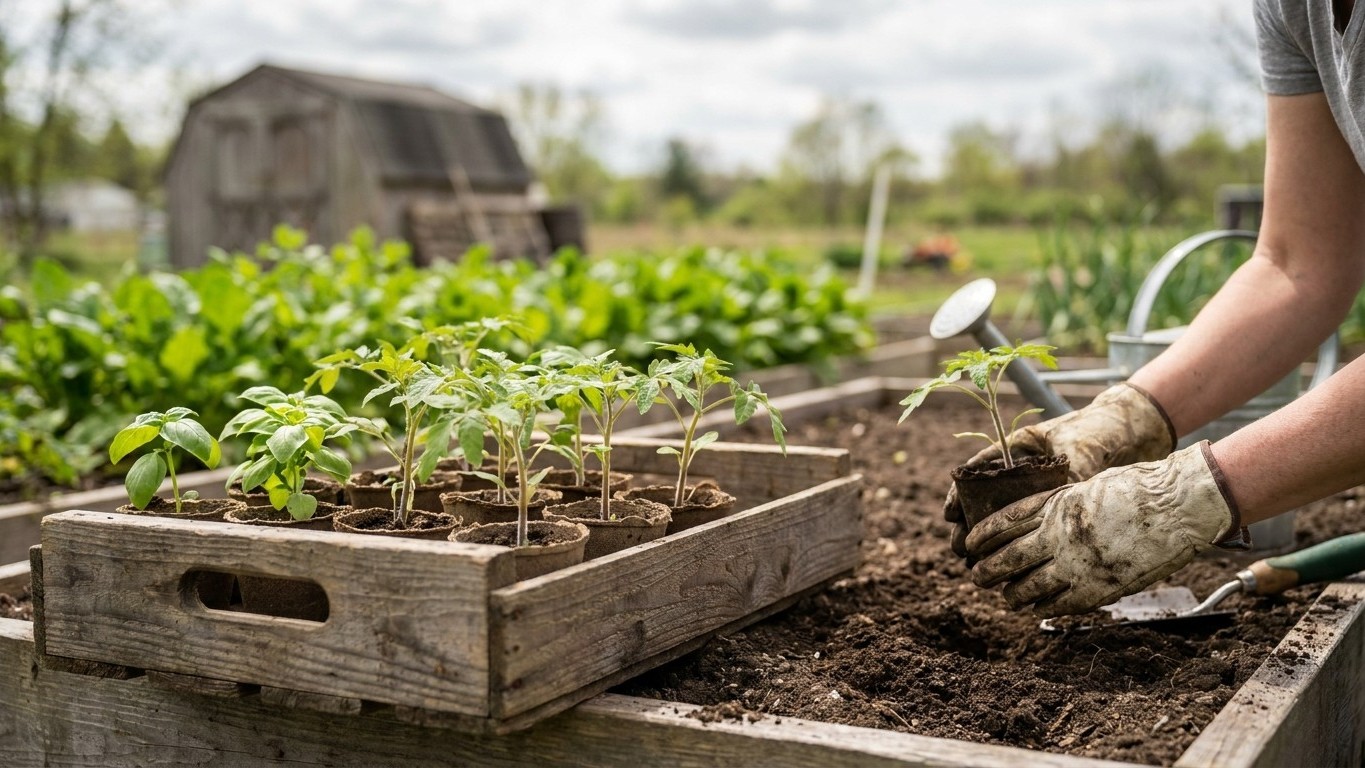
Warm-season crops are the gamble. Beans, corn, squash, cucumbers, and anything in the tomato or pepper family should wait until after that April 29 to May 10 window has closed, and even then, a grower at higher elevation or farther from a moderating valley should push the date later rather than earlier. Planting a tomato transplant into 55°F soil doesn’t kill it outright, but it stalls the plant for weeks while a neighbor’s tomato, planted two weeks later into warmer ground, catches up and passes it.
What to start under cover
Working backward from the frost window is the only arithmetic that matters here. If the target transplant date for peppers or tomatoes is somewhere after May 10, and those crops need roughly six to eight weeks indoors before they’re ready to go outside, the sowing date lands in mid-to-late March for most of the state, which means by May the window for starting those particular crops indoors has already mostly closed for anyone aiming at an early-summer transplant.
What still makes sense to start under cover in May is anything meant for a later transplant or a fall harvest: a second round of brassicas like broccoli or cabbage for a fall crop, melons and winter squash for growers who want a head start before setting them out in early June, and successive batches of lettuce or basil kept a few weeks apart so the whole crop doesn’t mature at once.
The two ways this goes wrong are almost mirror images of each other. Start too early relative to the last frost window and the seedlings sit in small pots far longer than they should, turning leggy, rootbound, and stressed before the ground and air are actually ready for them. Start too late and the plant runs out of growing season before the first fall frost, which lands between October 1 and October 14 around Billings, meaning a crop that needs 90 days from transplant has almost no margin for a cool, slow summer.
A cold frame or unheated hoop house buys real flexibility during this stretch. It lets a grower push both ends of that calculation, starting slightly earlier without leggy stems and holding transplants slightly longer without a setback once they finally go into open soil.
What is ready to pick
Outdoor harvest in May is thin almost everywhere in the state, and that’s worth saying plainly rather than padding the list. What’s actually coming in tends to be perennial rather than annual. Established asparagus beds, meaning ones that have been in the ground three years or more, start sending up spears once soil temperatures climb, and rhubarb stalks thicken enough to pull by mid-to-late month in most valleys. Chives and other perennial herbs that overwintered in place green up early and can be cut as soon as there’s enough leaf to spare.
Anything sown into a cold frame or under row cover back in April, like mesclun mix, spinach, or early radishes, is often ready for a first cutting by now, and that protected harvest can carry a household through the gap before the main garden produces anything.
The other source of food this month isn’t in the garden at all. It’s in the root cellar or pantry. Stored winter squash, potatoes, and onions from the previous season need a check now: winter squash that feels soft near the stem end or shows a sunken, water-soaked spot is on its way out and should be used first. Potatoes that have started sprouting eyes are still edible once the sprouts are removed, but they’re declining fast and shouldn’t sit much longer. Onions gone soft at the neck are the first to go bad in a stored batch, so sorting through the bin now and pulling the failing ones saves the rest.
The jobs that matter this month
Soil that’s workable but not yet planted needs attention before it’s asked to grow anything. A handful squeezed and released should crumble, not clump; working wet clay soil now compacts it for the rest of the season, so waiting an extra few days after rain pays off more than rushing the calendar ever does.
Hardening off is the job most likely to get skipped and most likely to cause losses when it is. Seedlings raised indoors or in a greenhouse need seven to ten days of gradually longer outdoor exposure, starting in shade and working up to full sun and open air, before they go into the ground for good. Skip that step during this frost-uncertain stretch and a plant that survived indoors all spring can scorch or collapse in a single afternoon.
Peas and anything climbing need their supports in place now, before the vines sprawl and tangle on the ground. Staking after the fact means untangling stems that have already taken a set in the wrong direction. Mulch goes down once the soil has warmed rather than before, since mulch laid too early traps cold in ground that still needs to heat up.
Succession sowing of quick crops like radishes and lettuce, planted every ten to fourteen days rather than all at once, spreads the harvest instead of dumping it all in a two-week window. Pest scouting matters too: cutworms and flea beetles emerge as soil warms, and catching the first chewed seedling now is a lot cheaper than losing a whole row of transplants two weeks later. Spring-flowering shrubs, once they’ve finished blooming, can be pruned back without sacrificing next year’s flowers, since they set next season’s buds on new growth that follows this pruning.
What not to do in May
The most common mistake this month is trusting the air temperature over the soil and the calendar over the frost window. A run of 70°F afternoons in early May feels like summer, but if that stretch falls before April 29 to May 10 has fully passed, a tomato or pepper set out during that warm spell is still one clear, still night away from frost damage. The fix is patience: wait until the window has closed, and at higher elevation, add extra days on top of that.
Pulling row cover or cold frame lids off too soon after a mild week is the second classic error. A string of gentle nights convinces a grower the risk has passed, and then a late cold snap, entirely within the normal range for this frost window, undoes weeks of protected growth in a single night. Keep the covers within reach until the date has genuinely passed, not just until the weather feels warm.
Heavy nitrogen feeding at the wrong moment is the third trap. Freshly transplanted seedlings need their roots to establish before they’re pushed into fast top growth, and a nitrogen-heavy feed right at transplant time encourages soft, leafy growth at the expense of the root system the plant actually needs to survive a dry June. Hold off on nitrogen until the plant shows a few weeks of steady growth, and lean on compost or a balanced feed at planting time instead.
Checking this against your own county
A state-wide frost window is a starting point, not an instruction specific to any one yard. Montana’s elevation swings, the moderating effect of a few larger lakes, and the real difference between the state’s northern and southern counties can shift a planting date by two or three weeks in either direction from the Billings reference used here. A valley floor at 3,000 feet and a bench at 5,500 feet in the same county can be on entirely different clocks.
The most reliable way to narrow that range is to check local data directly. The Montana State University Extension Service publishes county-level guidance and a planting calendar built for the state’s specific growing regions, and that’s the resource worth checking before committing seed to ground.
Gardeners who plant by the Moon can check the May 2027 moon planting calendar, a tradition rather than a proven method.
Common questions
When is it safe to plant tomatoes in Montana in May?
Only after the local last-frost window has passed. Around Billings that window runs April 29 to May 10, and growers at higher elevation or in a known cold pocket should wait even longer.
Can I plant potatoes in Montana in May?
Yes. Seed potatoes tolerate the cooler soil of early May, though a light hilling of soil over emerging shoots protects them if a late frost arrives before the window closes.
What vegetables can I direct sow in Montana in May?
Peas, spinach, lettuce, carrots, beets, and radishes handle direct sowing early in the month. Beans, corn, and squash should wait until after the frost window has passed and soil has warmed.
Does Montana frost after May?
Some mountain valleys can see frost outside the typical window in any month, and the general first fall frost for the Billings area runs October 1 to October 14, but a late spring frost right at the edge of the April 29 to May 10 range is not unusual either.