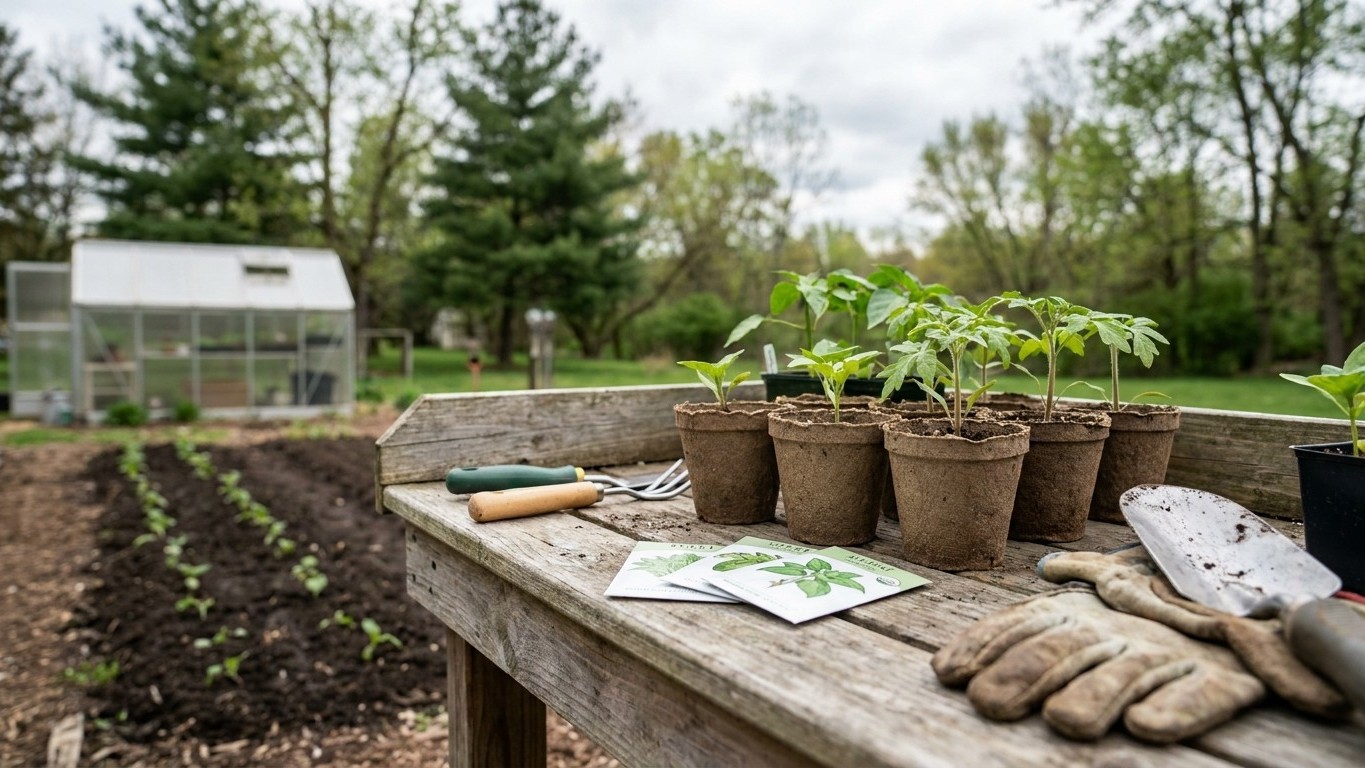

Nebraska’s last spring frost falls somewhere between April 12 and April 23, depending on where in the state you garden, so April is a month split in two. Early April still carries real frost risk almost everywhere; late April starts clearing it in the southeast. That means cold-hardy crops go in now, tender ones wait, and a lot of the real work happens under cover or on the calendar rather than in open dirt.
What goes in the ground in April

Soil temperature decides this month, not the date on the wall. Cold-hardy vegetables germinate and grow in soil that’s still chilly, while anything in the squash or tomato family will simply sit and rot if the ground hasn’t warmed enough. A soil thermometer pushed two inches down tells you more than any planting chart.
Peas are the classic April crop across Nebraska. They germinate in soil as cool as the low 40s Fahrenheit and actually prefer to mature before summer heat arrives, so early April sowing (even into soil that still feels cold to the hand) is standard practice. Spinach, lettuce, and other leafy greens follow the same logic: they tolerate a light frost once established and bolt in heat, so getting them in early is an advantage, not a risk.
Onion sets and seed potatoes belong in the same window. Potatoes can handle soil in the mid-40s and shrug off a late frost on emerging foliage, though a hard freeze after sprouts appear will burn the tops back (they usually regrow from the tuber). Radishes, carrots, and beets can go in as soon as soil is workable and not sticky with mud. Kale, cabbage, and broccoli transplants tolerate short cold snaps and are commonly set out well before the frost window closes.
What doesn’t belong in open ground yet: tomatoes, peppers, eggplant, cucumbers, squash, melons, and beans. All of these are frost-tender at every stage and most also stall in cold soil even without a freeze, so planting them before the April 12 to April 23 window has passed in your area is a gamble that rarely pays off.
| Crop | April status | Why |
|---|---|---|
| Peas | Direct-sow now | Germinates in cold soil, matures before heat |
| Spinach, lettuce | Direct-sow now | Frost-tolerant, bolts in warm weather anyway |
| Onion sets, seed potatoes | Plant now | Tolerates cool soil and light frost on tops |
| Kale, cabbage, broccoli transplants | Set out now | Withstands short cold snaps |
| Tomatoes, peppers, squash, beans | Wait | Frost-tender, stalls in cold soil |
What to start under cover
Counting backward from Nebraska’s last-frost window of April 12 to April 23 is how seed-starting dates actually get set, not by picking a date off a seed packet cover. Tomatoes and peppers need six to eight weeks indoors before they go outside, which means they should already be growing by the time April opens; if they aren’t started yet, it’s not too late, but the transplants will be smaller when frost finally clears.
Squash, cucumbers, and melons work differently. They resent root disturbance and grow fast, so they’re usually started only three to four weeks before their outdoor transplant date, which lands after the frost window closes, sometime in May depending on the county. That puts the ideal indoor start for these crops right in early-to-mid April for most of the state.
The two ways this goes wrong are mirror images of each other. Start tomatoes too early (ten or twelve weeks out) and they turn leggy and rootbound in their pots long before the ground is ready, forcing awkward up-potting or stunted transplants. Start squash and melons too late, waiting until the calendar says frost has passed, and there’s no head start left; the plants might as well have been direct-sown. Working backward from the actual frost window for your county, rather than a fixed date that ignores it, avoids both mistakes.
Cold frames and low tunnels stretch what’s possible this month too. Hardening off transplants under a cold frame for a week before they go into open beds cuts down on transplant shock, and a low tunnel over an early bed of greens or brassicas buys another week or two ahead of the unprotected garden.
What is ready to pick
April is thin for fresh harvest in Nebraska gardens, and it’s honest to say so. Most of what comes off the plant this month grew somewhere other than open, unprotected soil.
Overwintered crops lead the list. Kale and leeks that survived under mulch or snow cover often taste sweeter after cold exposure and are ready to pull as soon as the ground softens. Cold-frame greens, spinach and lettuce started in late winter under cover, are frequently the first real salad of the season, sometimes ready by early-to-mid April. Rhubarb sends up its first stalks toward the end of the month in much of the state, and early stalks are the most tender of the year. Asparagus, where an established bed exists, can start pushing spears late in April in warmer parts of Nebraska, though most beds won’t hit stride until May.
Indoors, sprouts and microgreens fill the gap in as little as a week from seed, which makes them the fastest fresh food a Nebraska garden produces in early spring.
This is also the month to walk the root cellar or basement storage shelves. Stored potatoes that have started sprouting eyes should be used first or, if firm, planted as seed potatoes. Onions going soft at the neck and squash with any soft spots or mold need to be used immediately or composted; one turning squash can spread rot to its neighbors within days in a warm room.
The jobs that matter this month
April rewards work that has nothing to do with seeds in the ground. Soil preparation tops the list: as soon as a handful of soil crumbles instead of forming a mud ball, beds can be turned, amended with compost, and raked ready. Working wet clay soil now instead of waiting for it to drain properly is one of the fastest ways to ruin its structure for the whole season.
Dormant pruning of fruit trees and berry canes is still on the table early in the month, but the window is closing. Once buds swell and break, pruning cuts heal more slowly and invite disease; getting apple, pear, and stone fruit trees pruned before that happens matters more than almost any other April task.
Asparagus and rhubarb beds need a spring feeding and a weeding pass before growth takes off, since both crops are notoriously hard to weed once established stalks are up. Staking and trellis materials for peas and, later, tomatoes are worth setting up now rather than after plants have flopped over; a pea trellis installed after the vines are already sprawling never works as well.
Succession sowing keeps the harvest coming rather than arriving all at once. A new short row of radishes, lettuce, or spinach every ten to fourteen days through April spreads out the crop instead of dumping it all in a two-week window. Pest scouting starts now too: aphids on early brassicas and cutworms around new transplants are far easier to manage caught in the first week than after a colony establishes.
Tools deserve a look before the season’s real demands hit. A sharpened hoe and pruners, a hose checked for winter cracks, and a compost pile turned to speed up its breakdown all pay off in May and June when there’s no time to stop and fix equipment.
What not to do in April
The single most common April mistake in Nebraska is planting warm-season crops outdoors because a stretch of 70-degree days felt like summer had arrived. Air temperature is not soil temperature, and it’s not frost risk either; a warm afternoon can be followed by a 28-degree night well within the state’s April frost window. Tomatoes, peppers, and squash set out on the strength of one nice week are gambling against a window that runs, on average, from April 12 to April 23.
A close second is pulling row covers, cold frame lids, or mulch off beds too early after a mild spell. That protective layer is doing its job precisely on the cold nights that follow a warm day, and stripping it off “because it looked done” exposes tender greens and emerging perennials to a freeze they’d otherwise have shrugged off.
Nitrogen timing trips up a lot of gardeners too. Heavy nitrogen feeding on lawns or perennial beds too early in spring pushes soft, lush top growth before roots have caught up, and that growth is exactly what a late frost damages worst. A lighter feeding, or waiting until growth is well underway, produces sturdier plants.
Tilling or digging wet soil is the other classic error. Soil worked while still soggy compacts into clods that can take a full season to break back down, undoing months of good structure in a single afternoon with a shovel.
Checking this against your own county
A state-wide April calendar is a starting point, not an instruction, and Nebraska is wide enough that it matters. The USDA Plant Hardiness Zone Map places the state anywhere from zone 4a to zone 5b, and that range alone can shift planting dates by two to three weeks between the Panhandle and the southeast corner. Elevation and local terrain move the frost window further still; a low-lying valley or a spot far from any city’s heat can see frost days later than the April 12 to April 23 range cited here, which comes from one reference weather station, not the whole state.
The most reliable next step is checking that window against your own county through the University of Nebraska-Lincoln’s extension service at extension.unl.edu, which publishes county-level guidance that accounts for these local differences.
Common questions
Is it too late to plant peas in April in Nebraska?
No. Peas are one of the better April crops precisely because they tolerate cool soil and light frost, and they’re commonly sown across the state well into mid-April without issue.
Can tomatoes go outside in April in Nebraska?
Not safely in most of the state. The last-frost window runs from April 12 to April 23 at the reference weather station used for this page, and tomatoes are frost-tender at every stage, so outdoor transplanting typically waits until May.
What vegetables tolerate a late frost in Nebraska gardens?
Spinach, lettuce, kale, cabbage, broccoli, peas, onions, and potatoes all handle a light frost on foliage without serious damage, which is why they anchor the April planting list.
Why does my county’s frost date differ from the state average?
The April 12 to April 23 window cited for Nebraska comes from one airport weather station. Elevation, local terrain, and distance from urban heat can push a garden’s actual last frost later, sometimes by a week or two, which is why checking county-level data through the state extension service matters.