
What to Plant in Nevada in November depends almost entirely on where in the state you’re standing. In the low desert around Las Vegas, garlic, shallots, and hardy greens can still go into open ground. At elevation around Reno, Carson City, and most of rural Nevada, the ground has likely already closed for the season, and the real work shifts to cold frames, dormant plantings, and planning.
What goes in the ground in November

Nevada runs from USDA hardiness zone 4a to 10a on the USDA Plant Hardiness Zone Map, and that range is the whole story this month. A single state-wide planting date doesn’t exist here, because soil temperature, not the calendar, decides whether a seed germinates or rots. In the Las Vegas basin, first fall frost typically lands between December 8 and December 23, based on the 30-70% freeze probability band in NOAA’s 1991-2020 Climate Normals. That’s a desert, urban-heat-island reading, though, taken at the airport, and it runs weeks or months later than what gardeners see in Reno, Carson City, or anywhere with real elevation.
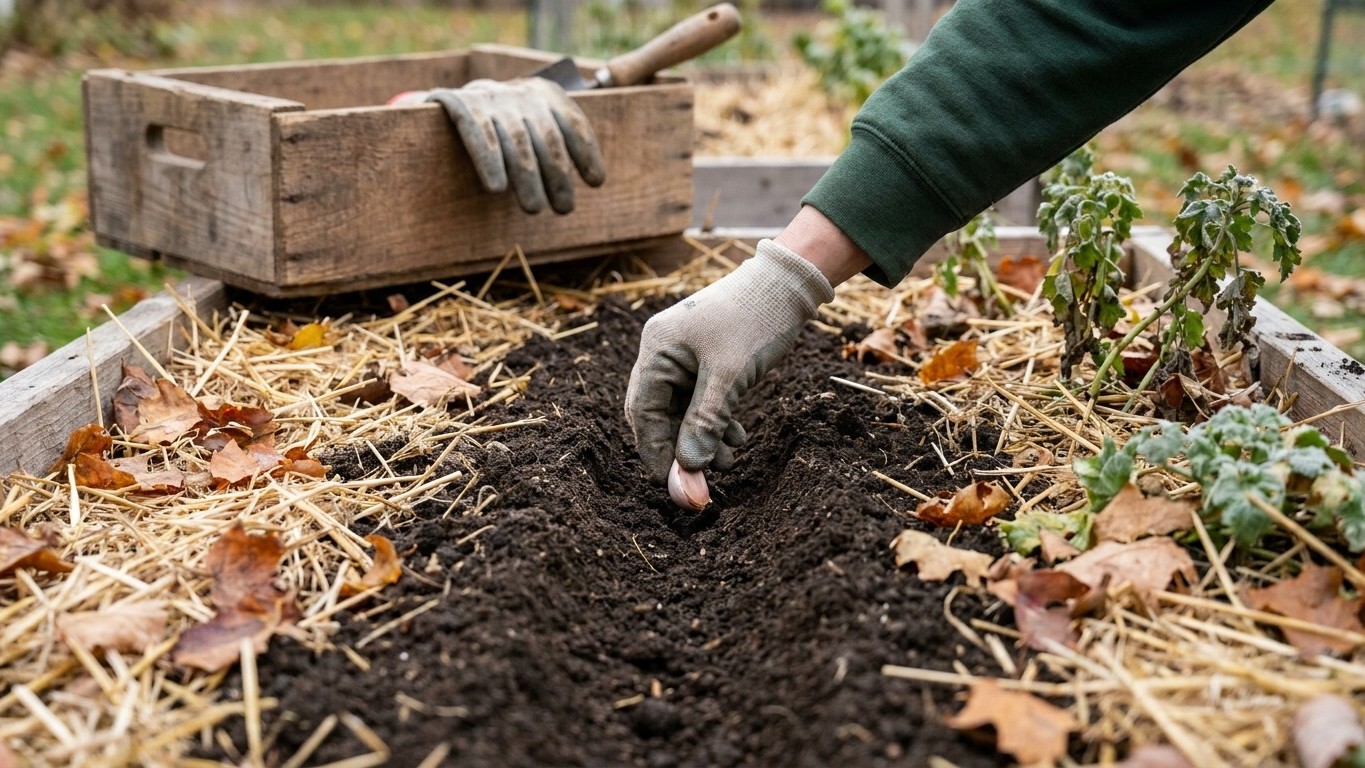
That gap matters. If you’re gardening in the low desert valleys, November still offers a workable window. Garlic and shallots can go into loosened, well-drained soil now, cloves and bulbs pointed up, mulched to buffer the swings between warm afternoons and cold nights. Cold-hardy alliums like bunching onions can follow the same rule. Peas tolerate a light frost and can still be direct-sown where the ground hasn’t hardened. Leafy greens with real cold tolerance, spinach, mâche, and some kales, can go in as transplants if they’ll have four to six weeks before the hard freeze arrives.
At higher elevation, the honest answer is that nothing new goes into open ground this month. The frost has likely already come and gone weeks earlier than the Las Vegas window, and pushing a transplant into cold, wet soil at that point is a losing bet. What does work everywhere in the state, regardless of elevation, is bare-root and dormant planting: fruit trees, roses, and cane fruit go in dormant and settle their roots over winter without pushing top growth into a freeze. Cold frames and low tunnels extend the season for greens by several weeks in any zone. Forcing rhubarb or chicory indoors, in the dark, gives you a harvest when the garden outside is closed.
What to start under cover
Work backward from your local frost window rather than from a date on a calendar. If your area’s first fall frost sits in that December 8 to December 23 range (again, that’s the Las Vegas-basin figure, and higher-elevation gardens should expect theirs weeks earlier), count back the number of weeks a seedling needs to reach a plantable size before that point, then add another one to two weeks of buffer for a cold spell that arrives early. That arithmetic works the same way no matter which zone you’re in; only the start date shifts.
Under cover this month, cold-hardy greens like lettuce, spinach, and mustard can still be started in trays for a cold-frame transplant a few weeks out. Onions and leeks meant for an early spring bed can be started indoors now under lights, since they’re slow growers that need a long head start. Herbs like parsley and cilantro also do well started indoors this month, since both bolt fast once real heat returns but tolerate cool, short days just fine while young.
Two mistakes ruin most of what gets started under cover this time of year. Starting too early leaves you with rootbound, leggy seedlings sitting in small trays for weeks with nowhere to go, since the ground outside isn’t ready and won’t be for a while. Starting too late means the transplant never builds enough root mass before the short, cold days of true winter slow growth to a crawl. Splitting the difference by starting in small batches, a tray every couple of weeks rather than all at once, hedges against guessing wrong on either end.
What is ready to pick
In the low desert, there’s still real harvesting to do. Cool-season crops planted in early fall, things like arugula, radishes, and quick turnips, are likely reaching pickable size now, and root vegetables in particular improve in flavor once the nights turn cold. Check radishes and turnips by feeling for shoulder width at the soil line rather than pulling blind; greens are ready whenever the leaves are big enough to use, since cutting-and-come-again crops don’t have a single harvest moment.
At higher elevation, the outdoor garden has mostly gone quiet, and that’s fine. Kale and leeks left in the ground under a mulch layer or even under snow often survive and stay sweet, since cold actually converts starches to sugars in both crops. Anything under a cold frame, spinach, mâche, hardy lettuce, keeps producing slowly through the cool months and is worth checking every week or so.
Indoors, sprouts and microgreens fill the gap when nothing outside is producing, and they’re ready in a matter of days rather than weeks. This is also the month to go through whatever squash, potatoes, and onions are in storage. Squash with a soft spot or a sweet smell near the stem end is starting to break down and should be used first. Potatoes that have gone green or started sprouting eyes should be pulled from the bin before they spread rot to the rest. Onions with any give when squeezed, rather than firm all the way through, won’t hold much longer.
The jobs that matter this month
The garden work that pays off happens whether or not anything new is going into the ground. Dormant pruning of fruit trees and cane berries is a November job precisely because the plant is asleep: cuts made now don’t push new growth into a freeze the way a late-summer cut would, and you can see the branch structure clearly with the leaves down. Apples, pears, and stone fruit all benefit from removing crossing branches and deadwood now rather than waiting for spring, when the plant is already racing to leaf out.
Seed ordering belongs on this month’s list too, since the varieties that sell out first, particularly regionally adapted ones bred for short seasons or alkaline soil, tend to disappear from catalogs by midwinter. Ordering now means you’re planting the variety you actually chose rather than whatever’s left.
Soil testing and amending is easiest to do now, while beds are empty and you’re not working around living plants. A basic test through your local extension office tells you whether Nevada’s often alkaline soils need sulfur or organic matter before spring, and amendments added now have the whole winter to work into the soil rather than sitting un-incorporated at planting time.
Turning compost, cleaning and sharpening tools, and repairing beds or fencing are the jobs that always get pushed off, and this is the month with the least competition for your time to actually do them. Add a walk through the root cellar or garage to check stored crops for the first signs of rot, since one bad potato left in a bin of good ones will take down its neighbors within a couple of weeks.
What not to do in November
The most common mistake this month is trusting the air temperature over the soil. A run of warm, sunny desert days can feel like an invitation to plant tomatoes, peppers, or other warm-season crops, but soil at 50 degrees or below simply won’t germinate those seeds or support root growth in a transplant, no matter how warm the afternoon air feels. Stick to the cold-hardy list for the zone you’re actually in, and save warm-season starts for indoor trays timed to a much later transplant date.
Uncovering cold frames or pulling mulch after a mild stretch is another classic error. A few warm days don’t mean the cold is done, and gardeners who strip protection early often lose the crop to the next cold snap, which arrives with no more warning than the warm spell did. Leave protective covers in place until the pattern, not a single warm week, has genuinely shifted.
Feeding nitrogen this month is also a mistake almost everywhere in the state. Nitrogen pushes soft, leafy growth, and that new growth has no time to harden off before a freeze hits it directly. If a bed needs a boost, a slow-release, low-nitrogen amendment worked in now feeds the soil biology over winter without forcing new growth that a cold night will simply kill.
Checking this against your own county
A state-wide guide is a starting point, not an instruction, and Nevada is a particularly poor fit for one-size-fits-all planting advice. Elevation alone can move a frost date by weeks between two towns that are close together on a map, and the difference between the southern low desert and the rest of the state is closer to a difference in climate than a difference in season. Before committing seed or money to a planting date, check it against your county extension office and the University of Nevada, Reno Extension Service at extension.unr.edu, which tracks local frost data and planting windows specific to your elevation.
Common questions
Can I still plant garlic in Nevada in November?
In the low desert, yes, as long as the ground is still workable and hasn’t frozen solid. At higher elevation, check with your local extension office first, since the ground may already be closed for the season by the time November arrives.
Why does the same month mean such different things across Nevada?
The state spans USDA hardiness zones 4a to 10a, an enormous range for one state, and elevation drives most of that difference. A frost date recorded in the Las Vegas basin can run weeks or months ahead of what gardeners see in Reno or Carson City.
Is it too late to start seeds indoors this month?
Not for cold-hardy greens, alliums, and slow-growing herbs meant for an early spring transplant. It is too late for anything that needs a long, warm growing season, since those seedlings won’t have enough daylight or warmth to develop before real winter sets in.
What’s the single most useful job to do in the garden this month?
Dormant pruning of fruit trees and cane berries tends to have the biggest payoff, since it’s easiest to see the branch structure with leaves down and the cuts won’t push new growth into a freeze the way pruning at another time of year would.
Gardeners who plant by the Moon can check the November 2026 moon planting calendar, a tradition rather than a proven method.
Related guides
Elsewhere? See what to plant in November in every state and province.