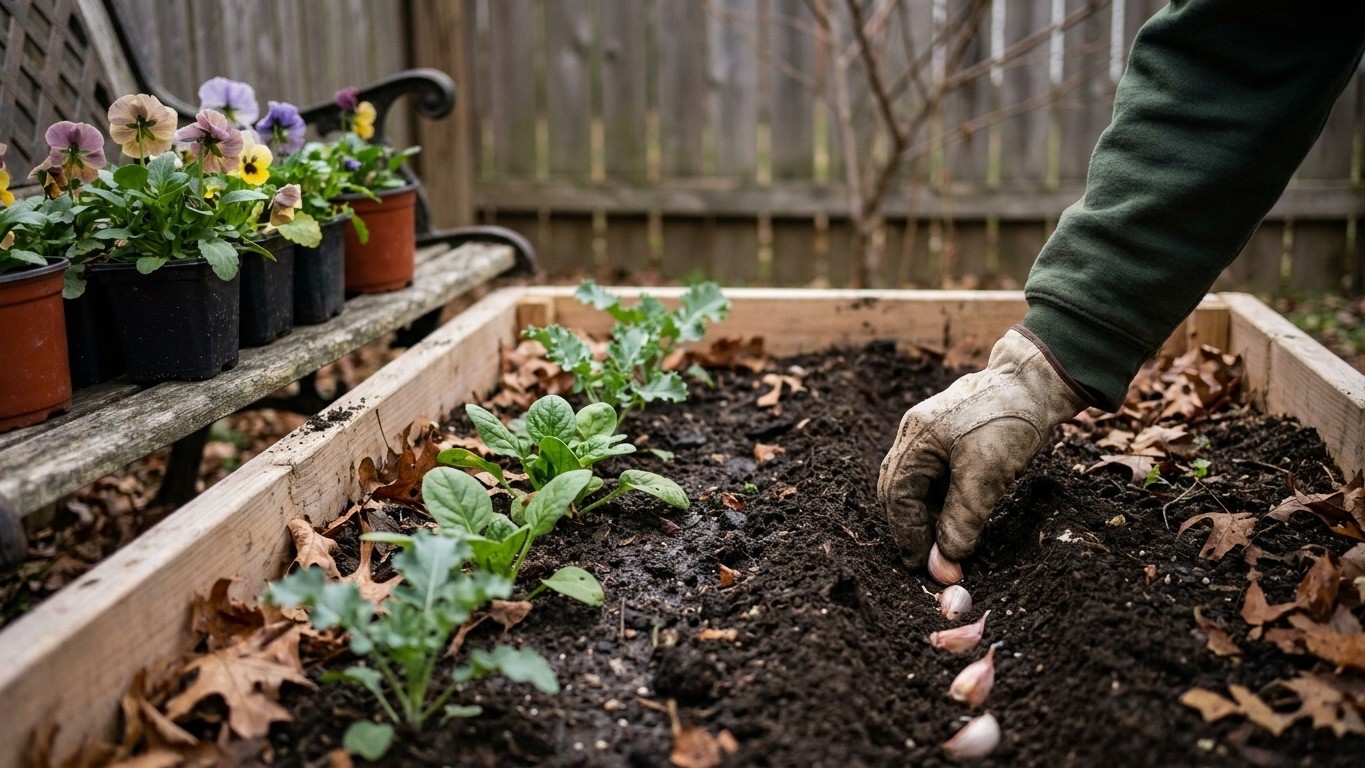

Nevada’s October answer splits by elevation and latitude more than any other month on the calendar. In the low desert around Las Vegas, October still runs warm enough to plant garlic, cool-season greens, root vegetables and brassica transplants for weeks. At elevation in Reno, Carson City, Elko or the Tahoe basin, frost has often already arrived by October, and the month turns toward cleanup, mulching and dormant-season prep instead of new plantings.
What goes in the ground in October

Soil temperature and the local frost window decide what’s safe this month, not the date on the wall. Nevada carries USDA hardiness zones from 4a up to 10a (USDA Plant Hardiness Zone Map, 1991-2020 normals), and that range is the whole story here: a zone 4a mountain valley and a zone 10a desert floor can be living in two different seasons on the same October morning.
In the low desert valleys around Las Vegas, first fall frost typically doesn’t land until December 8 to December 23 (NOAA NCEI 1991-2020 climate normals). That means October there is prime, unhurried planting time. Garlic and shallots go in now for next summer’s harvest. Spinach, arugula, lettuce, radish, carrots and beets can be direct-sown in soil that’s still workable and warm enough to germinate quickly. Broccoli, cauliflower and cabbage transplants set out now have real time to size up before any cold arrives.
Higher and farther north, the picture flips. Reno, Carson City, Elko and the Sierra front sit in cooler zones where frost often shows up in September or the first weeks of October, well ahead of the desert-floor dates above. Those Las Vegas airport figures are a desert heat-island extreme and should never be read as a statewide Nevada frost calendar; anywhere with elevation freezes months earlier in fall and thaws months later in spring. In those areas, October’s safe outdoor work narrows to garlic and shallots (still fine, since they’re planted to overwinter anyway), cold-hardy greens tucked under row cover or a cold frame, and cover crops sown to hold and feed the soil through winter.
What’s a gamble everywhere in the state: warm-season crops. Tomatoes, peppers, squash, beans and corn have no business going into Nevada ground in October, whether you’re in the low desert or the high valleys. There isn’t enough season left to reward the risk, and a single cold night erases the investment.
What to start under cover
Work backward from your local first fall frost range rather than from the calendar. Take the crop’s days-to-maturity, add the week or two most transplants need to harden off, and count back from the earliest date in your area’s frost window. If that math lands you inside October, the seed goes in now, under cover or on a windowsill; if it lands you past your frost window, the crop won’t finish, and it’s better used as a spring planting.
In the low desert, where frost holds off until early to late December, there’s still room to start a second flush of broccoli, cauliflower or lettuce transplants under cover this month, since the arithmetic above still leaves weeks of growing room. At elevation, where frost has often already arrived, October under cover is less about pushing a new crop to harvest and more about starting hardy greens that will simply sit and slow-grow through the cold, plus starting onions or leeks destined for spring transplant once the ground opens back up.
Two mistakes account for most failures here. Starting too early leaves transplants rootbound and leggy on a windowsill with nowhere to go, since the outdoor bed isn’t ready and won’t be for weeks. Starting too late in a short window means the plant runs out of daylight and warmth before it can size up, and it limps into winter half-grown instead of harvest-ready. Neither error is really about skill; it’s about not doing the backward count first.
What is ready to pick
In the low desert, October harvest can still include the tail end of warm-season crops (tomatoes, peppers, melons) that were planted earlier in the season and are racing to finish before any late-season cold, alongside the first pickings of lettuce and spinach sown in late summer. Garlic and onions from the previous cycle should already be cured and in storage; this is a good month to go through that stash and pull anything showing soft spots or sprouting before it spreads to the rest.
At elevation, where frost has already closed out the tender crops, October’s honest harvest is smaller: cold-hardy greens holding on under row cover or in a cold frame, winter squash and pumpkins that were cured earlier and are now coming out of storage, and any leeks or kale left standing, which often taste better once they’ve had a touch of cold. Check stored potatoes and squash the same way as garlic and onions, since one soft one in a bin can take down its neighbors if it’s not caught early.
Ready-to-pick cues stay simple: garlic and onions when the tops have dried and fallen over, winter squash when the skin resists a fingernail push, leafy greens once leaves reach a usable size rather than waiting for a specific date.
The jobs that matter this month
October’s task list carries real deadlines, whether or not new planting is happening. Garlic beds need soil prep now, since the cloves want loose, amended ground to root into before the first hard freeze locks it up. Mulching matters just as much in the low desert, where a 2 to 4 inch layer protects new garlic and greens from swinging night temperatures, as it does at elevation, where mulch is what keeps a freeze-thaw cycle from heaving roots right out of the ground.
Watering rhythm should be scaling back everywhere as daylight shortens, since plants are using less water even where the air still feels warm. Any tomato, pepper or squash plants still standing in warmer valleys are worth staking or supporting one more time before an early cold snap flattens them, and it’s worth one more pest scouting pass through squash and beans while they’re still active, since aphids and squash bugs are looking for a last meal before the cold shuts them down.
Dormant-season work at elevation
Once leaves drop at higher elevations, dormant pruning of fruit trees and cane berries can begin, cutting out damaged or crossing wood while the plant is asleep and least likely to be stressed by the cut. This is also the month to order garlic and spring bulbs before the good varieties sell out, test soil pH and fertility while beds are cleared, turn the compost pile one more time before cold slows the microbes down, and go over tools with a file and some oil so they’re ready for spring instead of rusting in a shed all winter.
What not to do in October
The most common mistake statewide is planting anything warm-season into cold soil because the afternoon air felt mild. Nevada’s desert days can run warm well into fall even as soil temperature and night lows tell a different story; air temperature is not the number that matters for germination or transplant survival.
A second mistake is uncovering cold frames, row cover or newly mulched beds after a stretch of mild weather, on the assumption the cold is done for the season. Because Nevada spans hardiness zones from 4a to 10a (USDA Plant Hardiness Zone Map, 1991-2020 normals), a warm week in October means very different things in Las Vegas than in Elko, and a return freeze can undo weeks of protection in one night at elevation.
The third mistake is feeding nitrogen to perennials, fruit trees or lawns late in the month. Nitrogen pushes soft new growth right when the plant should be hardening off for winter, and that tender growth is exactly what gets burned by the first real freeze. If soil needs amending this month, lean on compost and phosphorus-heavy amendments instead, and save the nitrogen push for spring green-up.
Last, don’t let stored garlic, onions, potatoes or winter squash sit unchecked through the month. One rotting bulb or tuber left in a bin can spoil its neighbors before the next check.
Checking this against your own county
A statewide October answer is a starting point, not an instruction for your specific yard. Elevation, valley cold pooling and the sheer distance between the Sierra front and the southern tip of the state can shift frost timing by weeks in either direction, and Nevada’s hardiness zones run from 4a to 10a (USDA Plant Hardiness Zone Map, 1991-2020 normals), which is one of the widest spreads of any state in the country. Before committing seed or transplants to the ground this month, check your county’s actual frost history and current soil temperature against the University of Nevada, Reno Extension service at extension.unr.edu, which tracks local conditions county by county rather than for the state as a whole.
Common questions
Is October too late to plant garlic in Nevada?
No, October is generally right on time. In the low desert, garlic can go in through October with weeks of mild soil ahead of it. At elevation, October is often the last comfortable window before the ground firms up for winter, so it pays to get cloves in early in the month rather than late.
Can I still start tomatoes or peppers outdoors this month anywhere in Nevada?
No. There isn’t enough remaining season in any part of the state to bring warm-season crops to harvest from an October start, and an early cold snap can end them overnight even in the warmer valleys.
Why does the same month mean such different gardening tasks across Nevada?
Because the state’s hardiness zones span 4a to 10a, one of the widest ranges of any state, elevation and location change frost timing by weeks to months between the low desert and the Sierra front and northern valleys.
What should I check before trusting a statewide planting date?
Check your county’s actual frost history and current soil temperature rather than relying on a single statewide figure, and use the University of Nevada, Reno Extension service for county-level guidance.
Gardeners who plant by the Moon can check the October 2026 moon planting calendar, a tradition rather than a proven method.
Related guides
- What to Plant in Nevada in November
- Nevada Planting Calendar
- When to Plant Cucumbers in Nevada
- What to Plant in Nevada in September
Elsewhere? See what to plant in October in every state and province.