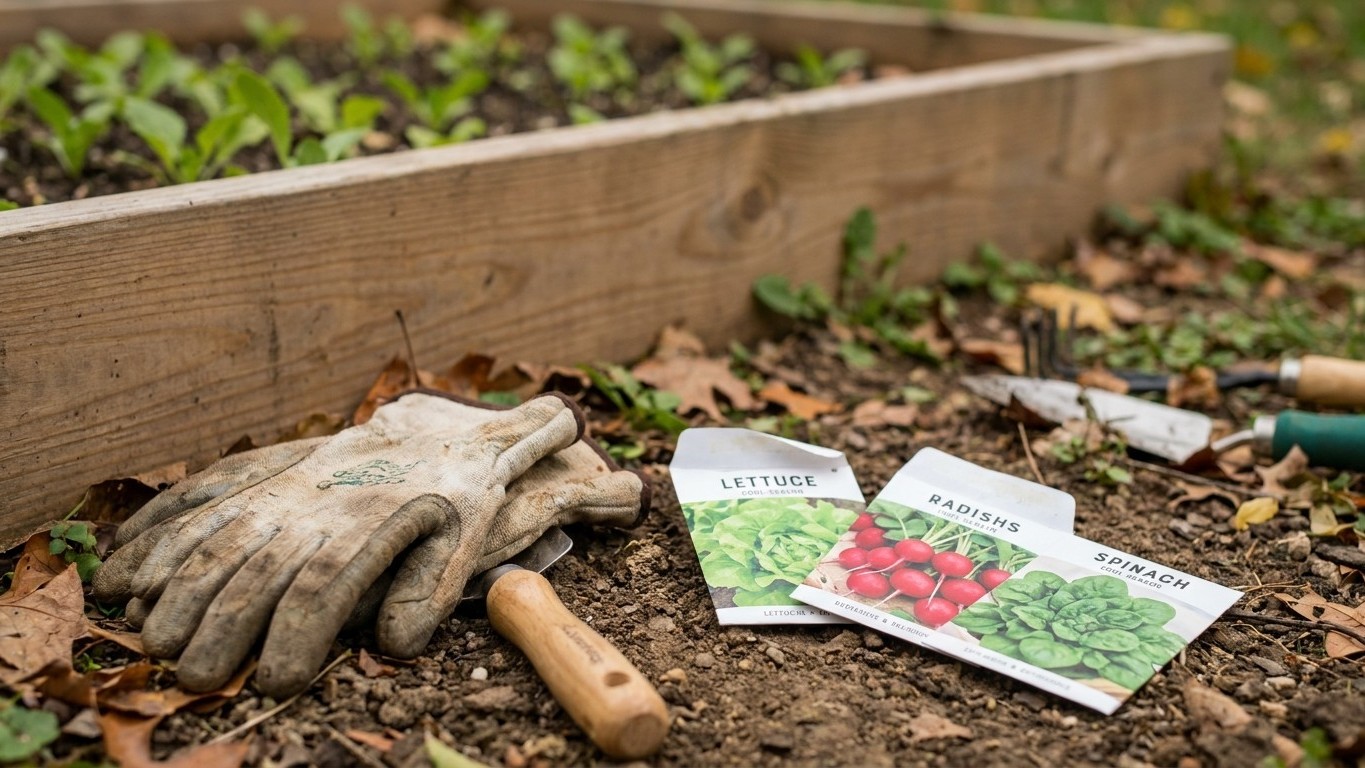

September in New Jersey (USDA zones 6a-7b) still sits roughly two months ahead of the first fall frost window of November 4 to November 16, which leaves real room for a second planting push. Quick salad greens, root vegetables, and early fall brassicas can still go into open ground in the first half of the month, while the harvest side of the garden is running at full speed with tomatoes, peppers, and the last of the summer squash.
What goes in the ground in September

The decision this month is not the calendar, it is soil temperature and the number of days left before frost arrives. Count backward from the first fall frost window (November 4 to November 16) rather than forward from today. A crop that needs 60 days to mature and gets sown on September 1 has a real shot; the same crop sown September 25 is a gamble that depends on a mild fall.
Direct-sown quick crops are the safest bet through the first two or three weeks of the month: spinach, arugula, mesclun mixes, radishes, and turnips all mature in 25 to 45 days, which puts harvest comfortably before the frost window even starts. Fall peas can still go in during the very first days of September if the soil has cooled from summer highs, but they are tight against the clock and best treated as a bonus crop, not a sure thing.
Transplants of fall brassicas, kale, collards, and quick-maturing cabbage varieties, can still be set out if they were started under cover in August and are already a few weeks old. New transplants bought or started from seed this late need a head start indoors (see the next section) rather than going straight into bare ground.
| Crop | Method | Approx. days to harvest |
|---|---|---|
| Spinach | Direct sow | 35-45 |
| Arugula | Direct sow | 25-40 |
| Radish | Direct sow | 25-30 |
| Turnip | Direct sow | 40-55 |
| Fall peas | Direct sow, early month only | 55-65 |
| Kale/collards | Transplant, hardened off | 30-40 from transplant |
Garlic and shallots are a different story: in this climate they belong in the ground in October and November, not September, so hold that seed stock and use the weeks ahead to pick and prep the bed instead.
What to start under cover
Working backward from the November 4 to November 16 frost window changes what makes sense to start now. A lettuce or pak choi transplant needs about three to four weeks under cover before it is ready to go into the garden, and another 30 to 45 days to reach harvest size outdoors. Started in the first week of September, that timeline lands the harvest in mid to late October, still ahead of frost. Started in the last week of September, the same crop is racing the calendar and may not size up before growth slows in the shorter daylight of late fall.
The two ways this goes wrong are opposite problems. Start too early under cover with no outdoor spot ready, and the transplants sit too long in small cells, get rootbound, and stall once they finally go into the ground. Start too late, and the plant simply runs out of warm, bright days to bulk up before cold and short daylight slow photosynthesis to a crawl, regardless of frost.
Cold frames and low tunnels are worth setting up now rather than waiting for the first frost warning. A cold frame started and vented properly in September can carry a crop of spinach or mesclun well past the point open ground would have shut down, essentially buying an extra month of harvest without any extra planting effort. Row cover over hoops does something similar for less money, trading a few degrees of frost protection for a longer picking window on crops already in the ground.
Anyone still holding seed for slower crops like leeks or overwintering onions should treat those as a winter project, not a September one; those seeds are better started in late winter for a spring transplant, not rushed into cover now.
What is ready to pick
September is one of the fullest harvest months in a New Jersey garden. Tomatoes are typically at peak production, and the difference between a ripe and an unripe fruit is obvious: full color, slight give under gentle pressure, and a fruit that separates from the vine with a light twist rather than a fight. Peppers, whether picked green or left to color up to red or yellow, come off cleanly with a sharp snip rather than a pull that can tear the stem.
Summer squash and cucumbers are still producing but need daily attention. Left on the vine even one extra day past the right size, both turn tough and seedy fast, so a squash the length of a hand and a cucumber still firm end to end are the targets, not the biggest one in the patch.
Beans are ready when the pod snaps cleanly rather than bending, and corn signals readiness with silks that have browned and dried while the husk is still green and tight. Melons are trickier: a ripe cantaloupe usually separates from the vine with almost no pressure, while watermelon relies on the dulling of the skin’s sheen and a hollow sound on a firm tap.
Herbs are at their most fragrant right before flowering, so basil, oregano, and thyme cut now, before the plants bolt to seed, hold the strongest flavor for drying or freezing. Early apple varieties and a second flush of raspberries on everbearing canes round out what is coming off the plants this month.
The jobs that matter this month
In the vegetable beds
Succession sowing is the single most time-sensitive job this month. Every week that passes without a fresh row of radishes, spinach, or lettuce going in is a week of harvest lost later in fall, since these quick crops are exactly what still fits before the frost window. Pest scouting matters just as much right now: squash vine borer damage and late-season cabbage worms are easiest to catch and remove before they spread to a whole row, and spent, damaged vines pulled now stop diseases from overwintering in the soil.
Soil and structure
Beds finishing their summer crops are ready for a round of compost worked in before a fall cover crop of winter rye or clover goes down in the back half of the month; that cover crop is what protects and feeds the soil all winter instead of leaving it bare. Mulching around fall transplants now, while the soil is still warm, holds moisture through the dry stretches September can bring and buys a few extra degrees of frost protection later.
Watering and staking
Watering rhythm needs a second look as nights cool: less evaporation means beds that needed water every other day in August may only need it every third or fourth day now, and overwatering at this point is a real way to rot late tomatoes and squash. Tall fall brassicas and any indeterminate tomatoes still producing should get a final round of staking before wind and the weight of a full harvest topple them.
Tool cleaning and sharpening, and repairing fencing or bed edges worn down over summer, are easy to push off but far simpler to do now, with the season still warm, than in the cold and wet of late fall.
What not to do in September
The most common mistake is starting new warm-season crops, tomatoes, peppers, squash, because a warm afternoon feels like summer. The soil and the calendar disagree with the air temperature: with the first fall frost landing between November 4 and November 16, there simply is not enough season left for a new warm-season planting to produce anything worth the space.
Uncovering cold frames or row covers too readily after a mild stretch is the second trap. A few warm days do not mean frost risk is gone, and a cover left open overnight on the wrong night can undo weeks of protected growth in a single cold snap.
Heavy nitrogen feeding is the third mistake, and the timing matters as much as the amount. Nitrogen late in the season pushes soft, leafy new growth on perennials and fruiting plants that has no time to harden off before cold weather, leaving that new growth far more vulnerable to frost damage than growth that slowed naturally on its own.
Letting winter squash or pumpkins sit too long “for more color” while the vines are already dying back is the last common error. Once the vine collapses, the fruit is exposed to soil moisture and rot risk climbs fast; a squash with a hard rind and a dried, corky stem is ready, regardless of whether every last streak of green has faded.
Checking this against your own county
A state-wide month is a starting point, not an instruction. New Jersey’s frost timing shifts by weeks depending on elevation, distance from the coast, and whether a garden sits in the Highlands, the Pine Barrens, or the shore counties, and gardens away from the reference weather station commonly see frost arrive earlier in fall and later in spring than the figures above. Before betting a planting on any date in this article, check it against the Rutgers Cooperative Extension for county-level guidance and the state’s own planting calendar resources.
Common questions
Is it too late to plant tomatoes in New Jersey in September?
Yes. With the first fall frost arriving between November 4 and November 16, there is not enough warm season left for a new tomato planting to mature and ripen a worthwhile crop.
Can garlic go in the ground in September in New Jersey?
Not typically. Garlic and shallots do better planted in October and November in this climate; September is better spent preparing the bed with compost so it is ready when planting time comes.
What is the fastest crop to plant in September for a harvest before frost?
Radishes, at roughly 25 to 30 days to harvest, are among the quickest, followed closely by arugula and other quick salad greens.
Should I start a cover crop this month?
Yes, especially in the back half of September. Winter rye or clover sown now has time to establish before growth slows, and it protects bare soil through the winter far better than leaving beds exposed.
Gardeners who plant by the Moon can check the September 2027 moon planting calendar, a tradition rather than a proven method.