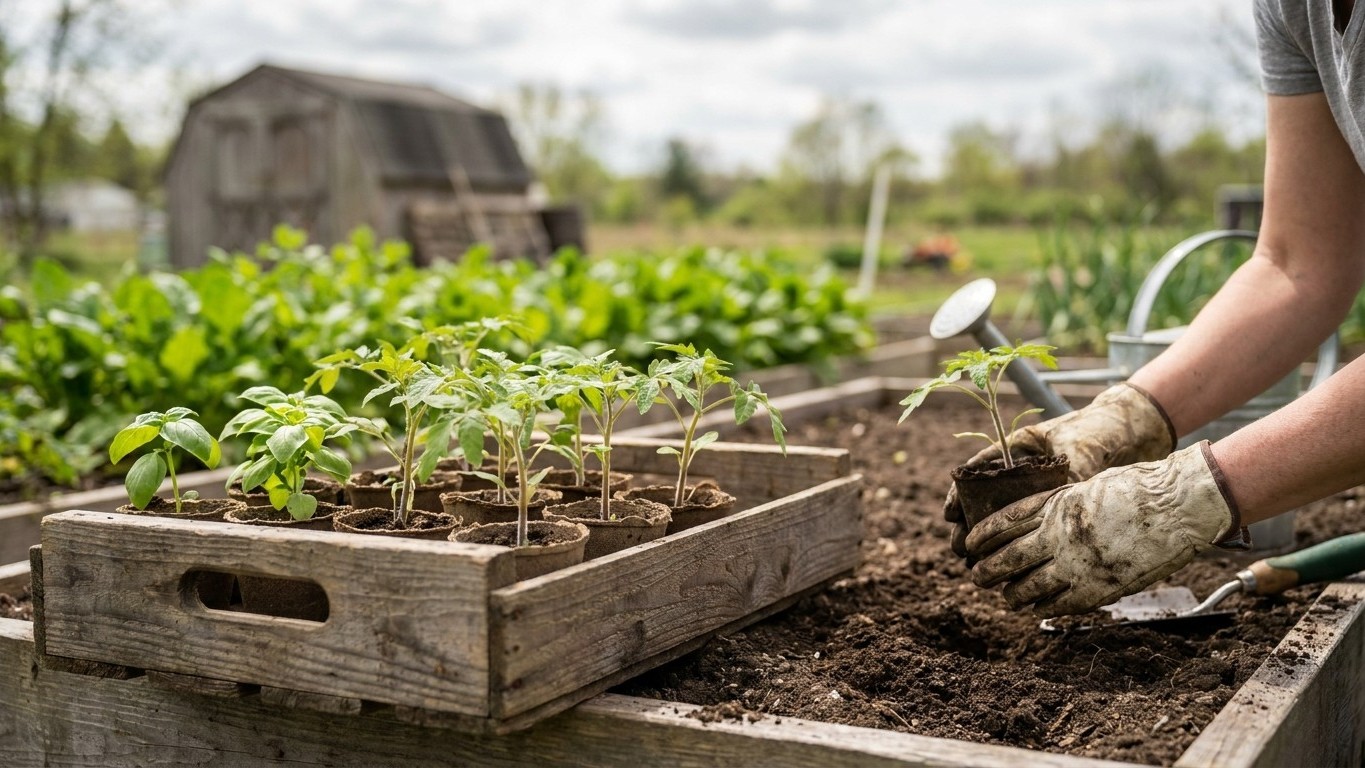

Mid-May through Memorial Day is the safe window for most of North Dakota, once the ground has actually warmed and the frost risk has passed. But “May” covers a two-week swing between the first days of the month, still inside the frost window for the reference station, and the back half, when soil temperature finally catches up to the calendar. What you plant depends on which half of May you’re standing in and what the soil thermometer says, not what the air feels like on a sunny afternoon.
What goes in the ground in May

The last spring freeze at the Bismarck reference station falls between May 4 and May 15, based on NOAA’s 1991-2020 climate normals. That means the first half of May is still inside the frost window for a lot of the state, and gardens outside that immediate area, especially at higher elevation or away from the moderating effect of a river valley, often see their last frost run a week or two later than that. Treat the date as a starting line, not a guarantee.
Hardy crops don’t care much about that risk. Peas, spinach, lettuce, radishes, and other quick greens can go into open ground as soon as the soil is workable, even with a light frost still possible. Onion sets and shallot sets go in the same way. Seed potatoes can be planted through May; a light frost may nip the first leaves that emerge, but the plant regrows from the tuber without lasting harm. Carrots and beets tolerate direct sowing early in the month too, since germination is slow enough that the seedlings emerge closer to the frost-free stretch.
Cole crops (cabbage, broccoli, kale, brussels sprouts) started as transplants indoors can move outside toward mid-May, ideally with a floating row cover on hand for any night that dips toward freezing. These plants shrug off temperatures into the high 20s without much drama.
What’s a gamble: tomatoes, peppers, squash, cucumbers, beans, and corn. These are warm-season crops that stall or die outright at soil temperatures below the mid-50s, regardless of air temperature. Waiting until the second half of May, and ideally confirming with a soil thermometer pushed a few inches into the bed, saves more transplants than any calendar date will.
What to start under cover
Work backward from the frost window rather than forward from a fixed date. If the last freeze at the reference station lands between May 4 and May 15, warm-season transplants like tomatoes and peppers should have already gone into trays roughly six to eight weeks earlier, meaning late March. If that window slipped, starting them now still works, but the transplants will likely go into the garden smaller and less hardened than ideal. That’s a fair trade for a shorter season rather than an empty one.
May is the right time to start a second wave indoors for crops that will replace an early harvest later in the season: a fresh tray of broccoli or cabbage to follow spring lettuce, or winter squash and melon starts that go outside three to four weeks from now, once the soil has fully warmed past the frost window on the calendar above.
The two ways this goes wrong are mirror images of each other. Start too early, and the plants sit in small pots for weeks waiting on the weather, turning rootbound and leggy, stretching toward window light and never quite recovering their vigor after transplant. Start too late, and there isn’t enough runway before the first fall freeze, which arrives at the reference station between September 25 and October 5. Given the frost-to-frost window, roughly 143 to 144 days depending on how the two ranges line up, a warm-season crop that needs 75 to 85 days to fruit doesn’t leave much slack for a late start.
What is ready to pick
Early May is thin in the garden itself, but not empty. Established asparagus beds send up their first spears as soil temperatures climb, and rhubarb stalks are usually thick enough to cut by mid-month. Both are worth checking every few days once they start, since asparagus spears turn woody fast and rhubarb keeps producing more if it’s harvested rather than left to bolt.
A cold frame or low tunnel that was seeded in late winter often has spinach, lettuce, or mixed greens ready to cut through May, well ahead of anything sown in the open ground this month. If a cold frame wasn’t running, a windowsill tray of microgreens or pea shoots fills the same gap in a couple of weeks.
The other job this month is going through the root cellar or garage storage bins. Potatoes that have started sprouting eyes are still edible if the sprouts are cut away, but they’re past their prime and should be used first. Onions that have gone soft at the neck or winter squash with a sunken, discolored patch on the skin are signs of rot starting from the inside; pull those before they spread mold to the crops sitting next to them. Anything that survived the winter in good shape can keep going a little longer, but May is the natural point to clear out what’s left and free up the shelf for the season ahead.
The jobs that matter this month
Soil preparation leads the list, because working a bed too early, before it’s dried out from spring melt, compacts it for the whole season. Squeeze a handful of soil; if it forms a tight ball that doesn’t crumble when poked, it’s still too wet to till or dig.
Mulching comes right after, but only once the soil has had a chance to warm in the sun. Mulch laid too early on cold soil just keeps it cold longer, which is the opposite of what a warm-season bed needs heading into June. Wait until the soil has warmed, then mulch to hold that warmth and moisture in.
Staking and support structures for peas, and cages for anything that will vine later, go in now, before the plants sprawl and the roots are established enough that driving a stake nearby risks damage. It’s a five-minute job in May and a frustrating one in July.
Watering rhythm matters more than volume this early: a deep soak twice a week beats a light sprinkle every day, because it trains roots to grow down rather than staying shallow near the surface where they dry out fast.
Succession sowing keeps quick crops like radishes and lettuce coming instead of maturing all at once; a small new row every ten days or so through the month spreads out the harvest. Pest scouting rounds out the list, since flea beetles and cutworms show up early on tender brassica and tomato seedlings, and catching the first chewed leaf now is a lot cheaper than losing a whole tray of transplants two weeks later.
What not to do in May
The most common mistake is trusting a warm afternoon over the soil itself. A string of 70-degree days in early May can feel like summer, but the soil a few inches down often hasn’t caught up, especially after a winter with heavy snowpack. Tomatoes and peppers set out into soil that’s still in the 40s will sulk for weeks even if they survive, sometimes never fully recovering their growth rate for the season.
Pulling row covers or cold frame lids off too early after a mild stretch is the second trap. The frost window at the reference station runs through May 15, and gardens outside that area can run later still. A single freezing night after covers come off can undo weeks of careful hardening-off in one shot.
Nitrogen timing trips people up too. Heavy nitrogen feeding right after transplant pushes soft, leafy growth that’s more vulnerable to a late frost, and on alliums like onions and garlic, it can delay the bulb formation that’s supposed to happen once day length shifts. Hold off on the nitrogen-heavy feed until plants are established and past the risk window, then feed based on what the crop actually needs rather than on a fixed schedule.
Checking this against your own county
Everything above is built on one weather station’s 30-year averages, not a statewide promise. North Dakota’s elevation changes, its distance from the Missouri River corridor, and the plain difference between the northern and southern halves of the state can shift the last frost date by a couple of weeks in either direction. A garden in the Turtle Mountains or up near the Canadian border should plan on a later safe date than one near Bismarck.
The most reliable way to narrow this down is to check with North Dakota State University Extension, which tracks local frost data and planting guidance county by county.
Common questions
Is it safe to plant tomatoes outside in North Dakota in May?
Only in the back half of the month, and even then with some caution. The reference station’s last freeze falls between May 4 and May 15, but many gardens run later. Waiting until soil temperature is reliably in the mid-50s or warmer is a better guide than the date on the calendar.
What vegetables can handle a light frost in May?
Peas, spinach, lettuce, radishes, onions, and cabbage-family transplants all tolerate a light freeze without lasting damage. Potatoes regrow from the tuber even if early leaves get nipped.
How long is the growing season in North Dakota?
Based on the reference station’s frost normals, from a last spring freeze of May 4 to May 15 through a first fall freeze of September 25 to October 5, the frost-free stretch runs roughly 143 to 144 days depending on where in each range the actual dates fall.
Why does the USDA hardiness zone matter for May planting?
North Dakota spans USDA zones 3a to 4b, a range built on average annual extreme minimum temperature rather than spring frost timing. It tells you what perennials and shrubs can survive the winter there, but it doesn’t replace checking the actual spring frost window before setting out annual vegetables.