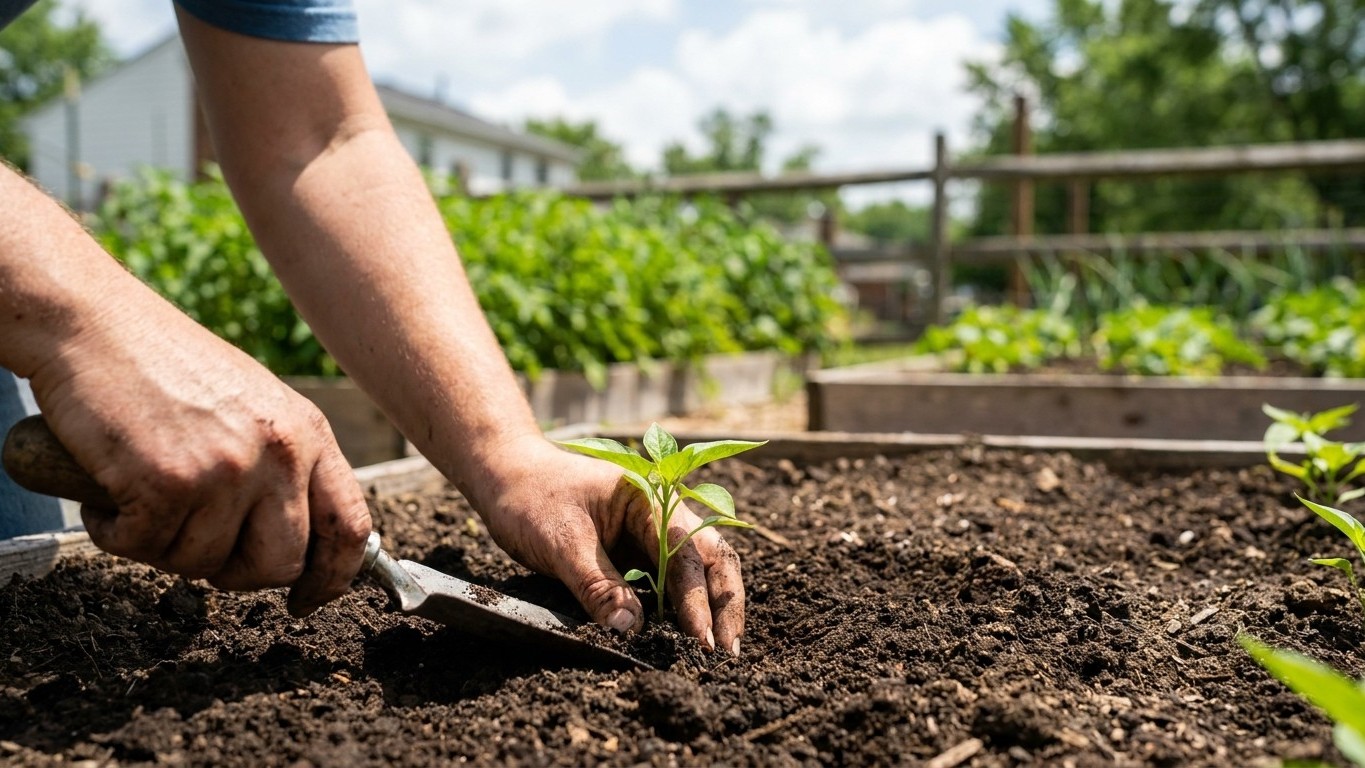

July in Nova Scotia sits in the middle of the growing season, well past the average last spring frost and still months from the average first fall frost. That gives room to direct-sow fast crops, transplant fall brassicas, and start pulling garlic, peas, and early greens out of the ground, but the clock that matters now runs toward autumn, not away from spring.
What goes in the ground in July

By July, soil temperature has stopped being the limiting factor almost everywhere in Nova Scotia. The real constraint is arithmetic: how many days does a crop need to mature, counted back from the average first fall frost of October 18? That date comes from Environment and Climate Change Canada’s Halifax Stanfield station, and it is a mean, not a guarantee. In half the years on record, frost arrives later than that. In the other half, it arrives sooner. Treat it as the midpoint of a window, not a deadline carved in stone.
Against that window, quick crops are still safe to direct-sow through most of July: bush beans, beets, carrots aimed at a fall harvest, radishes, turnips, chard, kale, and a second round of peas for an autumn pick. Fast lettuce varieties can go in too, though germination slows once soil gets warm, so a shaded row or a light mulch over the seed helps.
Transplants make sense for anything that was started under cover in June: leeks, celery, and the fall round of broccoli, cabbage, and cauliflower. These need the extra weeks a transplant provides, because direct-seeding them now would push maturity dangerously close to that October frost window, or past it in a cooler year.
The gamble crops are the long-season, heat-loving ones. Winter squash, pumpkins, and melons sown from seed in July are racing a clock they are likely to lose, especially in a season where frost lands on the early side of the average. Nova Scotia’s climate, rated zone 6b under the Canadian hardiness system for the Halifax area, does not compare directly to the USDA scale used elsewhere on this site. It reflects seven climate variables, not just winter minimum temperature, and that matters when judging how much growing season is actually left.
What to start under cover
Counting backward from October 18 is the whole trick here. A storage cabbage that needs roughly 100 days to mature would need to have been transplanted by early July to finish before the average frost arrives, which means anything started under cover for that purpose should already be in the ground, not still waiting in a tray.
What still makes sense to start under cover in July is a second, shorter-season wave: fast kale and collard varieties for an extended fall harvest, or lettuce started indoors or in a shaded cold frame rather than direct-sown, since lettuce seed can refuse to germinate once soil gets hot. Starting it under cover, in a cooler spot, sidesteps that problem and gives a transplant ready to go out within a few weeks.
The two ways this goes wrong are opposite but equally common. Start too early, back in May or early June, for a crop meant for a July transplant slot, and the seedlings sit too long, become rootbound, and stall once they finally go in the ground. Start too late, well into August, for anything needing 70 or 80 days, and the plant runs out of daylight and warmth before it can finish, even if frost itself holds off. Shortening day length in September slows growth on its own, independent of temperature, which is easy to forget when the air still feels like summer.
What is ready to pick
July is when the spring planting starts paying off. Garlic planted the previous fall usually comes out this month, and the tell is the foliage: once the lower three or four leaves have browned and dried while the upper leaves are still green, it is time to lift the bulbs rather than wait for the whole plant to die back.
Peas sown earlier in the season are usually filling out now, and the best window for picking is while pods are plump but still bright green, before they start to dull and toughen. Early potatoes, if the plants were hilled properly, can be dug as “new potatoes” once the flowers have dropped, well before the full crop is ready.
Strawberries planted in previous seasons typically finish their main flush around this point, and broccoli or cabbage transplanted back in May should be heading up or forming solid heads. Lettuce, radishes, spinach, and early beets sown in spring are also coming off now, and the faster they are picked once mature, the less chance they have to bolt in the heat. Zucchini and the first cucumbers often start showing up toward the end of the month, and both reward daily checking, since a squash left two extra days can double in size and lose its texture.
The jobs that matter this month
Watering rhythm matters more in July than almost any other month, because dry spells combine with peak plant growth to create real stress fast. Deep, infrequent watering that reaches the root zone does more good than a light daily sprinkle that only wets the surface. This is the month blossom-end rot shows up on tomatoes and peppers, and inconsistent watering is usually the cause.
Mulching pays for itself now by holding that moisture in and keeping weed pressure down while everything is growing fastest. Straw, shredded leaves, or grass clippings applied around tomatoes, squash, and beans cut down on the watering workload considerably.
Staking, succession, and scouting
Staking and trellising need to happen before plants sprawl, not after. Tomatoes, peas, and cucumbers left to flop on the ground are harder to harvest and far more prone to rot and slug damage. Succession sowing keeps the harvest going: a new short row of beans, lettuce, or beets every two to three weeks means there is always something coming along behind what is being picked now, instead of one glut followed by a gap.
Pest scouting is worth a few minutes every few days. Colorado potato beetle larvae, cabbage white caterpillars, and aphid colonies can all establish quickly in warm weather, and catching them early, by hand-picking or targeted treatment, is far less work than dealing with an infestation two weeks later. Harvesting beans, peas, and squash frequently also keeps the plants producing, since letting fruit mature and go to seed on the vine signals the plant to slow down.
What not to do in July
The most common mistake is sowing long-season, heat-loving crops as though a full season still lies ahead. Winter squash or pumpkins seeded in mid or late July are working against the calendar, since Nova Scotia’s average first fall frost on October 18 leaves a fixed and shrinking number of days, and a cooler-than-average year can cut that window further.
Feeding tomatoes and peppers a heavy dose of nitrogen at this stage is another classic error. Nitrogen pushes leafy growth, and a plant putting its energy into foliage instead of fruit set produces less, not more. A balanced or lower-nitrogen feed suits this point in the season far better.
Letting the soil swing between bone-dry and soaked is the third repeat offender. That inconsistency is behind most cases of blossom-end rot on tomatoes and split skins on carrots and tomatoes alike. And leaving bolting lettuce or spinach in the ground out of reluctance to pull it wastes space that a fresh succession sowing could be using instead. Once a plant sends up a flower stalk, its leaves turn bitter fast, and there is little to gain by waiting.
Checking this against your own county
A province-wide frost date is a starting point, not an instruction. Elevation, distance from the coast, and the general difference between the Annapolis Valley, the South Shore, and the Cape Breton highlands can shift both the spring and fall frost windows by real margins, sometimes weeks. A garden close to the Atlantic often runs cooler and later than one inland.
For local specifics, the Nova Scotia Department of Agriculture is the right place to check regional guidance before committing a full bed to a July planting decision based on province-wide averages alone.
Common questions
Can tomatoes still be transplanted in July in Nova Scotia?
It is late for a full-size crop from a young transplant, since fruit needs to set and ripen well before the average first fall frost on October 18. A tomato plant already carrying flowers or small fruit stands a better chance than a fresh seedling started this month.
Is it too late to plant peas in July?
No. A second pea sowing in early to mid-July for a fall harvest works well, since peas tolerate cool weather and mature relatively quickly compared with warm-season crops.
When should garlic be planted if not in July?
Garlic in Nova Scotia is typically a fall-planted crop, not a July one. July is usually harvest time for garlic planted the previous autumn, not planting time for the next round.
How reliable is the October 18 frost date for planning fall crops?
It is a long-term average from the Halifax Stanfield station, meaning frost arrives later than that date about half the time and earlier the other half. It should be used as a planning midpoint, with a buffer built in, rather than treated as a fixed cutoff.