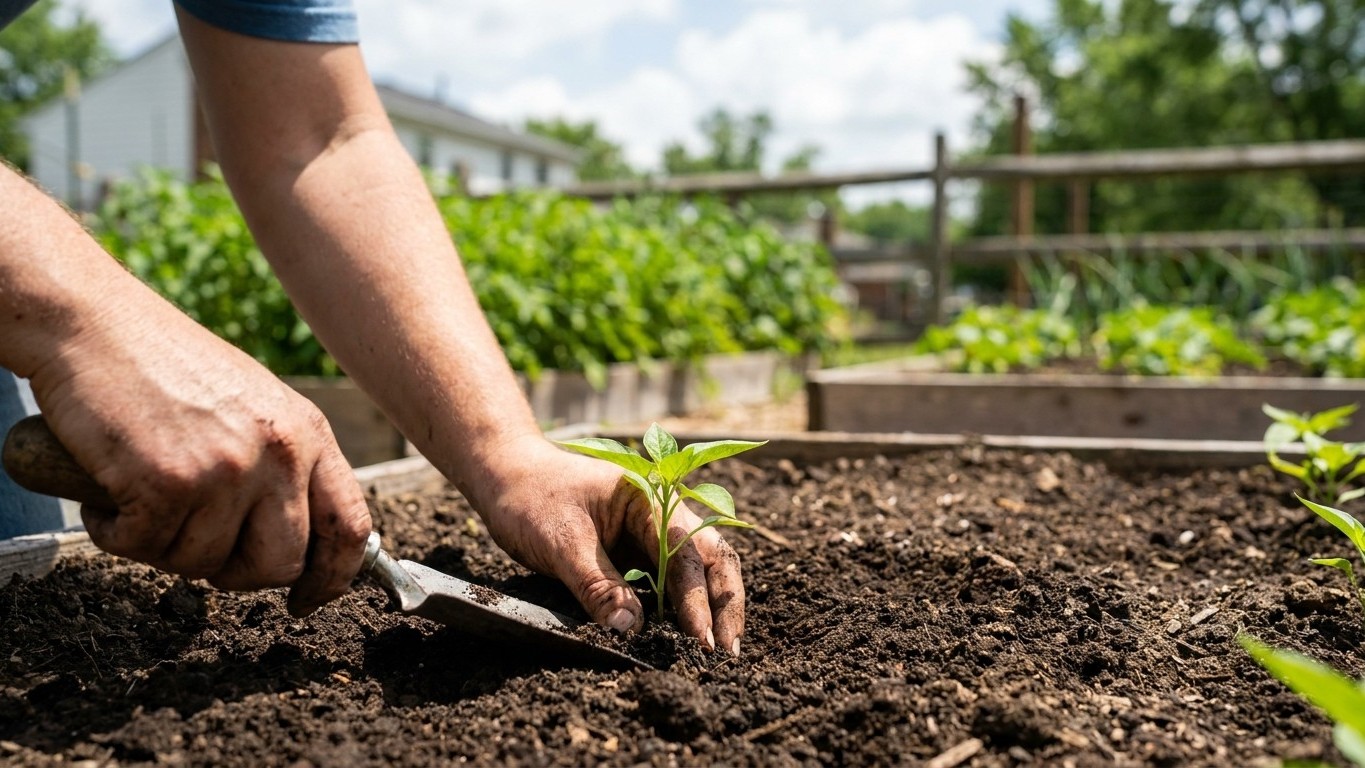

July in Oklahoma means soil temperatures pushing past 85°F and air that can hit triple digits for weeks at a stretch. That heat rules out almost every spring vegetable, but it opens the door for okra, southern peas, and pumpkins timed for a fall harvest. It’s also the month to start fall broccoli and cabbage indoors, since the state’s first fall frost doesn’t arrive until late October or early November.
What goes in the ground in July
Soil temperature, not the calendar, decides what survives here this month. By July, ground temperatures across most of Oklahoma sit well above 80°F even a few inches down, which is lethal to lettuce, spinach, and pea seed but exactly what okra and southern peas (cowpeas, black-eyed peas, crowder peas) want to germinate fast. Both can go directly into the ground now and still produce a full crop before frost.
Sweet potato slips, if not already planted in late spring, can still go in during the first half of the month in most of the state and have enough season left to size up. Pumpkins and winter squash meant for a fall harvest are a bigger gamble the later in July you plant them: count backward from the first fall frost window of October 29 to November 8, and if the variety’s days-to-maturity plus a two-week cushion for curing doesn’t fit before that window, skip it or choose a faster variety.
What is too risky this month
Sweet corn planted after the first week of July often runs out of season before the ears fill, especially in the northern part of the state where frost tends to arrive earlier. Melons started this late rarely ripen fully. Any cool-season crop, from lettuce to spinach to peas, direct-sown in July bare soil will bolt or fail to germinate at all; hold those for a fall sowing once temperatures ease.
What to start under cover
Fall brassicas are the main project this month, and the timing runs backward from frost rather than forward from today. Broccoli, cabbage, and cauliflower need roughly six to eight weeks as transplants before they go into the garden, and then another 60 to 80 days to mature once transplanted. Working back from the first fall frost window of October 29 to November 8, that means starting seed indoors or under shade cloth in mid-to-late July gives most varieties just enough runway.
Start too early in July and the transplants sit ready for weeks with nowhere to go, stretching into leggy, rootbound seedlings baking in pots while the garden is still too hot to receive them. Start too late, past the first week of August for slower varieties, and the plants won’t size up before cold shuts growth down. Kale and collards are more forgiving on both ends and give more room for error if the July heat delays a sowing by a week or two.
Cover any July seed trays from direct afternoon sun; germination rates for brassica seed drop sharply once soil surface temperatures climb past 90°F, so shade cloth or a spot on a shaded porch often outperforms a sunny windowsill this month.
What is ready to pick
July is a harvest month more than a planting month for anything already in the ground since spring. Tomatoes, peppers, cucumbers, summer squash, and green beans should all be coming in steadily, and picking them often, every day or two for squash and cucumbers, keeps the plants producing instead of shutting down to finish seed.
Okra needs picking young, at two to three inches, since pods left even one extra day turn woody. Garlic and any spring-planted onions are likely finished or finishing: garlic is ready when most of the leaves have browned, and both should be pulled and cured in a dry, airy spot rather than left in hot ground. Sweet corn is ready when the silks have browned and a squeezed kernel releases milky, not clear, liquid.
Watermelon and cantaloupe planted earlier in the season may start ripening late in the month; a dull rind and a hollow sound when thumped are better indicators than the calendar. Anything left too long in July heat, especially squash and cucumbers, turns bitter or oversized fast, so a garden checked every other day beats one checked once a week.
The jobs that matter this month
Mulch is the single job that pays off most in July heat. A three-to-four-inch layer of straw or shredded leaves around tomatoes, peppers, and squash keeps soil temperature down and moisture even, which directly prevents blossom end rot, the calcium-uptake problem that shows up as a black, sunken spot on the bottom of tomatoes and is almost always a watering-consistency issue rather than a soil deficiency.
Watering rhythm matters more than volume this month. Deep, infrequent watering, aiming for the equivalent of about an inch of water a week delivered in one or two sessions rather than a light daily sprinkle, encourages roots to grow down instead of staying shallow and stressed near a hot surface. Early morning is the better window than evening, since foliage that stays wet overnight in July humidity invites fungal disease.
Staking and caging need to happen before, not after, tomato and pepper plants sprawl under their own fruit load; a plant that’s already flopped is harder to support without breaking stems. Pest scouting is worth a few minutes every few days: squash vine borer moths are active in July and lay eggs at the base of squash stems, spider mites thrive in dry heat and show up as fine stippling on leaves, and Japanese beetles skeletonize leaves fast once they arrive. Catching any of these early, by hand-picking, row cover, or targeted treatment, costs far less than losing a plant to an infestation that had a two-week head start.
What not to do in July
The most common mistake is treating July as open planting season just because the weather feels productive. Warm soil doesn’t mean every crop belongs; melons, corn, and long-season squash planted late in the month often don’t finish before the first fall frost window of October 29 to November 8, and the effort goes to a plant that never fruits.
Heavy nitrogen fertilizer is another trap. Feeding tomatoes and peppers a nitrogen-rich fertilizer once they’re flowering and setting fruit pushes leafy growth at the expense of the fruit itself, the opposite of what the plant needs mid-season. A lower-nitrogen, higher-potassium feed supports fruit development better once flowering has started.
Uncovering fall brassica transplants too early, moving them from shade into full afternoon sun before they’ve hardened off over several days, scorches leaves and sets growth back by a week or more. And letting harvest slide, whether it’s zucchini left three extra days or beans left to toughen on the vine, signals the plant to stop producing new fruit and finish its life cycle instead, which is the opposite of what a July garden needs.
Checking this against your own county
A state-wide month is a starting point, not an instruction. Oklahoma spans USDA hardiness zones 6a to 8a, and the panhandle’s higher elevation, the difference between the north and south of the state, and local microclimates can shift these frost windows by a couple of weeks in either direction. The frost dates cited here come from a single reference weather station, and gardens outside city limits often see frost arrive earlier in fall and linger later in spring than the airport data suggests.
Before committing to a fall planting date or a last succession sowing, check current conditions and localized guidance through the Oklahoma State University Extension service, which maintains county-level planting calendars and can account for elevation and regional variation the state average can’t capture.
Common questions
Can I still plant tomatoes in Oklahoma in July?
Transplants set out in early July can still produce before frost in most of the state, but germinating tomato seed outdoors in July heat is unreliable; if starting from seed, do it indoors under cover rather than direct-sown.
Is it too late to plant a fall garden in July?
No. July is when fall brassica transplants should be started indoors, and okra, southern peas, and fast winter squash varieties can still go directly into the ground early in the month.
Why are my squash and cucumbers producing less in late July?
Extreme heat can cause blossom drop and reduce pollination, especially when daytime temperatures stay above the mid-90s for extended stretches; consistent watering and afternoon shade cloth often help production recover.
Should I fertilize my vegetable garden in July?
Yes, but favor a lower-nitrogen, higher-potassium feed once plants are flowering and fruiting, since heavy nitrogen at this stage pushes leaf growth over fruit development.