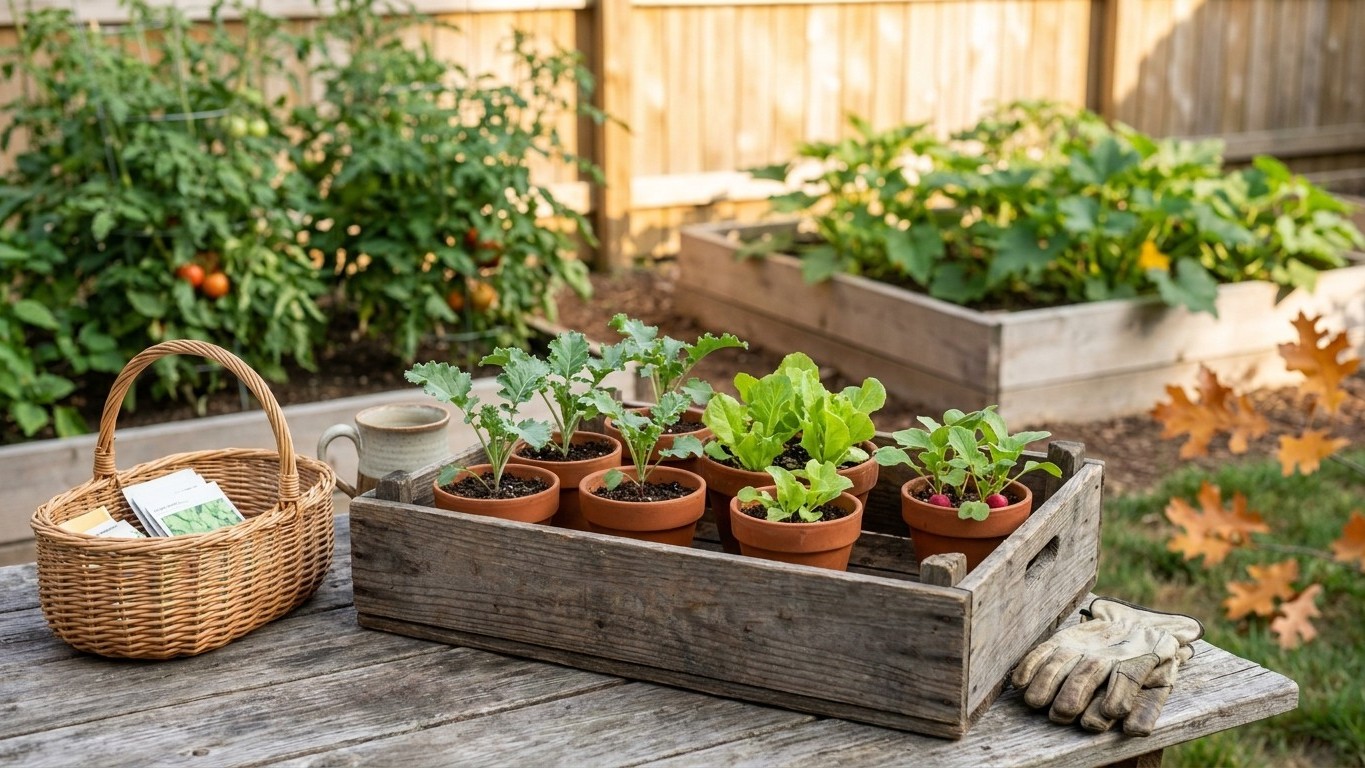

August in Pennsylvania sits roughly three months ahead of the first fall frost, which lands somewhere between November 5 and November 16 depending on where in the state you garden. That gap is enough for another full round of quick vegetables: beans, beets, carrots, and the first fall sowings of lettuce and spinach. Summer crops are also peaking, so this is as much a harvest month as a planting one. What goes in the ground now depends less on the calendar than on how many days each crop needs before that frost arrives.
What goes in the ground in August

The number that matters this month isn’t the date on the calendar, it’s the days-to-maturity printed on the seed packet, counted backward from the first fall frost window of November 5 to November 16. That window is measured at the Philadelphia station behind this normal, and it runs two to four weeks earlier in the northern tier and the higher ground of the Alleghenies. A fast crop that squeaks by near Philadelphia might need an earlier sowing date for a grower near Erie or up in Potter County.
With that arithmetic in hand, direct-sowing is wide open right now for anything finishing in 60 days or less. Bush beans planted in the first half of August still have time to flower and fill pods before a cold snap in most of the state. Beets, carrots, and turnips sown for fall harvest often turn out better than spring plantings, because cooling nights ahead sweeten the roots. Kale, collards, and Swiss chard shrug off the first light frosts and, honestly, taste better for the exposure. Spinach and lettuce sown late in the month dodge the bolt risk that plagues spring sowings, since daylight is shortening rather than stretching out.
Transplants earn their keep too. Broccoli, cabbage, and cauliflower seedlings started back in July and moved into the ground now have a real shot at heading up before frost, especially with row cover ready for the first cold nights.
One crop that belongs on a fall list but not an August one is garlic. It wants cool soil and a long dormancy before spring growth, so it waits for October or November, not this month.
| Crop | Days to maturity | Sowing note |
|---|---|---|
| Bush beans | 50-60 | Sow by early-to-mid August |
| Beets | 55-65 | Sow through mid August |
| Carrots | 65-75 | Sow by early August in colder counties |
| Kale | 50-65 | Sow through late August |
| Spinach | 40-50 | Best sown late August |
Soil temperature works in the gardener’s favor this month. Warm August ground speeds germination, sometimes a matter of days rather than the slow spring wait. The trade-off is moisture: seed beds dry out fast in summer heat, so a light daily watering until seedlings emerge often matters more than what actually goes into the soil.
What to start under cover
Indoor starting in August is a narrower job than in spring, but it still matters for two groups of crops. The first is lettuce and other greens that stall out when soil temperatures climb above roughly 80 degrees, since lettuce seed can go dormant in the heat. Starting these in trays in a cooler spot, a basement or an air-conditioned room, then transplanting once the bed cools a little, gets around that problem entirely.
The second group is a second round of broccoli, cauliflower, or cabbage for gardeners who missed the July window. Counted backward from a mid-November frost, that gives roughly 100 to 110 days, which is workable in the milder southern counties but tight further north. Brussels sprouts sit right at the edge of that math statewide; started now, they’re a gamble in the northern tier and a reasonable bet only where frost arrives on the later end of the window.
Two failure modes show up every year. Starting too early means seedlings sit in trays through the hottest part of summer, get rootbound, and go leggy before the soil is ready for them. Starting too late means the transplant never bulks up before the cold arrives, leaving a stunted head or none at all. Splitting the difference, most fall brassica transplants do best moved into the garden within two to three weeks of sowing, not held longer waiting for cooler weather that may not come soon enough.
Shade cloth over young trays, rather than a heat mat, is the tool this month calls for. It’s the opposite problem from spring starting: keeping seedlings cool enough to germinate, not warm enough.
What is ready to pick
August is peak harvest for the crops planted back in spring. Tomatoes are coming in steadily, ready when the color runs solid and the fruit gives slightly under gentle pressure. Peppers can be picked green or left to color up, depending on the variety and the cook’s preference. Sweet corn signals readiness with browned, dry silks and kernels that spurt a milky liquid when pierced with a thumbnail.
Cucumbers and summer squash need frequent checking, sometimes daily in a warm stretch, since both turn from tender to tough within a couple of days of missing the pick. Melons give the clearest signal of any garden crop: a ripe cantaloupe slips free from the vine with barely a tug, while watermelon relies more on a dull thump and a yellowing underside where it rests on the ground.
Beans keep producing as long as the pods are picked young and often; leave a few to mature and the plant slows down, thinking its job is done. Early potatoes can be dug now for immediate eating, while the main crop stays in the ground a little longer to cure its skin. Onions and garlic harvested earlier in the summer should be fully cured and moved to a dry, airy storage spot by this point, checked over for any soft necks before they go into long-term storage.
The jobs that matter this month

Watering rhythm decides more than almost any other August task. A deep soak two or three times a week beats a light daily sprinkle, because it pushes roots downward instead of keeping them shallow and vulnerable to the next dry spell. Mulch matters for the same reason: two to three inches of straw or shredded leaves around tomatoes, squash, and peppers holds soil moisture through a heat wave and keeps weeds from competing for what water is there.
Staking and caging can’t wait much longer. Indeterminate tomatoes and pole beans loaded with fruit will topple under their own weight in the next storm if they aren’t already tied up, and a plant lying on wet soil is an open invitation to rot and slugs.
Succession sowing keeps the harvest coming rather than arriving all at once. A fresh round of bush beans or salad greens every two weeks through the month means fresh pickings well into fall instead of one glut followed by bare beds.
Pest scouting earns its keep now too. Squash vine borer damage shows up as sudden wilting of a single vine even with wet soil, a sign the base needs checking for the telltale sawdust-like frass. Japanese beetles skeletonize leaves fast enough to defoliate a young bean row in days, and hand-picking into soapy water in the early morning, when they’re sluggish, remains the most reliable control for a home garden.
Clearing spent crops, like bolted lettuce or finished peas, and turning that space over with a layer of compost sets up the fall sowings covered above. Skipping that bed prep now is the fastest way to run out of room for the second half of the season.
What not to do in August
The most common mistake this month is planting a heat-loving crop from seed as if there’s still a full season ahead. Sweet corn, winter squash, and pumpkins started now rarely finish before frost anywhere in the state; the math simply doesn’t work, no matter how warm the air feels. Watermelon falls into the same trap, since a new planting needs more days than August has left to offer, even in the mildest southeastern counties.
Overwatering during a heat wave causes its own damage. Soaking already-moist soil doesn’t cool plants down, it just sets up blossom end rot in tomatoes and peppers and invites fungal disease in crowded foliage. A finger pushed two inches into the soil tells the truth better than the thermometer does.
High-nitrogen fertilizer is the wrong tool for tomatoes and peppers at this point in the season. It pushes lush leaf growth at the expense of fruit set and can actually delay ripening on plants that are already loaded. A balanced feed, or none at all on established plants, does more for the harvest than another dose of nitrogen.
Leaving overripe vegetables hanging on the vine is a quieter mistake with real consequences. A forgotten zucchini turned into a baseball bat, or beans left to fatten and toughen, signals the plant to stop producing new fruit. Regular picking, even of imperfect vegetables, keeps the whole planting in production through the rest of the season.
Checking this against your own county
A statewide month is a starting point, not an instruction. Elevation, local frost pockets, and the long stretch between the southeastern corner and the northern tier can shift these windows by two to four weeks in either direction. A garden in the Alleghenies or the Poconos should expect an earlier fall frost and a shorter runway for late sowings than one near Philadelphia or Lancaster.
Penn State Extension keeps county-level guidance and a planting calendar built for these local differences, and it’s worth checking against the numbers above before committing a bed to a late-season crop. Find it at extension.psu.edu.
Common questions
Can you plant tomatoes in Pennsylvania in August?
Starting new tomatoes from seed this late won’t leave enough time to ripen fruit before frost in most of the state. An already-growing transplant of a fast, short-season variety is a modest gamble in the milder southeastern counties, but it’s not a reliable bet statewide.
What vegetables can still be planted in Pennsylvania in August?
Bush beans, beets, carrots, kale, collards, turnips, radishes, and both lettuce and spinach for late-month sowing all fit comfortably within the days remaining before the first fall frost.
Is it too late to start a fall garden in Pennsylvania in August?
No. August is close to the ideal window for fall crops, since most quick vegetables need 40 to 65 days and frost is still roughly 90 to 105 days out depending on location.
Why are my August tomato and pepper plants growing leaves but not fruit?
That pattern usually points to too much nitrogen fertilizer or heat stress interrupting pollination. Cutting back on nitrogen and watering deeply rather than lightly during hot spells generally brings fruit set back within a couple of weeks.
Gardeners who plant by the Moon can check the August 2027 moon planting calendar, a tradition rather than a proven method.