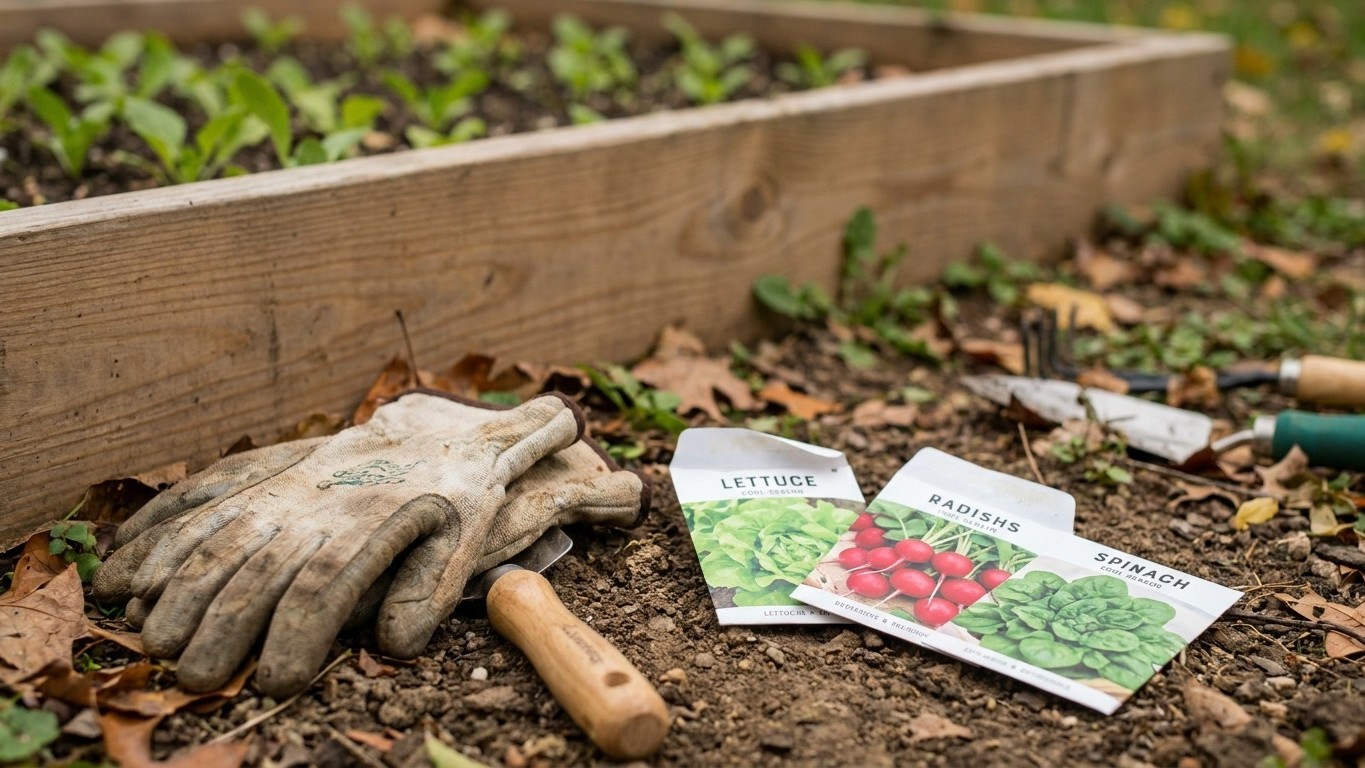

September in Pennsylvania still gives gardeners a real planting window. With first fall frost landing between November 5 and November 16 around Philadelphia, there’s enough runway for quick cool-season crops sown directly in the ground: spinach, lettuce, radishes, turnips, arugula and a last round of peas. Garlic beds get prepped now for planting later in fall. Warm-season transplants are off the table. What actually survives depends less on the date on the calendar than on soil temperature and how many frost-free days are left where you garden.
What goes in the ground in September

The math that matters here isn’t “it’s September, so plant this.” It’s counting backward from the first fall frost, which arrives between November 5 and November 16 in the Philadelphia area, and matching that gap against how many days a crop needs to mature. That leaves roughly 60 to 75 days in the mildest part of the state, less as you move north or gain elevation. A radish that needs 25 to 30 days fits easily, twice over if the soil stays workable. A pea that needs 60 days for a fall crop is tighter, and only quick varieties make sense at this point.
Soil temperature is the other half of the decision, and it cuts the opposite way from what people assume. September soil is still warm from summer, which is good news for germination: spinach, lettuce, arugula, mustard greens and turnip greens will sprout fast in warm soil and then mature into cooler weather, which actually improves their flavor. Warm soil does not mean it’s safe to squeeze in another round of tomatoes or squash. Those need the whole season ahead of them, not the tail end of it.
What fits this month
- Spinach, leaf lettuce, arugula and mustard greens, direct-sown for a fall harvest
- Radishes and turnips, both roots and greens
- A fast-maturing pea variety, sown early in the month in the warmer counties
- Garlic and shallot beds, worked with compost now even if the cloves go in closer to October
- Kale sown for baby leaf rather than full heads, which need more time than the month allows
The USDA Plant Hardiness Zone Map puts Pennsylvania between zones 5a and 7b, a range built on one measurement, the average extreme minimum winter temperature. That number matters for what perennials and garlic varieties survive the winter ahead, but it has almost no bearing on whether a radish sown this week will mature before frost. For that question, the frost window and the seed packet’s days-to-maturity number do all the real work.
What to start under cover
Almost nothing needs starting indoors from seed in September for this year’s harvest, because anything slow enough to need a head start won’t finish before frost anyway. What does make sense is starting fast greens under cover, spinach or lettuce sown into flats or a cold frame, so they’re ready to slot into a bed as soon as space opens up from finished summer crops.
The arithmetic works the same way it does for direct sowing, just with an extra buffer. Take the first frost date for your area, subtract the days to maturity listed on the seed packet, then subtract another one to two weeks to account for slower growth as daylight shortens through the month. Whatever date is left is the last point this month it makes sense to start that crop under cover. For a 30-day lettuce with a November 10 frost target, that pushes the safe start window into the very beginning of the month, not the end.
Two mistakes show up every year at this stage. The first is starting too early in a warm greenhouse or a sunny windowsill, which produces leggy, rootbound seedlings that sulk for weeks after transplanting instead of taking off. The second is starting too late and running the clock out, so the crop is still small and tender when the first hard frost arrives, with none of the size it needed to actually feed anyone. Cold frames and low tunnels buy extra time on both ends, but they extend the season, they don’t erase the calendar.
What is ready to pick
September is one of the fuller harvest months in Pennsylvania gardens, not an empty one. Tomatoes, peppers, eggplant and summer squash are still producing, though the pace slows as nights cool. Sweet corn planted for a late crop finishes up. Melons and the last cucumbers come in before vines give out. Potatoes get dug once the foliage has died back, a sign the skins have set enough to cure and store.
Fruit is a big part of the month too. Early apple varieties, grapes and fall-bearing raspberries all come ripe now, and orchard fruit is worth checking every few days rather than waiting for a single harvest day, since ripening spreads out over weeks even on one tree.
Reading readiness on the crops that fool people
Winter squash and pumpkins are the trickiest calls of the month. A squash is ready when the rind resists a fingernail press and the stem has started to dry and turn brown or gray. Pull them too early and the rind stays soft, which means they rot in storage within weeks instead of lasting through winter. Onions and garlic harvested earlier in summer should be curing in a dry, airy spot by now; check that curing batch for any bulb going soft at the neck, since one rotting onion in storage can take its neighbors down with it.
The jobs that matter this month

The single job with the tightest deadline this month is sowing a cover crop into any bed that’s finished for the season. Winter rye, crimson clover and oats all need enough warm soil left to germinate and put on some growth before frost, and that window closes fast as the month goes on. A bed left bare over winter loses topsoil to rain and wind that a cover crop would have held in place.
Garlic bed prep belongs on this month’s list even though the cloves themselves usually go in during October. Working compost into that bed now, while the soil is still easy to turn, saves a harder job later when the ground has cooled and stiffened.
Strawberry beds need mulching ahead of the coldest nights, and any perennials that flopped over summer, particularly asters and mums heading into their fall bloom, benefit from staking before they sprawl across the path. Watering rhythm should shift too: as days shorten and evaporation slows, deep and less frequent watering serves plants better than the frequent light watering that made sense in July’s heat.
Pest scouting still pays off. Squash vine borer larvae are finishing their damage inside vines that are already dying back, so pulling and destroying spent squash plants now denies them a place to overwinter. Cabbage worms keep working on fall brassicas well into cooler weather, and a quick daily check under leaves catches an infestation before it strips a planting.
Cleanup rounds out the list: pulling spent summer plants, ordering garlic and next season’s seed before the popular varieties sell out, and testing soil so amendments can go in while there’s still time for them to work into the ground before winter.
What not to do in September
The most common mistake this month is planting warm-season crops because a stretch of warm days made it feel like summer wasn’t over. Tomatoes, peppers, squash and cucumbers started now won’t have anywhere near enough time to produce before frost arrives between November 5 and November 16, and cool nights slow fruit set well before that date even hits. Warm afternoons are not a reliable signal. The frost window is what decides this, not how the air feels on a given day.
Feeding high-nitrogen fertilizer to perennials, shrubs or fruit trees this month is another one to skip. It pushes soft new growth that won’t have time to harden off before cold weather sets in, which makes that new growth far more likely to die back over winter and can weaken the whole plant.
Harvest timing on winter squash and pumpkins trips people up in both directions. Pulling them too early, before the rind has hardened and the stem has dried, means they won’t store. Leaving them too long in the field risks a frost catching them before they’re in, which shortens their storage life just as much. Check them by rind hardness and stem color, not by a date on the calendar.
Finally, don’t let a warm week convince you the frost date has slipped. November 5 to November 16 is an average band built from the 1991-2020 climate record, not a guarantee, and a run of 70-degree afternoons can still be followed by a sharp overnight drop that catches tender transplants unprotected.
Checking this against your own county
A state-wide frost window is a starting point, not an instruction for your specific yard. Philadelphia sits at the mild end of Pennsylvania’s climate, and the northern tier and the Alleghenies see frost arrive noticeably earlier in fall, sometimes by weeks, once elevation and latitude are factored in. Hardiness zones across the state span 5a to 7b, which is a wide enough range that a planting plan built for one county can miss badly in another just a couple hours’ drive away.
For county-level frost data and a planting calendar built specifically for Pennsylvania’s regions, Penn State Extension is the reliable next stop, run through the USDA’s land-grant university extension network.
Common questions
Can I still start a vegetable garden from scratch in September in Pennsylvania?
Yes, but only with fast crops. Radishes, arugula, spinach and leaf lettuce all fit inside the remaining frost-free window, especially in the milder southeastern counties. A full garden of slow-maturing crops isn’t realistic starting this late.
Is September too late to plant garlic in Pennsylvania?
Not quite, but it’s early rather than late. Most Pennsylvania gardeners plant garlic cloves in October, once soil has cooled further. September is the month to prepare that bed with compost so it’s ready when planting time comes.
Why did my September-planted greens bolt instead of growing normal leaves?
Warm soil early in the month can push fast growth followed by a stress response if a hot, dry stretch follows planting. Consistent watering and a bit of afternoon shade for the first week or two usually prevents it.
How do I know if my winter squash is ready to harvest before frost?
Press a fingernail into the rind. If it resists and doesn’t puncture easily, and the stem has started drying and turning gray or brown, it’s ready. Soft rinds mean it needs more time, weather permitting.
Gardeners who plant by the Moon can check the September 2027 moon planting calendar, a tradition rather than a proven method.