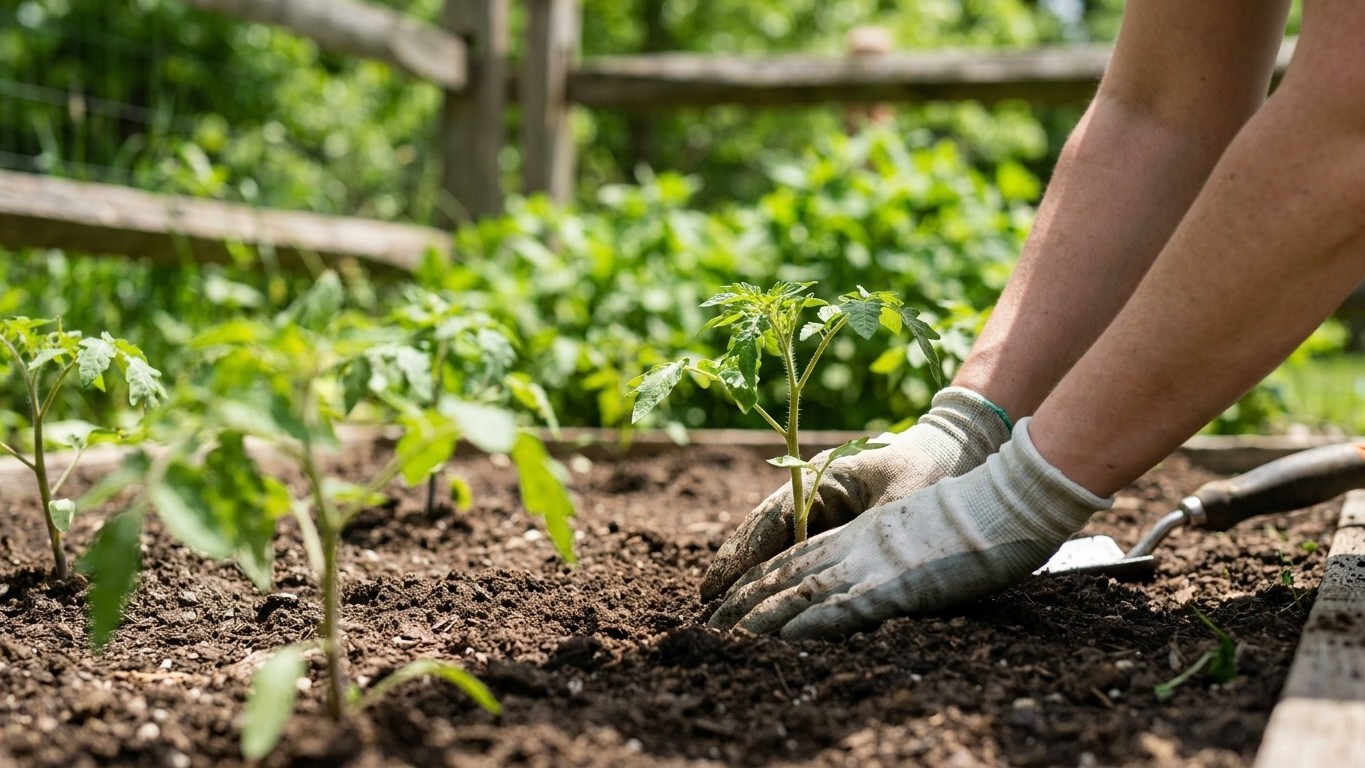

By June, Pennsylvania’s frost risk is behind you almost everywhere in the state, and soil temperatures have finally caught up with the calendar. That means the warm-season garden goes in now: tomatoes, peppers, beans, squash, cucumbers, melons, corn, and basil all move outdoors or into open ground this month, while a last window remains for a quick round of cool-season greens before real heat arrives.
What goes in the ground in June

The last spring frost in Philadelphia falls between March 29 and April 6, based on NOAA’s 1991-2020 climate normals for 32°F freeze probability. Even in the northern tier and the Alleghenies, where that window runs two to four weeks later, June sits comfortably past the risk everywhere in the state. That’s the real story of this month: it isn’t about dodging frost anymore, it’s about soil temperature and how much growing season is left before fall.
Warm-season crops that sulk or rot in cool spring soil finally have what they need. Direct-sow bush and pole beans, sweet corn, summer and winter squash, cucumbers, and melons straight into the garden bed. These are plants that resent transplanting, with fragile root systems that don’t like disturbance, so seed in place rather than starting trays for them this late. If tomatoes, peppers, eggplant, and sweet potato slips haven’t gone in yet, early June is still workable, though earlier transplanted plants will always outproduce latecomers simply because they’ve had more weeks of daylight and warmth to build root mass before fruiting.
Early June also allows one more succession of quick cool-season crops, lettuce, spinach, and radishes, provided you pick bolt-resistant varieties and give them afternoon shade as heat builds. Push past the first couple weeks and that window closes; these crops turn bitter and shoot to seed once soil temperatures climb.
| Region | Spring frost timing | June planting status |
|---|---|---|
| Philadelphia and southeast | March 29 to April 6 | Warm-season crops fully safe, longest harvest window |
| South-central Piedmont | Roughly one to two weeks later | Warm-season crops safe, slightly shorter season ahead |
| Northern tier and Alleghenies | Two to four weeks later | Warm-season crops safe by June, but growing season is more compressed |
What to start under cover
Seed-starting indoors for spring crops is done by June. What makes sense now is starting fall brassicas under cover for a second harvest, broccoli, cabbage, cauliflower, and Brussels sprouts sown in trays or a shaded cold frame to transplant out in July. The math runs backward from the first fall frost, which lands between November 5 and November 16 in Philadelphia (again, later toward the north and higher elevations). Take the days-to-maturity listed for your chosen variety, add a few weeks of buffer for slower fall growth as daylight shortens, and count back from that frost date to find your sowing window. A gardener in the Alleghenies working from a later frost date has a bit more room; a gardener near Philadelphia needs to start sooner relative to the season’s end.
Two failure modes show up every year. Start too early, and seedlings sit in trays through peak heat, growing leggy and rootbound before the ground is ready for them, or worse, they get baked on a windowsill or under a cover that traps too much heat. Start too late, and the fall crop runs out of daylight before it matures, leaving small heads or crops that never bulk up before frost shuts things down. Splitting the difference, starting a small first batch and a second one two weeks later, is a cheap insurance policy against guessing wrong.
What is ready to pick
June is when the spring garden finally pays off. Garlic planted the previous fall sends up scapes early in the month, curling tightly and signaling it’s time to snap them off (which also redirects energy into bulb size); the bulbs themselves typically finish later in summer. Peas from spring sowings hit their peak here, best picked while pods are plump but before they turn tough and starchy. Spinach and lettuce sown early are at their final good harvest before bolting in the heat, and radishes from spring sowings should already be out of the ground.
Strawberries reach peak season across Pennsylvania in June, ready when fully red with no white shoulders, since they don’t ripen further once picked. Early herbs like chives, cilantro, and dill are usable now, though cilantro bolts fast once temperatures climb, so harvest heavily while it lasts. In the northern tier and higher elevations, these harvest windows run a bit later than in the southeast, following the same lag as the frost dates.
The jobs that matter this month

Mulching is the single job with the biggest payoff this month, but timing matters: wait until soil has warmed before laying it down, since mulch applied too early traps cold and slows warm-season crops. Once tomatoes, peppers, and squash are in and the soil feels warm to the touch, two to three inches of straw or shredded leaves locks in moisture and blocks weeds before the summer dry spells hit.
Staking and caging tomatoes needs to happen now, before plants sprawl and branches snap under fruit weight later. The same goes for peas and pole beans on trellises; support installed after the vines have flopped over does far less good than support set at planting.
Watering rhythm shifts this month too. Newly transplanted heat lovers need consistent moisture to establish roots, while established plants do better with deep, infrequent watering that pushes roots downward rather than frequent shallow sprinkles that keep roots near the surface. Succession sowing keeps beans, corn, and squash coming in waves rather than all at once, spacing plantings roughly two weeks apart for a steadier harvest through summer.
Pest scouting earns its keep in June. Colorado potato beetles, squash vine borer moths, and Japanese beetles all emerge this month, and catching the first generation early, by checking leaf undersides and the base of squash stems, is far easier than fighting an established infestation in July.
What not to do in June
The classic mistake is trusting the air temperature over the soil. A warm afternoon doesn’t mean the ground has caught up, and squash or beans seeded into soil that’s still cool from a wet spring will rot before they sprout rather than gain any head start. If soil feels cold to the touch a few inches down, wait rather than seed on faith.
Overfeeding nitrogen once tomatoes and peppers start flowering is another common misstep. Nitrogen pushes leafy growth at the expense of fruit set, so a plant loaded with dark green foliage and few flowers usually got too much of the wrong fertilizer at the wrong time. Switch to a formula lower in nitrogen and higher in phosphorus and potassium once flowering begins.
Skipping pest scouting because plants look healthy is a mistake that shows up later as a hollowed-out squash stem or a defoliated potato plant. Squash vine borer damage in particular is nearly invisible until the plant suddenly wilts and dies, by which point it’s too late to save it. A five-minute check of stem bases each week catches the problem while it’s still just eggs or newly hatched larvae.
Crowding cucurbits to fit more plants into a bed also backfires, since poor airflow between squash and cucumber leaves is one of the biggest drivers of powdery mildew later in summer. Give them the spacing the seed packet recommends, even when it feels wasteful in June.
Checking this against your own county
A state-wide answer for June is a starting point, not an instruction for your particular yard. Pennsylvania spans USDA Hardiness Zones 5a to 7b, and that range alone tells you conditions in the Alleghenies and the northern tier differ from the Philadelphia area by weeks, not days. Elevation shifts frost timing and soil warm-up independent of latitude, so a valley floor and a nearby ridge can run on different planting schedules despite being a few miles apart.
For a planting calendar built around your specific county, along with local frost data and variety recommendations, the Penn State Extension office is the reliable next stop.
Common questions
Is it too late to plant tomatoes in Pennsylvania in June?
No. Early June transplants still have a full season ahead of them, especially in the southeast where the growing season runs longest. Plants that go in later simply yield less than ones started in May, since they’ve had fewer weeks to build size before fruiting begins.
Can I still direct-sow corn and beans in June?
Yes, and June is the ideal month for it, since soil is fully warm and germination is fast and reliable. Succession sowing every two weeks through the month keeps harvests staggered rather than arriving all at once.
Why did my June-planted lettuce bolt so fast?
Lettuce and spinach bolt once soil and air temperatures climb, sending the plant to seed instead of leaf production. Sowing only bolt-resistant varieties in early June, with afternoon shade, buys a little extra time before this happens.
When should I start fall broccoli and cabbage seeds?
Count backward from the first fall frost, which falls between November 5 and November 16 in the Philadelphia area and later further north. Add the variety’s days-to-maturity plus a few weeks of buffer for slower fall growth to find your sowing date, and stagger two batches two weeks apart to hedge against guessing wrong.