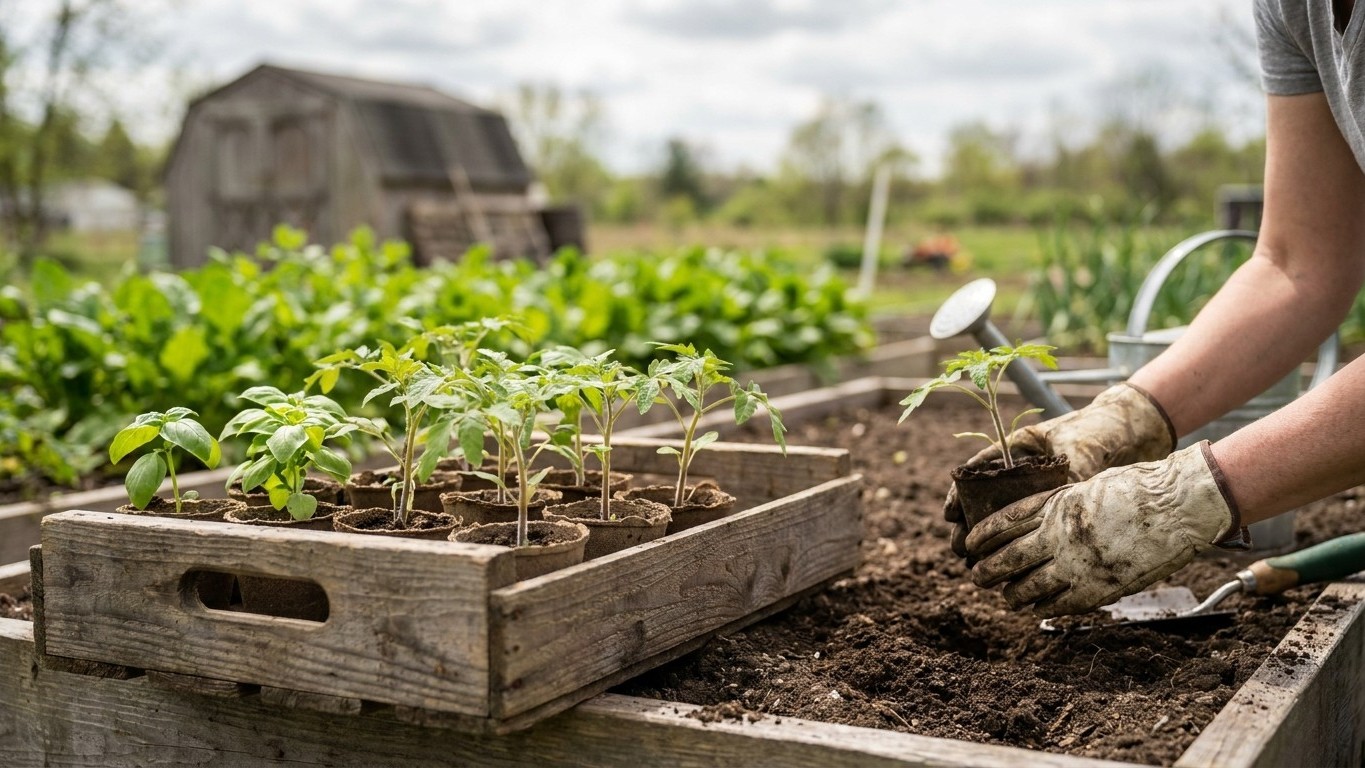

By May, South Carolina’s last frost window (February 28 to March 17, per NOAA) is long behind every part of the state, and the first fall frost is still six months out. This is the month warm-season crops go into the ground for real: tomatoes, peppers, beans, squash, and sweet potatoes all belong outside now, with soil warmth, not the calendar, deciding exactly when.
What goes in the ground in May

The last spring frost across South Carolina falls between February 28 and March 17, according to NOAA’s 1991-2020 Climate Normals for a station in the central part of the state. May sits well outside that window everywhere in the state, from the Upstate foothills to the coastal plain, which means the soil has had weeks to warm past the point that stops warm-season seeds from rotting in the ground.
That’s the real gate here, not the freeze date. Beans, corn, squash, cucumbers, melons, and okra can all go in as direct-sown seed once the soil has held steady warmth for a stretch, and by May that’s true statewide. Tomato, pepper, and eggplant transplants that were hardened off in April can go into open beds now without a cold night setting them back. Sweet potato slips go in once the ground is loose and warm. In coastal counties, where the growing season stretches longest, gardeners can already be planting a second round of bush beans behind an early crop.
What still needs a little caution
Upstate counties, especially at higher elevation, trail the coast by roughly two to three weeks in soil warmth even though the calendar date is the same. A gardener in Oconee or Pickens County transplanting tomatoes on the same day as someone in Beaufort County is taking a slightly bigger risk of a cool, wet spell stunting the plants, even with frost off the table. Watching the forecast for a run of cold nights, not just the frost line, still matters this month in the Upstate.
Spring crops that dislike heat, like lettuce, spinach, and peas, are on their way out rather than in. Planting them fresh in May in most of the state is a losing bet; they’ll bolt or stall as temperatures climb. If a gardener wants greens through summer, that’s a job for heat-tolerant varieties or partial shade, not a repeat of the March sowing.
What to start under cover
Starting seed indoors in May isn’t about spring crops anymore, those are already transplanted or direct-sown outside. It’s about counting backward from the first fall frost, which lands between November 20 and December 5 statewide, to get a second wave of crops timed to finish before cold weather returns.
Fall broccoli, cabbage, and other cole crops are the main candidates. Seedlings typically need several weeks under cover before they’re sturdy enough to transplant, and the crop itself needs a couple of months in the ground to mature, so starting trays now, indoors or in a shaded cold frame away from the worst of the heat, keeps that fall harvest on schedule instead of racing an early winter. Winter squash and pumpkins meant for a fall harvest can also be started under cover in May for transplanting in early summer, giving them a head start before the vines need real garden space.
The two ways this goes wrong are predictable. Start too early under cover and the seedlings sit too long in trays, get rootbound, and stall once transplanted, never quite recovering their vigor. Start too late and the fall crop runs out of daylight and warm soil before it matures, leaving a half-grown cabbage head when the first freeze hits. Working backward from the November 20 to December 5 window, rather than picking an arbitrary date, keeps the timing honest.
What is ready to pick
May is a genuine harvest month in South Carolina, not a lean one. Strawberries planted the previous fall are usually at their peak, and gardeners who mulched them well over winter often see the heaviest picking of the season right now. Spring-planted lettuce, spinach, and radishes that went in back in March are finishing their run, best pulled before the heat pushes them to bolt and turn bitter.
Peas, both English and snap types, are typically at their peak in May before summer heat shuts them down for good. Asparagus beds that are past their second or third year should still be producing spears worth cutting, though the harvest window on asparagus narrows as the weather warms and the plant shifts energy into ferning out. Early potatoes, if planted back in late winter, may be ready for a first “new potato” dig, felt for by hand rather than by calendar date, checking for skins that have set.
Onions and garlic planted the previous fall are bulking up but usually not ready for a full harvest until the tops begin to yellow and fall over, which for most varieties comes later in early summer. Anyone storing winter squash, potatoes, or onions from a prior season should be checking that stash regularly by May; anything soft, sprouting, or with a sour smell needs to be pulled before it spreads rot to the rest of the bin.
The jobs that matter this month

Mulching is the single job with the shortest window of usefulness in May. Once the soil warms up and dries out under direct sun, weeds move fast and moisture disappears just as fast. A two- to three-inch layer of straw, pine straw, or shredded leaves around tomatoes, peppers, and squash now holds moisture through the first real heat spell and saves hours of hoeing later. Skip it in May and the payoff comes in July as cracked, stressed plants instead.
Staking and caging go in before plants sprawl, not after. Tomato cages set over a six-inch seedling take thirty seconds; the same cage forced over a two-foot sprawling plant a month later usually snaps a branch or two in the process. The same logic applies to trellising cucumbers and pole beans.
Watering rhythm needs to shift this month from the light, frequent watering that suits seedlings to deeper, less frequent soaking that pushes roots down instead of keeping them shallow near the surface. Succession sowing of bush beans, summer squash, and cucumbers every two to three weeks through May keeps a steady harvest coming instead of one glut followed by a gap.
Pest scouting matters more in May than almost any other month, because the first generation of squash vine borer, Colorado potato beetle, and aphids is establishing itself while colonies are still small and manageable. Checking the undersides of leaves and the base of squash stems weekly catches problems while a gardener can still pick them off by hand, rather than reaching for a spray later on a full-blown infestation.
What not to do in May
The classic May mistake in South Carolina is treating a warm afternoon as proof the garden is ready for anything, and pushing heat-loving crops like sweet corn or melons into ground that’s still cool a few inches down after a wet spring stretch. Warm air on a sunny day doesn’t mean warm soil; a probe pushed a few inches into the bed tells the truth faster than the thermometer on the porch.
Overwatering is the second trap. South Carolina’s May humidity keeps soil moist longer than gardeners used to drier climates expect, and adding a daily watering habit on top of that humidity invites fungal problems, blossom end rot in tomatoes, and root rot in beds that never fully drain. Watering less often but more deeply, and checking the soil before turning on a hose, avoids both the drought stress and the soggy-root problem at once.
Feeding nitrogen heavily to tomatoes and peppers in May, once they’ve set their first flowers, is a common overcorrection. It produces lush, dark green foliage at the expense of fruit set, exactly the opposite of what a gardener wants heading into the productive part of the season. A lighter, balanced feeding once fruit has started forming does more good than a nitrogen-heavy dose applied out of habit.
Letting spring greens linger past their prime is the last one. Lettuce and spinach that have started to bolt won’t recover their flavor no matter how quickly they’re picked afterward; pulling them and replacing the space with a heat-tolerant crop is more productive than hoping for a second wind.
Checking this against your own county
A statewide frost window is a starting point, not a personal instruction. The February 28 to March 17 range comes from a single station in central South Carolina; peninsular Charleston runs milder than that, and Upstate counties at higher elevation run tighter at both ends of the season, sometimes by two to three weeks. The USDA hardiness zone range for the state, 7a to 9a, spans that same gap, built on one measure, the average annual extreme minimum temperature, so it’s worth checking where a specific county actually falls rather than assuming the middle of the range applies.
For county-level guidance and a planting calendar built for South Carolina’s specific regions, the Clemson Cooperative Extension service is the direct resource to check against local conditions before finalizing a planting date.
Common questions
Is it too late to plant tomatoes in South Carolina in May?
No. Since the last frost falls between February 28 and March 17 statewide, May is well within the safe window for tomato transplants, and coastal counties in particular still have a long season ahead of them.
Can I still direct-sow beans and squash in May?
Yes, and succession sowing every two to three weeks through the month keeps the harvest coming steadily rather than all at once.
Why are my spring lettuce and spinach bitter this month?
Rising heat pushes cool-season greens to bolt, sending energy into a flower stalk and turning the leaves bitter. Once that starts, harvesting quickly and replacing the bed with a heat-tolerant crop works better than trying to hold them.
Do Upstate and coastal South Carolina really need different May timing?
Yes. Higher elevation in the Upstate keeps soil cooler for longer, often by two to three weeks compared to the coastal plain, even though the frost date itself is officially past for both regions by May.
Gardeners who plant by the Moon can check the May 2027 moon planting calendar, a tradition rather than a proven method.