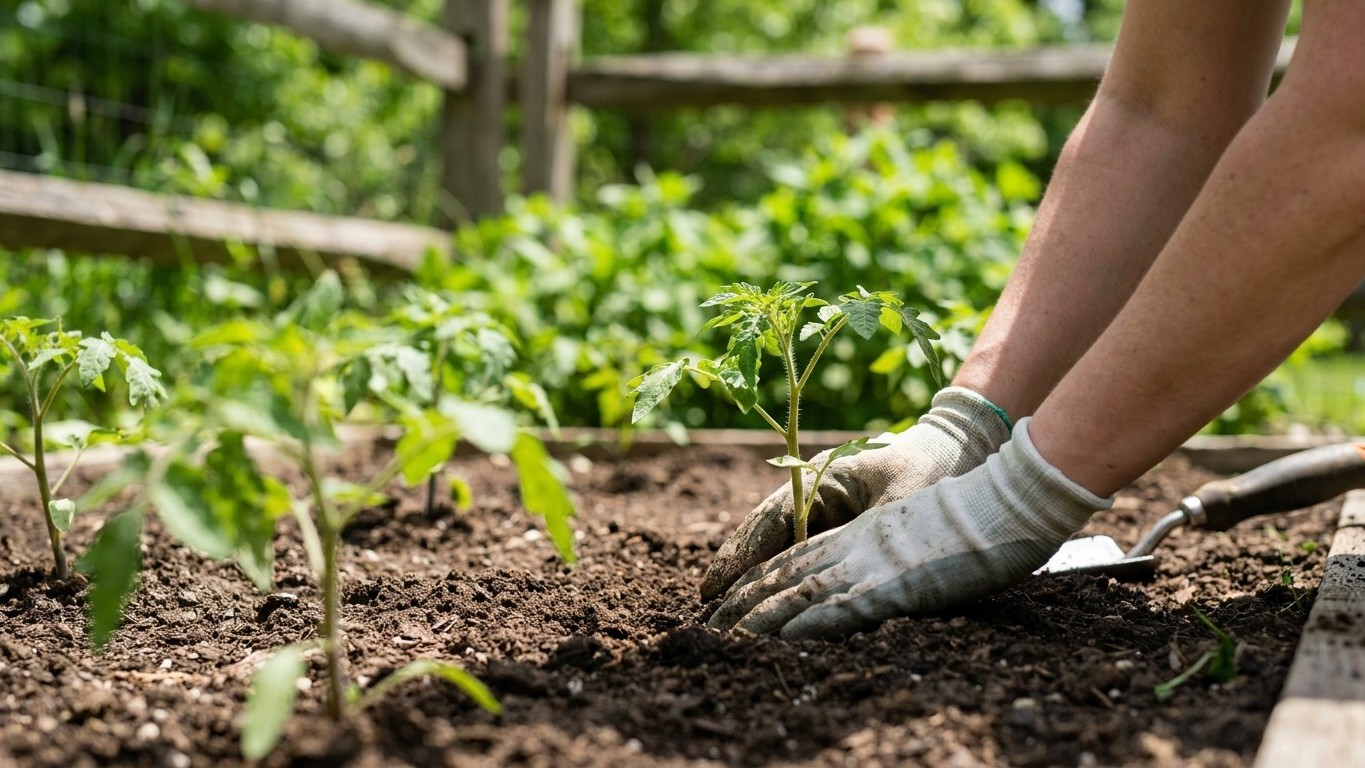

June is South Carolina’s hottest planting window of the year, and it belongs to heat-lovers: okra, southern peas, sweet potato slips, melons, and the last realistic sowings of snap beans and sweet corn before the real summer swelter sets in. It’s also a harvest month, with garlic, onions, and the first tomatoes coming off the vine. Soil temperature, not the calendar, decides what actually thrives.
What goes in the ground in June

By June, South Carolina is three months past its last frost window (February 28 to March 17, per NOAA climate normals for the reference station), so frost is no longer the limiting factor anywhere in the state. Soil temperature is. Cool-season crops like lettuce and spinach will bolt or turn bitter in the rising heat, while warm-season crops finally hit their stride because the ground has caught up to the air.
Okra and southern peas (cowpeas) are the two crops built for this month. Both germinate poorly in cool soil but take off once the ground warms, and both shrug off the humidity and afternoon thunderstorms that define a Carolina summer. Sweet potato slips go in now too, since they need a long, hot stretch (well over 100 days) to size up before fall digging.
| Crop | Method | Approximate soil temp needed | Notes |
|---|---|---|---|
| Okra | Direct sow | Around 65°F | Tolerates poor soil and drought once established |
| Southern peas (cowpeas) | Direct sow | Around 65°F | Fixes nitrogen, good in tired beds |
| Sweet potato slips | Transplant | Warm, workable soil | Needs 100+ days to maturity |
| Cucumbers | Direct sow or transplant | Around 60°F | Water consistently or fruit turns bitter |
| Summer squash and zucchini | Direct sow | Around 60°F | Watch for squash vine borer |
| Melons | Direct sow or transplant | Around 65-70°F | Needs full sun and room to sprawl |
Tomatoes and peppers can still go in early in the month if they haven’t already, but they’re racing the clock. Fruit set slows dramatically once nighttime temperatures stay above the mid-70s, so a tomato transplanted in June is really being planted for a fall harvest rather than a midsummer one. Sweet corn planted now will mature in the thick of summer heat, which can hurt pollination, so treat it as a last shot rather than a sure bet.
What to start under cover
“Under cover” in June means something different than it does in early spring. There’s no frost to dodge, so starting seed indoors or in a shaded, protected spot is mostly about germinating fall crops without cooking them in the garden bed, and about timing transplants so they hit the ground at the right size.
Work backward from South Carolina’s first fall frost window, November 20 to December 5. Broccoli, cabbage, and Brussels sprouts typically need 10 to 12 weeks from seed to a harvestable head, plus a few weeks of hardening off and settling in after transplant. Counting back from late November puts the seed-starting window for these fall brassicas squarely in June, started indoors or in a shaded cold frame where daytime heat won’t fry the seedlings before they’re ready to move outside in late summer.
The two ways this goes wrong are familiar to anyone who’s tried it. Start too early under cover in June heat and the seedlings get leggy and stressed long before the garden bed has cooled enough to receive them, then they sulk or bolt on arrival. Start too late and the plants won’t have enough weeks of cool fall weather left to size up before frost shuts things down. If shade cloth and consistent watering aren’t part of the setup, June-started seedlings dry out fast, since ambient heat under any cover, even open shade, is intense this time of year.
Herbs like basil can also be started under light shade now for a mid-summer transplant, since direct June sun on tiny seedlings is often too much even for a heat-tolerant plant.
What is ready to pick
June is when the garden starts paying rent. Garlic and bulb onions planted the previous fall or winter come out this month, and the tell is the foliage: garlic is ready when the lower leaves brown and the top few stay green, and onions signal readiness when their tops flop over on their own.
Early tomatoes planted in spring begin ripening toward the end of the month in much of the state, and the first cucumbers and summer squash from spring plantings are usually already coming in steadily, often faster than a household can eat them. Snap beans sown in spring finish their run around now too, and it’s worth pulling spent plants promptly to make room for a second sowing of beans or a first sowing of southern peas.
Blueberries hit their peak in June across much of South Carolina, and early peach varieties are coming off the tree in the same window, both worth checking daily since ripe fruit doesn’t wait around in the heat. Cabbage and broccoli from late-winter plantings need to be cut now if they haven’t already been harvested, because summer heat pushes them to bolt and turn bitter fast. Stored garlic and onions from a previous harvest should get a quick check too. Any bulb going soft or sprouting at the neck should be used first, before it takes the rest of the batch with it.
The jobs that matter this month

Mulching is the single highest-value job in a South Carolina June. A 2 to 3 inch layer of straw, pine bark, or leaf mulch keeps soil temperatures from spiking in the afternoon sun, holds moisture between the heavy but irregular thunderstorms typical of the season, and keeps weeds from competing for both. Skip it this month and the difference shows up within a week in wilted squash and stressed tomato roots.
Watering rhythm matters more than watering volume. A deep soak two or three times a week beats a light daily sprinkle, since shallow watering trains roots to stay near the surface where they cook fastest. Tomatoes in particular need consistent moisture now to avoid blossom end rot, which is a calcium uptake problem triggered by irregular watering, not a lack of calcium in the soil itself.
Staking and trellising can’t wait. Tomatoes, pole beans, and cucumbers put on rapid growth in June heat, and a plant that sprawls unsupported for even a week develops a tangle that’s far harder to correct later, along with more contact between fruit and damp soil, which invites rot.
Succession sowing keeps the harvest coming. Beans, squash, and cucumbers planted in early June can be followed by another round in three to four weeks, staggering the harvest instead of getting buried in one glut.
Pest scouting earns its keep now too. Squash vine borer moths lay eggs at the base of squash and zucchini stems starting in early summer, and catching the first signs (a small hole with sawdust-like frass) before the larvae tunnel deep can save the plant. Japanese beetles and cucumber beetles also ramp up in June, and checking the undersides of leaves every few days catches an infestation while it’s still manageable by hand.
What not to do in June
The classic June mistake is treating cool-season crops as if they still have a window. Lettuce, spinach, and other spring greens sown now will bolt to seed or turn bitter within days in South Carolina heat, regardless of watering. If a fresh green is wanted, look to heat-tolerant substitutes like Malabar spinach or New Zealand spinach instead of fighting the thermometer.
Overwatering shallowly is another. A quick daily sprinkle feels responsible but actually encourages shallow, heat-vulnerable roots. Deep, less frequent watering builds a plant that can ride out a dry stretch between thunderstorms.
Heavy nitrogen fertilizing on tomatoes and peppers once they’re flowering is a common overcorrection. Nitrogen pushed at the wrong point drives lush leafy growth at the expense of fruit set, which is already under stress from June’s nighttime heat. A balanced or lower-nitrogen feed suits this stage better.
Letting mulch pile against plant stems, rather than staying a couple inches back, traps moisture against the base of the plant and invites rot and stem borers in warm, humid conditions. And pulling row covers or shade cloth off too early after a mild spell ignores that June heat can spike hard within days. Once shade cloth is protecting tender transplants or fall brassica seedlings from the worst afternoon sun, it’s worth leaving in place rather than removing it at the first cooler morning.
Checking this against your own county
A state-wide month is a starting point, not an instruction. South Carolina spans USDA hardiness zones 7a to 9a, and elevation changes the picture fast: the Upstate around Greenville and Spartanburg runs noticeably cooler than the Lowcountry and coastal plain around Charleston, where the milder microclimate can push planting windows earlier in spring and later in fall. A frost date measured at one airport station doesn’t hold for a mountain valley or a barrier island.
For county-level guidance, check the Clemson Cooperative Extension Service, which tracks regional soil and pest conditions specific to South Carolina.
Common questions
Is it too late to plant tomatoes in South Carolina in June?
Not too late to plant, but late for a midsummer harvest. Tomatoes transplanted early in June will likely set most of their fruit for a fall harvest, since heat above the mid-70s at night slows pollination through the peak of summer.
Can I still start a vegetable garden from scratch in June in South Carolina?
Yes. Okra, southern peas, sweet potatoes, cucumbers, and summer squash all do well started fresh in June, since the soil is finally warm enough for reliable germination and the growing season still has months left before the first fall frost.
Why are my June-planted seeds not coming up?
Uneven watering is the usual culprit. Direct-sown seed in June heat can dry out at the surface within hours of a watering, especially without mulch, which prevents germination even when soil temperature is otherwise right for the crop.
What should I do with spring crops that are bolting in June heat?
Pull them. Lettuce, spinach, and other bolting greens won’t recover flavor once they’ve started flowering, and the bed space is better used for a heat-tolerant crop like southern peas or a second round of beans.
Gardeners who plant by the Moon can check the June 2027 moon planting calendar, a tradition rather than a proven method.