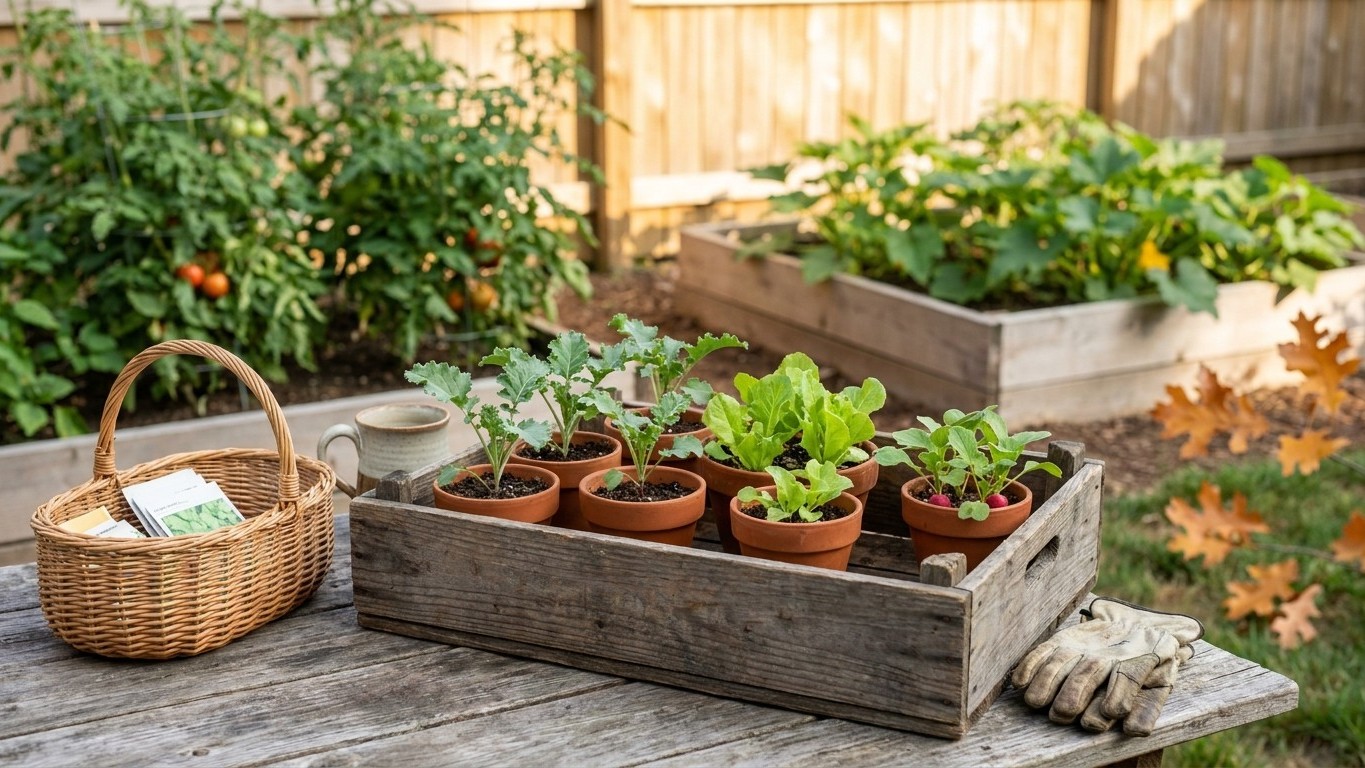

August in Tennessee splits into two gardens: the one still producing in the heat, and the one you’re building for fall. Early in the month, direct-sow bush beans and a fast summer squash for one more harvest before frost. From mid-August on, shift to root crops and transplant fall brassicas. Skip new warm-season plantings after the first week.
What goes in the ground in August

The decision this month isn’t the calendar, it’s counting backward from the first fall freeze. Tennessee’s average first fall frost lands between October 28 and November 8, depending on where the station sits (source: NOAA NCEI 1991-2020 Climate Normals, station USW00013897). That gives a working window of roughly eight to fourteen weeks from any date in August, and every crop you plant now has to fit inside it, not just survive the heat that’s still sitting on the soil.
Bush beans are the clearest early-August bet. They mature in 50 to 60 days, which puts an August 1 sowing right at the edge of a safe harvest even against the earlier frost date. Wait past the first week or two and the math stops working, so this is a small, closing window rather than a monthlong one.
A second wave of summer squash or quick cucumbers can still go in during the first half of the month for a late crop, but treat this as a gamble crop in cooler pockets of the state, not a guarantee everywhere.
Root crops are the safer play as the month goes on. Carrots, beets, and turnips sown from mid-August through the end of the month have enough days to size up before the ground cools, and they tolerate the light frost that typically arrives before a hard freeze does.
Hardy greens belong here too: collards, mustard, kale, and turnip greens sown direct in the back half of August will still be producing well past the average frost date, since none of them quit at 32°F the way a squash vine does.
Transplants of broccoli, cabbage, and cauliflower that were started under cover in July go into the ground now, ideally on an overcast day or in the evening, to avoid transplant shock from soil that’s still holding summer heat.
What to start under cover
Not everything germinates well in August soil, even with the right calendar math. Lettuce and spinach seed can stall or go dormant when soil temperatures sit in the 80s, so starting them in trays in a cooler spot, a basement or a shaded porch, and transplanting once soil has eased down, gets around the problem entirely.
Count backward from the first frost window (October 28 to November 8) the same way you would for anything direct-sown. A lettuce variety that needs 45 to 55 days to mature, started under cover in the first half of August, lands its transplant date in the second half of the month and still has margin before frost, even in the earlier part of the window.
The two failure modes show up every year in the same shape. Start too early under cover, in weather still running hot, and the seedlings stretch, go leggy, and sit rootbound in their trays waiting for soil to cool enough to receive them. Start too late, and a fall broccoli transplant set out in early September simply runs out of daylight and warm soil before it heads up.
The middle of August is the practical sweet spot for a second round of broccoli and cabbage starts meant for a September transplant date, giving them roughly six to eight weeks of cover time before they need real dirt.
Cover cropping seed, like crimson clover or winter rye for beds coming out of production, can also be started in flats now if you want a head start on ground cover before the first frost arrives, though most gardeners simply broadcast it directly once summer crops are pulled.
What is ready to pick
August is the harvest month, and the list is long enough that the real skill is knowing when to stop waiting. Tomatoes are at full stride, and the test is color plus a slight give at the shoulder, not size. Peppers can be picked green or left to color up, depending on the variety and your patience.
Sweet corn signals readiness through the husk: silks turning brown and dry, kernels that spurt a milky liquid when pierced with a thumbnail rather than a clear one. Summer squash and cucumbers need daily checking in this heat, since both can go from perfect to oversized in about 48 hours.
Okra should come off the plant at 3 to 4 inches, before the pods turn woody. Melons are trickier: a cantaloupe slips easily from the vine when ripe, while a watermelon gives a dull thump and the tendril nearest the fruit browns and dries.
Blackberries and early apples are also coming in through the state this month, and blueberries are often on their last flush. For anything you can’t eat fast enough, this is the point in the season where a second freezer bag or a pressure canner earns its keep, since the harvest volume in August rarely matches the pace anyone can eat it at.
The jobs that matter this month

Watering rhythm decides more outcomes in August than any other single task. Deep, infrequent watering, aimed at the root zone rather than a daily sprinkle over the leaves, keeps tomatoes from splitting and squash from bolting into stress-induced bitterness. A soaker hose run early morning beats an overhead sprinkler run at midday on every count that matters.
Mulch does double duty right now: it holds soil moisture through the heat and it keeps the ground from crusting over just as you’re trying to get root crops and greens to germinate. A two to three inch layer around established plants and a thinner layer over newly seeded rows both pay off within a week.
Staking and tying can’t wait. Indeterminate tomatoes and any vining squash left unsupported in August sprawl fast, and once a heavy fruit-laden branch is on the ground, propping it back up does more damage than leaving it.
Pest scouting matters most in the first half of the month. Squash vine borer damage shows up as a wilting vine with a small hole and frass near the base, and it’s treatable early but not once the larva is deep inside. Japanese beetles and tomato hornworms are both easiest to control by hand-picking in the cool of early morning, before the heat of the day sends everyone, gardener included, indoors.
Succession sowing of beans, and the timed root-crop and green sowings described above, only work if they actually go on a calendar. This is also the month to clear spent bean and pea vines, work compost into that freed space, and get it ready for the fall crops going in behind them.
What not to do in August
The most common mistake is trusting the air temperature over the soil temperature. A warm morning doesn’t mean the soil has cooled enough for lettuce or spinach seed to germinate reliably, and forcing it usually just means a bare row and a wasted packet of seed.
Planting a new warm-season crop, like a full round of beans or squash, past the first week or two of August is the second classic error. It feels like there’s still summer left, but the arithmetic against the October 28 to November 8 frost window simply doesn’t support it in most of the state.
Nitrogen timing trips up root crops specifically. A high-nitrogen feed on carrots, beets, or turnips pushes lush tops at the expense of the root, which is the opposite of what anyone wants from those beds. Save the nitrogen for the leafy greens and brassica transplants, which do want that push.
Transplanting brassicas at midday, straight from a cool tray into full afternoon sun and hot soil, sends them into shock they don’t always recover from. Move the transplant to evening or an overcast stretch instead, and water them in immediately.
Finally, don’t let squash vine borer or hornworm damage sit unchecked because the season “feels” like it’s winding down. Both pests can still take out a healthy plant in August, and a few minutes of scouting costs far less than the harvest they’ll otherwise cost you.
Checking this against your own county
A statewide window is a starting point, not an instruction. Tennessee’s hardiness range runs from 5b to 8a on the USDA Plant Hardiness Zone Map, and East Tennessee along with the Cumberland Plateau consistently runs cooler and later than the Nashville-area dates used above. Elevation alone can shift a frost window by weeks within the same county.
Before locking in a fall planting date, check both the University of Tennessee Institute of Agriculture Extension for local advice and any county-specific planting calendar it publishes. Extension agents adjust these dates for elevation and local microclimate in ways a statewide average never can.
Gardeners who plant by the Moon can check the August 2027 moon planting calendar, a tradition rather than a proven method.
Common questions
Is it too late to plant tomatoes in Tennessee in August?
Yes, for a first tomato crop from seed. A transplant of a fast-maturing variety could still squeak by in the earliest part of the month in warmer parts of the state, but the safer move is to focus new plantings on beans, root crops, and fall greens instead.
Can I still plant carrots in August in Tennessee?
Yes, and mid-to-late August is one of the better windows for them. Carrots sown then have enough time to size up before the first fall frost (October 28 to November 8) and actually sweeten after a light frost rather than being damaged by it.
What vegetables tolerate a light frost in Tennessee?
Kale, collards, turnips, mustard greens, and carrots all handle a light frost without damage, and several improve in flavor afterward. Squash, beans, cucumbers, and tomatoes have no such tolerance and will be killed by the first freeze.
When should fall broccoli and cabbage transplants go in the ground?
Transplants started under cover in July generally go into the garden in August, timed so they have roughly 60 to 70 days of growth before the average first frost. Moving them out in the evening or under cloud cover reduces transplant shock in the remaining summer heat.