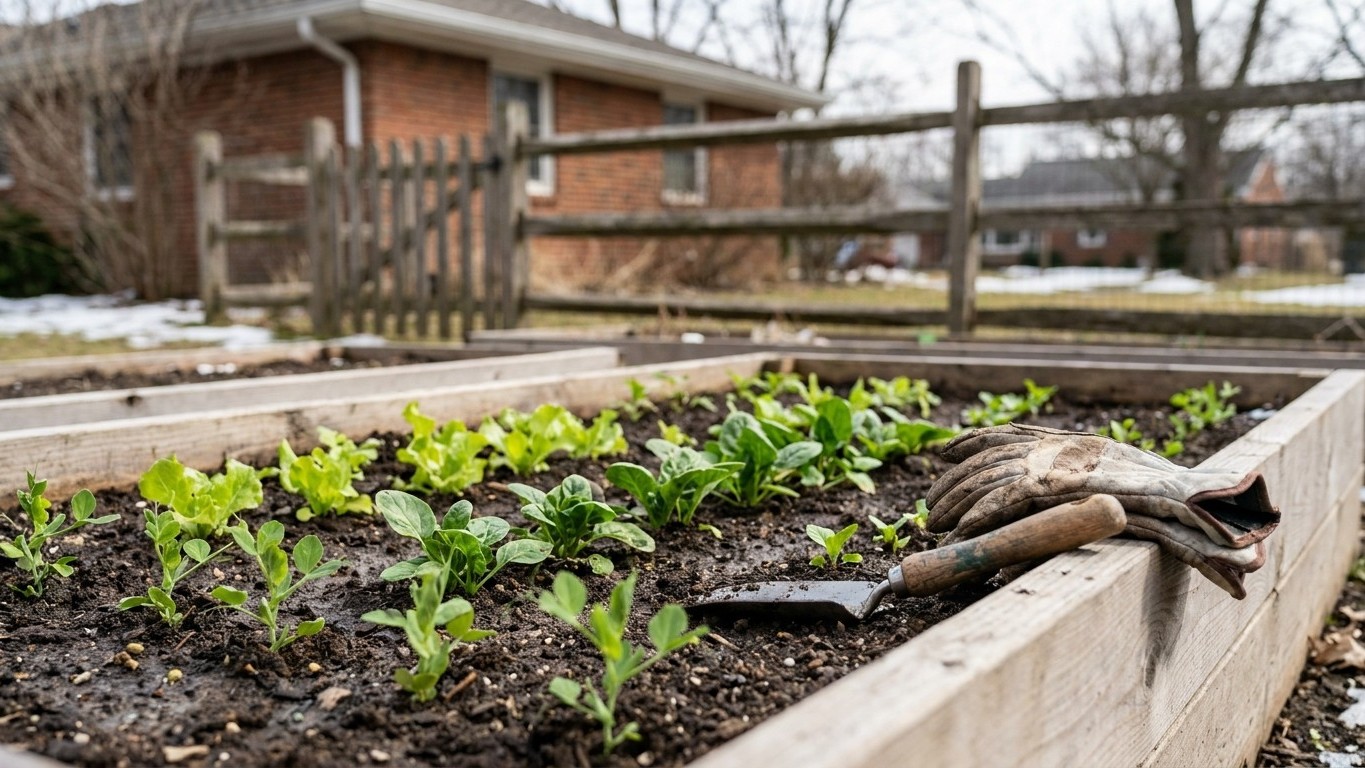

Direct-sow only what shrugs off a hard freeze: spinach, kale, lettuce, peas, radishes, and onion sets go in now. Garlic and shallots, bare-root fruit trees, and asparagus crowns also belong in the ground. Everything tender waits, because Nashville’s last frost typically falls between March 31 and April 12, and the whole month sits ahead of that window.
What goes in the ground in March

Soil temperature decides this month, not the calendar. Cold-hardy crops germinate and grow in soil in the low 40s Fahrenheit, but tomatoes, peppers, beans, and squash need soil closer to 60F to even sprout without rotting. Since the last frost at the Nashville reference station (USW00013897) lands between March 31 and April 12, most of March still falls inside the frost window across the state, and higher ground in East Tennessee and the Cumberland Plateau runs later than that.
What is genuinely safe: spinach, lettuce, arugula, kale, collards, and mustard greens sown directly. Peas go in as soon as the soil can be worked, ideally against a trellis set up before the vines need it. Onion sets, shallots, and any garlic not already planted in fall can still go in early in the month if the ground isn’t frozen or waterlogged. Radishes and carrots handle a light frost without complaint. Potatoes can go in toward the back half of March in the warmer western part of the state, but growers on the plateau or in the eastern valleys should hold another two to three weeks.
Bare-root roses, fruit trees, and cane fruit like raspberries and blackberries want to go in while they’re still dormant, and March is usually the last comfortable window before buds break. Asparagus crowns follow the same logic: plant while dormant, not once the ferns have started pushing up.
| Crop group | Safe now? | Why |
|---|---|---|
| Hardy greens, peas, radishes | Yes | Tolerate frost, germinate in cold soil |
| Onion sets, garlic, shallots | Yes | Rooting happens best while soil is cool |
| Bare-root trees, canes, asparagus | Yes | Must go in before dormancy breaks |
| Potatoes | Late month, west TN only | Risk of rot in cold, wet soil |
| Tomatoes, peppers, beans, squash | No | Soil too cold, frost window still open |
Anything tender that goes in this month is a gamble against a frost date that, historically, hasn’t closed until the very end of March at the earliest, and well into April in cooler pockets of the state.
What to start under cover
Work backward from the frost window instead of from a date on a seed packet. With the last frost falling between March 31 and April 12 around Nashville, tomatoes started 6 to 8 weeks ahead should already be under lights by early March if they’re going to be transplant-ready right at the frost line. Peppers and eggplant, which want 8 to 10 weeks indoors, are on the same tight schedule, so starting them in early March still works for growers whose local frost falls closer to mid-April.
Broccoli, cabbage, and other brassica transplants started 6 weeks before that window are ready to harden off toward the end of March, giving them a jump on the season without exposing tender leaves to a hard freeze. Basil, started indoors now, will be sizeable enough to go out once the soil has warmed past the danger point.
Cucumbers, summer squash, and melons don’t need as much lead time, just 3 to 4 weeks, so starting them under cover in late March lines up with transplanting after the frost window closes. The two ways this goes wrong are starting too early and ending up with rootbound, leggy plants sitting on a windowsill for weeks past their prime, or starting too late and running out of the warm stretch these crops need to produce before fall frost returns between October 28 and November 8.
A cold frame or unheated hoop house buys an extra two to three weeks on either end of the season, which matters most for gardeners on the Cumberland Plateau where spring arrives later than the state average.
What is ready to pick
Outdoors, March harvests are thin but real. Kale, collards, and spinach that overwintered in the ground often taste sweeter after cold exposure, since the plant converts starches to sugars as a kind of natural antifreeze. Leeks left in the ground over winter are still pullable as long as the soil hasn’t frozen solid. Cold frames extend this further, holding lettuce and mustard greens in edible condition well past when open-ground greens would have bolted or frozen back.
Indoors, sprouts and microgreens fill the gap on a countertop in under two weeks, which makes them one of the few crops that go from seed to plate entirely within March regardless of what the weather is doing outside.
Stored crops need a check now, not later. Potatoes stored since fall should be inspected for soft spots or sprouting eyes; anything sprouting should be used first or the sprouts rubbed off to slow the clock. Onions and winter squash stored in a cool, dark spot are worth turning over monthly, since one soft squash sitting against its neighbors can spread rot through the whole bin within days. Any onion that’s gone soft at the neck or started growing a green shoot should come out of storage and get used immediately.
The jobs that matter this month

Pruning and planning
Dormant pruning of fruit trees, grapevines, and cane fruit needs to happen before buds swell, and March is usually the last practical window in Tennessee before that happens. Cutting after growth starts costs the plant stored energy and can reduce the season’s fruit set. This is also the last reasonable stretch to order seed before the popular tomato and pepper varieties sell out from mail-order suppliers, and to sketch out crop rotation so nightshades and brassicas aren’t going back into the same bed they occupied the prior season.
Soil and structure
A soil test taken now gives results back in time to amend before the bulk of spring planting starts in April. Turning compost speeds decomposition right as the pile starts warming with the season, and finished compost worked into beds now has weeks to integrate before seedlings go in. Cleaning and sharpening pruners, hoes, and shovels takes an afternoon and prevents ragged cuts that invite disease into fresh wood.
Beds, trellises, and fencing repaired now save a frustrating scramble later when the peas and beans actually need something to climb. Staking tomato cages or building supports before the plants go in the ground beats trying to wrestle a support around a plant that’s already sprawled. Weeds that germinate in March are far easier to pull now, as seedlings, than in June once they’ve set seed and multiplied.
What not to do in March
The classic mistake is planting warm-season crops outdoors because a stretch of 70-degree afternoons felt like spring. Air temperature and soil temperature are not the same thing, and soil this early in the season often lags well behind a warm afternoon. A tomato transplant set into 50-degree soil will sit stalled, stressed, and vulnerable to rot for weeks, even if it doesn’t die outright from the next frost, since the last frost at the Nashville reference station doesn’t clear until March 31 to April 12, and later than that farther east.
Uncovering cold frames, row covers, or mulched beds too early after a mild spell is the second common error. A week of warm days followed by one hard freeze can wipe out greens that would have sailed through winter untouched if they’d stayed covered. Keep the covers on hand even after removing them, because Tennessee’s spring weather swings hard between warm fronts and cold snaps.
Feeding nitrogen too early is the third trap. High-nitrogen fertilizer applied before a plant has an established root system pushes soft, leafy growth that’s more vulnerable to frost damage and slower to recover from cold stress. Hold nitrogen applications until plants are actively growing and the frost risk has genuinely passed, not just until the calendar suggests it should have.
Checking this against your own county
A statewide frost window is a starting point, not an instruction for a specific yard. Elevation changes everything in Tennessee: a garden on the Cumberland Plateau or in the higher valleys of East Tennessee can run two to three weeks behind the Nashville reference dates used here, while parts of West Tennessee near the Mississippi warm up sooner. The USDA Plant Hardiness Zone Map places the state across zones 5b to 8a, which is a wide enough range that a recommendation timed for one end can fail at the other.
For local frost data and a planting calendar built for specific counties, the University of Tennessee Extension is the reliable next stop.
Common questions
Can I plant tomatoes in Tennessee in March?
Not outdoors. The last frost typically falls between March 31 and April 12 around Nashville, and later in East Tennessee, so tomato transplants set out in March face real frost risk. Start them indoors instead and transplant after the local frost date has passed.
What vegetables can handle a frost in March?
Spinach, kale, collards, lettuce, peas, and radishes all tolerate a light frost without damage, which is why they’re the safe direct-sow choices this early in the season.
Is it too late to plant garlic in March?
Garlic is normally planted in fall for the best bulb size, but if it wasn’t planted then, an early March planting where the ground is workable can still produce a smaller harvest.
Why does elevation matter so much for planting dates in Tennessee?
Higher elevations, like the Cumberland Plateau and the mountains of East Tennessee, hold cold air longer into spring than the lower valleys and western part of the state, which can push safe planting dates two to three weeks later than statewide averages.
Gardeners who plant by the Moon can check the March 2027 moon planting calendar, a tradition rather than a proven method.