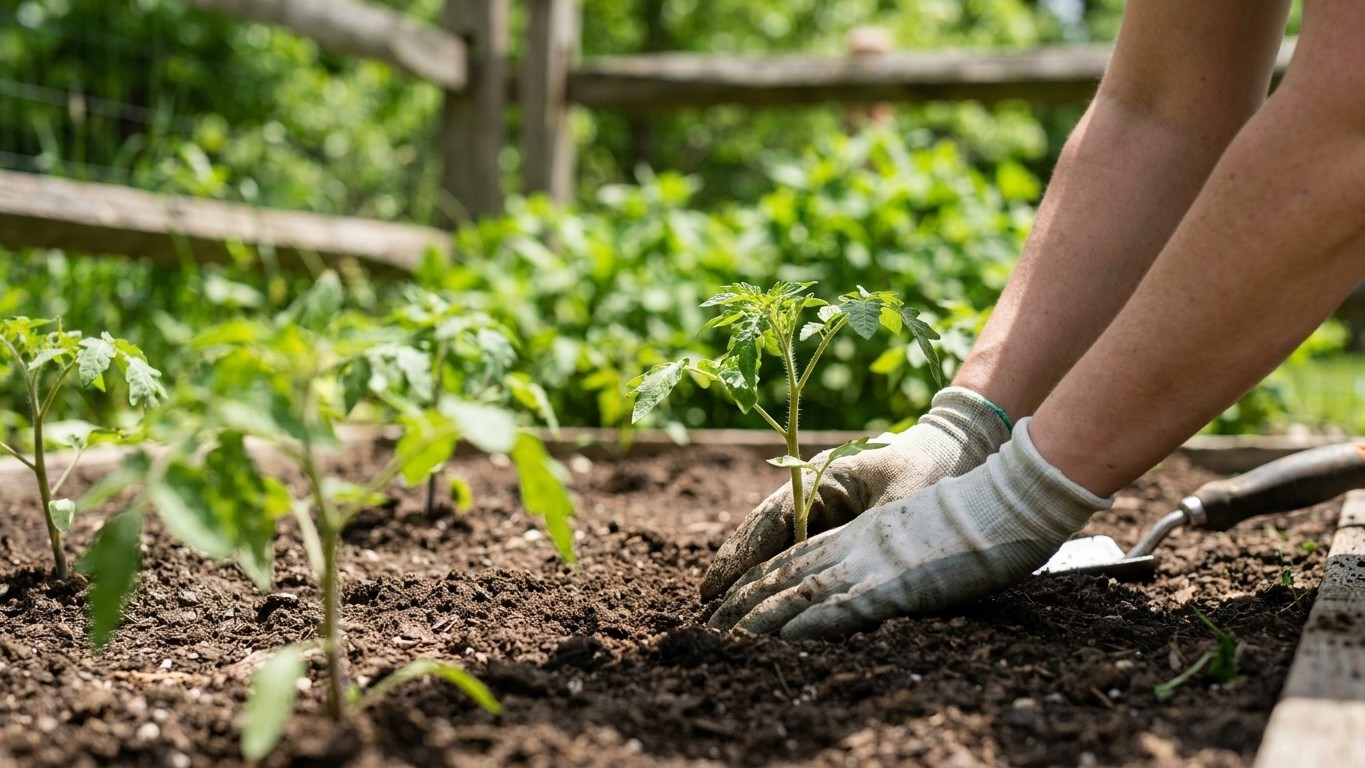

By June, Virginia gardens sit squarely in the warm-season stretch. The state’s last frost window (March 20 to April 3 at the coastal reference station) is long past, so soil has had weeks to warm. This is the month for beans, squash, cucumbers, melons, corn and okra going straight into the ground, with any lagging tomato or pepper transplants going in during the first half of the month before heat makes root establishment harder.
What goes in the ground in June

The decision this month isn’t whether frost will hit, it’s whether soil temperature and heat tolerance line up with what you’re planting. Warm-season crops germinate poorly in soil below roughly 60°F, and June soil across most of Virginia has cleared that bar weeks earlier. That’s why this month rewards direct-sowing over starting indoors: beans, corn, cucumbers, summer squash, winter squash, melons and okra all go straight into garden soil now, and they’ll outrun anything started under cover in April.
Succession sowing matters more in June than almost any other month. Bush beans and corn planted in the first week can be followed by a second sowing two to three weeks later, stretching harvest instead of getting one glut. Sweet potato slips, if not already set, still have time to root and produce before the first fall frost window of November 10 to November 24.
Where June planting gets riskier
Lettuce, spinach and other cool-season greens are the gamble this month. Direct-sown in early June they may germinate fine in the Blue Ridge and higher elevations of southwest Virginia, where spring lags weeks behind the coastal plain, but seed sown into hot Piedmont or Tidewater soil late in the month often just sits, or bolts the moment it sprouts. If you want greens through summer, shade cloth and afternoon shade are doing real work by June, not just a nice-to-have.
| Crop group | Method | June timing note |
|---|---|---|
| Beans, corn, squash, cucumbers, melons | Direct sow | Safe all month, succession every 2-3 weeks |
| Tomatoes, peppers, eggplant | Transplant | Best in first half of month before heat stress |
| Sweet potato slips | Transplant | Set as early in the month as possible |
| Lettuce, spinach | Direct sow, cautious | Only with shade, higher elevation or early month |
What to start under cover
June is when Virginia gardeners plant the seeds of fall harvest, and the arithmetic runs backward from the first fall frost window of November 10 to November 24. Broccoli, cabbage and brussels sprouts typically need 10 to 14 weeks from seed to harvest-ready heads. Counting back from mid-November, that puts the ideal seed-starting window for those crops right in June, started indoors or under light shade cloth where outdoor heat would otherwise scorch tender seedlings.
The same backward math applies to a second round of tomatoes in the warmer coastal and Piedmont zones, where growers with enough season left sometimes start a fall crop from seed in June to fruit before frost. It’s tighter than it sounds: a tomato variety needing 75 days to maturity, started from seed in early June, needs every one of those days to land fruit before the cold shuts things down, especially inland where frost arrives on the earlier end of the range.
The two ways this goes wrong are familiar to anyone who’s started seeds before. Start too early relative to your last realistic transplant date and you end up babysitting leggy, rootbound seedlings on a windowsill in July heat, which stresses them before they even reach the garden. Start too late and you run out of days entirely, watching a promising fall crop get caught by frost while still green. The safest habit is choosing the fall frost date for your specific county, not the coastal reference point, and subtracting the seed packet’s stated days-to-maturity plus a two-week buffer for transplant shock.
What is ready to pick
June is a genuine transition month in the garden, and what’s ready reflects that. Garlic planted the previous fall is typically ready to pull once the lower leaves have browned, usually mid-to-late June across most of the state, and it should come out before the papery wrapper around each bulb starts to split. Peas are on their way out as heat builds; pick pods daily once they plump, because a few hot days can turn a sweet pea patch bitter and tough almost overnight.
Strawberries wind down through the month, with the last flush often smaller and more scattered than the peak weeks. Early lettuce and spinach sown in spring are usually bolting by now, sending up a bitter flower stalk, so the practical move is to harvest what’s left rather than wait, and pull the plants to free the bed for a heat-tolerant crop.
By the back half of June, the first summer squash and cucumbers of the season typically start showing up in gardens that were direct-sown early, and in the warmest coastal and southern Piedmont locations, the earliest tomato varieties may set their first ripe fruit before the month is out. Herbs like basil, dill and cilantro are usually in full production and benefit from regular cutting, which delays bolting and keeps new growth coming.
The jobs that matter this month

Mulching pays off faster in June than in any other month, because it’s doing double duty: holding soil moisture as temperatures climb and keeping weed pressure down before it explodes. A two-to-three-inch layer of straw or shredded leaves around vegetables now saves hours of watering and weeding later.
Staking and trellising need to happen before plants sprawl, not after. Tomatoes, pole beans, cucumbers and melons put on rapid vertical growth in June, and a cage or trellis installed after the vines have flopped over means damaging stems to correct it. The same logic applies to caging peppers and staking tall dahlias or delphiniums in ornamental beds.
Watering rhythm shifts this month too. Established plants generally do better with a deep soak once or twice a week than a light daily sprinkle, which encourages shallow roots that struggle the moment a dry spell hits. Morning watering, aimed at the soil rather than the foliage, cuts down on the fungal disease pressure that humid Virginia summers bring.
Pest scouting deserves a weekly habit starting now. Japanese beetles typically begin emerging in June across much of the state, along with squash vine borer moths laying eggs at the base of squash stems and early Colorado potato beetle larvae on unprotected potato plants. Catching these populations early, by hand-picking beetles or checking stem bases for the sawdust-like frass that signals borer activity, is far easier than fighting an established infestation in July.
What not to do in June
The most common June mistake is treating soil temperature as settled the moment the air feels warm. A stretch of hot days can push gardeners to direct-sow heat-lovers into beds that are still shaded or slow to warm at root depth, particularly in the Blue Ridge and higher elevations where spring lingers. Check soil temperature with a simple probe thermometer rather than trusting the thermometer on the porch.
Uncovering plants too early after a cool spell is the flip side of the same error. A run of mild nights doesn’t mean frost risk is fully gone in the higher elevations of southwest Virginia, where the last frost window can run weeks behind the coastal reference dates. Row covers protecting tender transplants are cheap insurance against a late cold snap that catches gardeners off guard.
Nitrogen timing trips up a lot of tomato and pepper growers in June. Heavy nitrogen feeding once plants are flowering and setting fruit pushes leafy growth at the expense of fruit, leaving you with a lush, green plant and disappointing yield. A phosphorus-and-potassium-leaning fertilizer, or simply backing off nitrogen once flowers appear, keeps the plant’s energy pointed at fruit rather than foliage.
Skipping water during the season’s first real heat wave is the other classic slip. Shallow-rooted transplants and anything in a container can wilt and suffer real damage within a single hot afternoon, and by the time leaves look scorched the damage to yield is often already done.
Checking this against your own county
Every date and window here comes from one coastal reference station, and Virginia’s geography is too varied for a single line to hold statewide. Elevation change across the Blue Ridge and the mountains of southwest Virginia routinely pushes the last frost window and the first fall frost window weeks later in spring and weeks earlier in fall than the coastal plain sees. A garden in the Shenandoah Valley or the highlands near the Kentucky and Tennessee borders is often working with a noticeably shorter frost-free season than Virginia Beach.
Before locking in a June planting plan, check county-level guidance through the Virginia Cooperative Extension, which publishes localized planting calendars and frost data for the state’s individual regions.
Common questions
Is it too late to plant tomatoes in June in Virginia?
No, though it depends on variety and location. Transplants set in the first half of June still have time to establish and fruit before the first fall frost window of November 10 to November 24 in most of the state, especially in warmer coastal and Piedmont areas.
Can I still direct-sow beans and squash in June?
Yes. Soil is warm enough across virtually all of Virginia by June, and beans, squash, cucumbers, corn and melons are reliable direct-sow choices all month, with succession plantings extending the harvest.
Why did my June-sown lettuce bolt so fast?
Heat is the trigger. Lettuce and spinach send up a bitter flower stalk once temperatures climb, which is why cool-season greens sown in June need shade cloth, partial shade or higher-elevation conditions to hold longer before bolting.
What Virginia hardiness zone should I use for June planting decisions?
Virginia spans USDA hardiness zones 5a to 8b, a range built on average annual extreme minimum temperature rather than frost timing. Since June planting decisions hinge more on soil temperature and the fall frost window than on winter hardiness, checking your specific county’s frost dates through Virginia Cooperative Extension gives a more useful answer than the zone number alone.
Gardeners who plant by the Moon can check the June 2027 moon planting calendar, a tradition rather than a proven method.