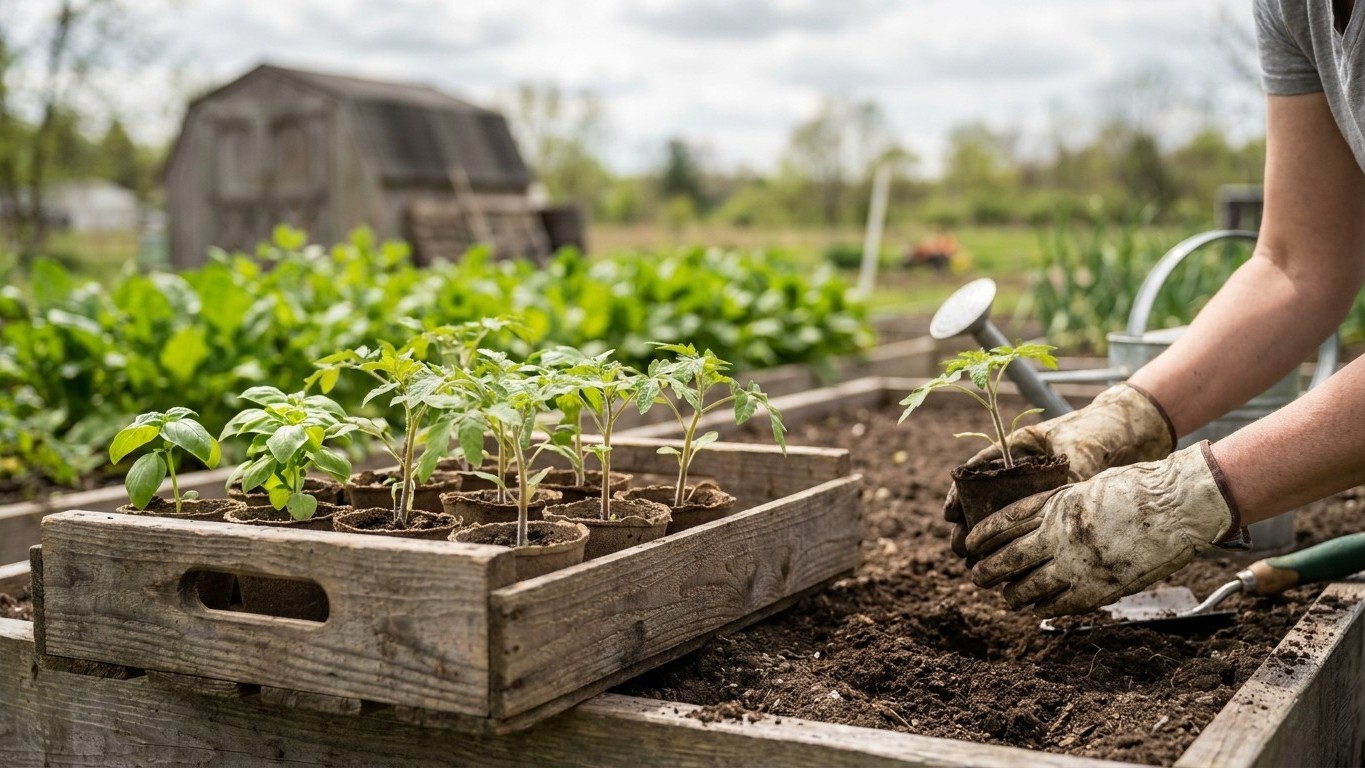

By May, Virginia’s last spring frost window (March 20 to April 3, per NOAA NCEI data for coastal Virginia Beach) has already closed across most of the state. That means tomatoes, peppers, beans, squash, and corn can go straight into the ground. The exception is higher elevation: the Blue Ridge and far southwest run weeks behind the coast, so soil temperature there still calls the shots.
What goes in the ground in May

The calendar says frost season is over almost everywhere in Virginia by now, but soil temperature is the real gatekeeper, not the date on the wall. Warm-season crops like tomatoes, peppers, eggplant, and squash want soil consistently above 60°F at planting depth. In the Piedmont and Tidewater regions, that threshold is usually met well before mid-May. In the mountains and southwest counties, where the growing season starts later, a cold snap can still stall germination even after the official frost window has passed.
Direct-sown beans, corn, cucumbers, and melons are safe bets across most of the state this month. So are sweet potato slips, once nighttime lows stay reliably above 55°F. Basil and other tender herbs can go outside too, but they sulk in anything cooler.
Cool-season holdovers still have a place. Lettuce, spinach, and other greens can go in for one more quick round before summer heat pushes them to bolt, especially if you choose a shaded spot or a heat-tolerant variety. Alliums planted the previous fall, garlic and shallots, are bulking up underground now and don’t need attention beyond routine weeding.
Where the timing shifts
| Region | Typical soil readiness | Risk factor |
|---|---|---|
| Coastal / Tidewater | Early May | Low frost risk, watch for heat stress by late month |
| Piedmont | Early to mid-May | Occasional cool nights early in the month |
| Blue Ridge / Southwest | Mid to late May | Lingering frost risk at higher elevation |
If you garden in one of those higher counties, hold warm-season transplants a week or two longer rather than trusting a mild stretch of weather.
What to start under cover
Most of the classic “start indoors” crops for spring, tomatoes, peppers, eggplant, are already transplant-sized by May, not seedlings. What’s worth starting under cover now is the next wave: crops timed for fall harvest, counted backward from the first fall frost window of November 10 to November 24.
Take broccoli or cabbage for a fall crop. Most varieties need roughly 60 to 80 days from transplant to harvest, plus another few weeks as a seedling before it’s transplant-ready. Working backward from the earliest fall frost date in your area, that puts the seed-starting window for fall brassicas in the late-May to June range, not now, so a cold frame or shaded seed tray started this month gets you ahead without rushing.
Melons and winter squash for a long fall harvest can also be started in cell trays under cover this month if your outdoor season is short, then moved out once the vines have a few true leaves and nights are reliably warm.
The two failure modes are the same every year. Start too early and you end up with leggy, rootbound seedlings sitting in cramped containers, stretching for light and stalling once transplanted. Start too late and the plant runs out of daylight and warmth before it finishes producing. Neither is fatal, but both cost yield. A cold frame or unheated hoop structure buys flexibility either way, letting you hold seedlings a little longer without the stretch that happens on a windowsill.
What is ready to pick
Asparagus beds that are three years or older are in full swing by May, and the harvest window runs several weeks before spears thin out and it’s time to let the plant put energy back into its roots. Rhubarb stalks are thick and ready to pull, though the leaves stay in the compost pile, never the kitchen.
Overwintered spinach and kale are usually still producing, but watch for the first signs of bolting, a central stalk shooting up, leaves narrowing, a bitter edge to the taste. Once that starts, harvest fast and use it up; the plant won’t reverse course.
Early lettuce sown in March is at full size for many gardeners now, and the first strawberries are coloring up on plants that were mulched over winter. Peas planted in early spring are starting to fill pods, and the test is simple: firm, well-filled pods that still snap cleanly, not ones gone puffy or pale.
If you’re checking stored crops from the previous season, onions and winter squash held in a cool pantry should be inspected now for soft spots or sprouting. Anything showing green shoots at the neck or a soft give under light pressure should be used immediately rather than left to spread rot to the rest of the batch.
The jobs that matter this month

Staking and caging go in before plants need them, not after. A tomato plant that’s already sprawled across the bed by the time you reach for a cage will have broken stems and buried fruit by the time you sort it out. Set supports at planting, even for a seedling that looks too small to need one.
Mulching matters more in May than almost any other month, because bare soil heats and dries fast once the sun gets strong. A two- to three-inch layer of straw or shredded leaves around warm-season crops holds moisture and keeps weed pressure down before it gets ahead of you.
Succession sowing is the job most gardeners skip and regret. A single planting of beans, lettuce, or cucumbers gives one harvest window; a new row every two to three weeks keeps the kitchen supplied through summer instead of flooded for a week and then empty.
Pest scouting starts in earnest now. Flea beetles show up on young brassicas and eggplant as tiny shot holes in the leaves; squash bugs lay clusters of copper-colored eggs on the undersides of squash and pumpkin leaves. Catching either in the first week saves the plant; missing them for a month means fighting an established population.
Watering rhythm needs resetting too. Seedlings and transplants need frequent, shallow water to establish roots, while a bed of maturing peas or garlic wants deeper, less frequent soakings that encourage roots to grow down rather than stay shallow.
What not to do in May
The most common mistake is trusting the air temperature over the soil. A warm afternoon doesn’t mean the soil four inches down has caught up, especially after a cool, wet stretch. Planting warm-season seedlings into soil that’s still cold slows them down for weeks, sometimes permanently stunting the plant even after conditions improve.
In the mountains and southwest counties, uncovering row covers or cold frames too early after a mild spell is a close second. A run of warm days can be followed by a night that dips back down, and tender growth that’s been hardened off too fast has no buffer left.
Nitrogen timing trips up a lot of tomato and pepper growers. A heavy dose of high-nitrogen fertilizer right after transplanting pushes lush green foliage at the expense of flowering and fruit set. Better to feed lightly at planting and switch to a bloom-focused fertilizer once the first flowers appear.
Skipping the hardening-off step for anything started indoors is another repeat offender. A seedling raised under stable indoor light and temperature needs several days of gradually increasing outdoor exposure before it goes into the ground full-time, or the shock from wind, direct sun, and temperature swings can set it back hard enough to stunt the whole season.
Checking this against your own county
A statewide frost window is a starting point, not a guarantee for your particular yard. Elevation alone can shift planting dates by two to three weeks between the coast and the mountains, and a valley that pools cold air overnight will lag behind a hillside a mile away. The USDA hardiness zone range for Virginia, 5a to 8b, spans that same gap: it’s built from one measure, the average annual extreme minimum temperature, and it tells you almost nothing about your specific frost dates on its own.
For local planting windows and county-specific guidance, Virginia Cooperative Extension (ext.vt.edu) publishes region-specific planting calendars and can connect you with an office in your own county.
Common questions
Is it too late to plant tomatoes in Virginia in May?
No. May is generally the prime transplanting window for tomatoes across most of Virginia, since the last spring frost window (March 20 to April 3) has already passed for the coastal and Piedmont regions. Gardeners in higher elevations should confirm soil warmth before planting.
Can I still direct-sow lettuce in Virginia in May?
Yes, but choose a heat-tolerant variety and plant it in partial shade if possible. Rising temperatures later in the month push lettuce toward bolting faster than in cooler months.
What vegetables are ready to harvest in Virginia in May?
Asparagus, rhubarb, overwintered kale and spinach, early lettuce, strawberries, and early peas are typically ready during this window, depending on when they were planted and the region’s specific soil warm-up.
Why does the Blue Ridge region plant later than the coast?
Elevation delays soil warming and extends frost risk. While coastal Virginia Beach data shows a last frost window of March 20 to April 3, mountain and southwest counties routinely see frost linger weeks past that range, which pushes safe planting dates later into May.
Gardeners who plant by the Moon can check the May 2027 moon planting calendar, a tradition rather than a proven method.