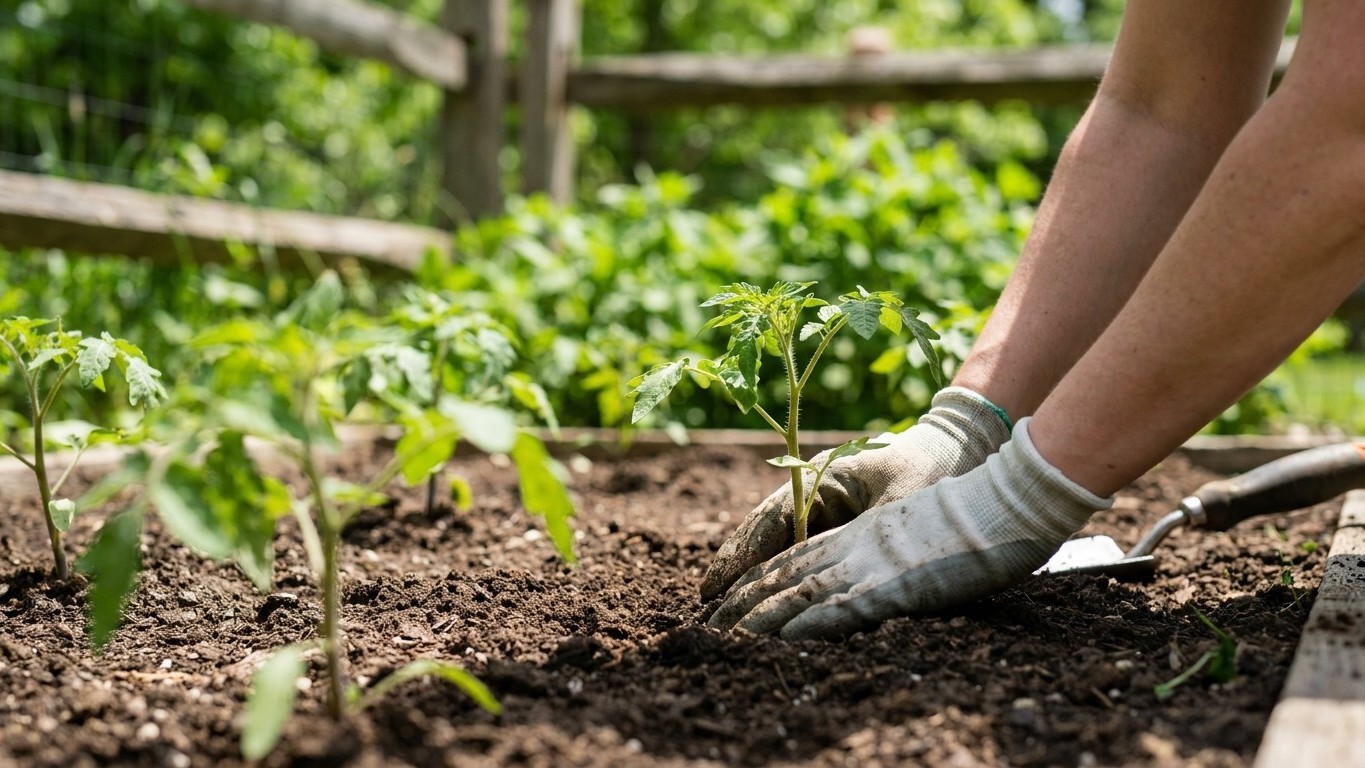

June is the month Wisconsin gardens fill in for real. Soil temperatures have finally caught up with the calendar, so beans, corn, squash, cucumbers, and melons can go straight into the ground, alongside tomato, pepper, and eggplant transplants that spent May hardening off. Succession sowings of lettuce, beets, and carrots still make sense in the first half of the month.
What goes in the ground in June
The last spring frost across the state falls somewhere between April 16 and April 29, based on NOAA’s 1991-2020 climate normals for the reference station used here. By the time June opens, that window is weeks behind, which changes the question a gardener should be asking. It is no longer “will it frost,” it is “is the soil warm enough for the seed to germinate instead of rot.” That distinction matters most for the heat-loving crops that stall or simply sit in cold, wet ground.
Bush and pole beans, sweet corn, cucumbers, summer squash, winter squash, pumpkins, and melons can all be direct-sown now that soil has warmed into the range these seeds need to germinate reliably. Corn in particular sulks in cold soil, so a planting that goes in when the ground is still chilly from a wet spring often gets outcompeted by a second, later sowing. Tomatoes, peppers, eggplant, and basil, started indoors earlier in spring, are the transplants that go out this month, ideally after a proper hardening-off period rather than straight from a warm windowsill.
Root crops have not lost their window yet. Carrots and beets sown in the first half of June still have time to mature before fall weather sets in, and a second round of bush beans planted now will come in a few weeks after the first. Given the state’s hardiness range of zone 3b to 6a under the USDA system, gardeners in the far north should treat late frost risk with a bit more caution than those near the reference city the normals were built on, since colder pockets and higher elevations can lag behind the stated window. Lake Michigan’s moderating effect works mostly on the fall side of the season, but it is a reminder that shoreline microclimates rarely match inland ones exactly.
What to start under cover
Most of the classic indoor-sown transplants, tomatoes, peppers, the early brassicas, already went into cell trays back in March or April. June’s indoor sowing job looks different: it is about the fall garden, not the summer one. Broccoli, cabbage, and cauliflower destined for a fall harvest are started under cover now so they are ready to transplant into the garden in July.
The arithmetic is worth doing by hand rather than trusting a fixed date. The first fall frost across the state lands somewhere between October 17 and October 29. Count backward from that window: fall brassicas need roughly eight to ten weeks from transplant to harvest, plus another four to six weeks as seedlings before they are transplant-ready. Add those together and June sowing dates line up almost exactly with a fall harvest that finishes before the ground freezes. A gardener farther north, closer to the early end of that fall frost window, should push the sowing date earlier in June rather than later.
Two mistakes show up every year with this kind of counted-backward planning. Starting too early means seedlings sit in trays for weeks longer than intended, going rootbound and leggy before there is room for them outside. Starting too late runs the opposite risk: a fall crop that is still small and unhardened when the first hard frost arrives, with no time left to finish. Lettuce and other quick greens meant for a fall crop can also be started under light shade cloth this month, since direct summer sun and heat make germination spotty for cool-season seed.
What is ready to pick
June is when the garden starts paying rent. June-bearing strawberries come into full harvest, and the difference between a berry left one day too long and one picked right shows up fast, fully colored with no white shoulder, and it should separate from the cap with a gentle tug rather than a fight. Asparagus is finishing its cutting season by month’s end; extension guidance generally calls for stopping the harvest so the plant can put energy back into the crown for next season, rather than cutting spears all summer.
Spring-sown lettuce, spinach, and radishes are ready or close to it, and this is the point in the season to watch for bolting as daytime heat climbs, a plant that sends up a central flower stalk is telling you the harvest window just closed. Peas planted earlier reach picking size toward the end of the month in many parts of the state. Garlic planted the previous fall may be sending up scapes, the curling flower stalks that are worth cutting and eating, since removing them redirects the plant’s energy into the bulb.
Rhubarb stalks are ready for a light harvest as well, though established plants tolerate more cutting than young ones. Anywhere in the state where a cold frame or low tunnel carried greens through a rough spring, this is also the month to check on stored crops from the previous season, onions and potatoes held in a cool basement or root cellar should be inspected now for any that have started to soften or sprout before they spoil the rest of the batch.
The jobs that matter this month
Mulching earns its keep in June more than almost any other month. Soil has warmed enough that a layer of straw or shredded leaves no longer traps unwanted cold, and it now does its real job, holding moisture through the first genuinely hot stretches and keeping weed pressure down before it becomes a summer-long fight. The trick is keeping mulch a couple of inches back from plant stems, since piled mulch against a stem invites rot and slug damage.
Staking and caging need to happen now, not after the fact. Tomato plants that sprawl for two weeks before a cage goes on develop a tangle of stems that is nearly impossible to correct later without breaking branches. The same logic applies to peas and pole beans on trellises, support installed early guides growth in the right direction from the start.
Watering rhythm matters more in June than it will later, because root systems on newly transplanted crops are still shallow and unforgiving of missed days. A deep soak that reaches several inches down, rather than a light daily sprinkle, encourages roots to grow downward instead of clustering near the surface where they dry out fast. Succession sowing of beans and corn every couple of weeks through the month spreads the harvest out instead of dumping it all at once. Pest scouting rounds out the list: Colorado potato beetle adults and larvae show up on potato and eggplant leaves this month, and squash vine borer moths are laying eggs at the base of squash plants right when the vines are most vulnerable, so a quick check under leaves every few days catches problems while they are still small.
What not to do in June
The most common mistake this month is not about planting too early, it is about feeding too generously. Heavy nitrogen applications on tomatoes and peppers in June push a plant into lush green growth at the expense of flowering and fruit set, leaving a gardener with an impressive-looking plant and a disappointing harvest in August. A balanced feeding, or none at all if the soil was prepared well in spring, usually beats a heavy hand with fertilizer.
Shallow, frequent watering is another habit worth breaking now. It feels productive, but it trains roots to stay near the surface, which makes plants far more vulnerable the first time a hot, dry week hits without warning. Deep, less frequent watering builds a more resilient root system for the rest of the season.
Skipping the hardening-off step for late transplants is a mistake that shows up within days: a pepper or eggplant moved straight from a sheltered porch or windowsill into full June sun often shows sunscald or simply stalls in shock for a week or two. And mulch applied too thick, piled directly against stems, does more harm than the weeds it was meant to suppress, trapping moisture against the plant and inviting rot. Letting cool-season greens sit unharvested past their prime, rather than picking through succession, is the last one: a lettuce bed left two extra days in a June heat wave can bolt and turn bitter before the next picking.
Checking this against your own county
A statewide planting month is a starting point, not an instruction written for one particular yard. Wisconsin’s range from USDA hardiness zone 3b in the far north to zone 6a in pockets farther south covers a real spread in growing conditions, and elevation, lake effect near Lake Michigan, and simple north-south distance can shift these windows by two or three weeks in either direction. A garden in the northern part of the state should generally treat these dates as a touch later than one near the southern border.
The most reliable next step is checking local numbers against the University of Wisconsin-Madison Division of Extension, which publishes county-level guidance that accounts for these regional differences far than any single statewide date range can.
Common questions
Is it too late to plant tomatoes in June in Wisconsin?
No. Tomato transplants that were hardened off properly can go in throughout June across the state, and many gardeners plant successfully well into the month without losing meaningful harvest time before fall frost.
Can I still direct-sow sweet corn in June?
Yes, and for many parts of the state June is actually the better month for corn compared to a cold, wet May, since the seed germinates far more reliably once soil has warmed.
When should I stop harvesting asparagus?
General guidance points to ending the asparagus harvest by the close of June so the plant can rebuild energy in its crown for the following season, rather than continuing to cut spears through the summer.
Why did my June-planted seedlings turn leggy and weak?
This usually points to transplants held too long indoors before planting out, or seedlings started too early relative to the local transplant window. Counting backward from the region’s frost dates, rather than sowing on a fixed calendar date, helps avoid both starting too early and running out of season on the other end.