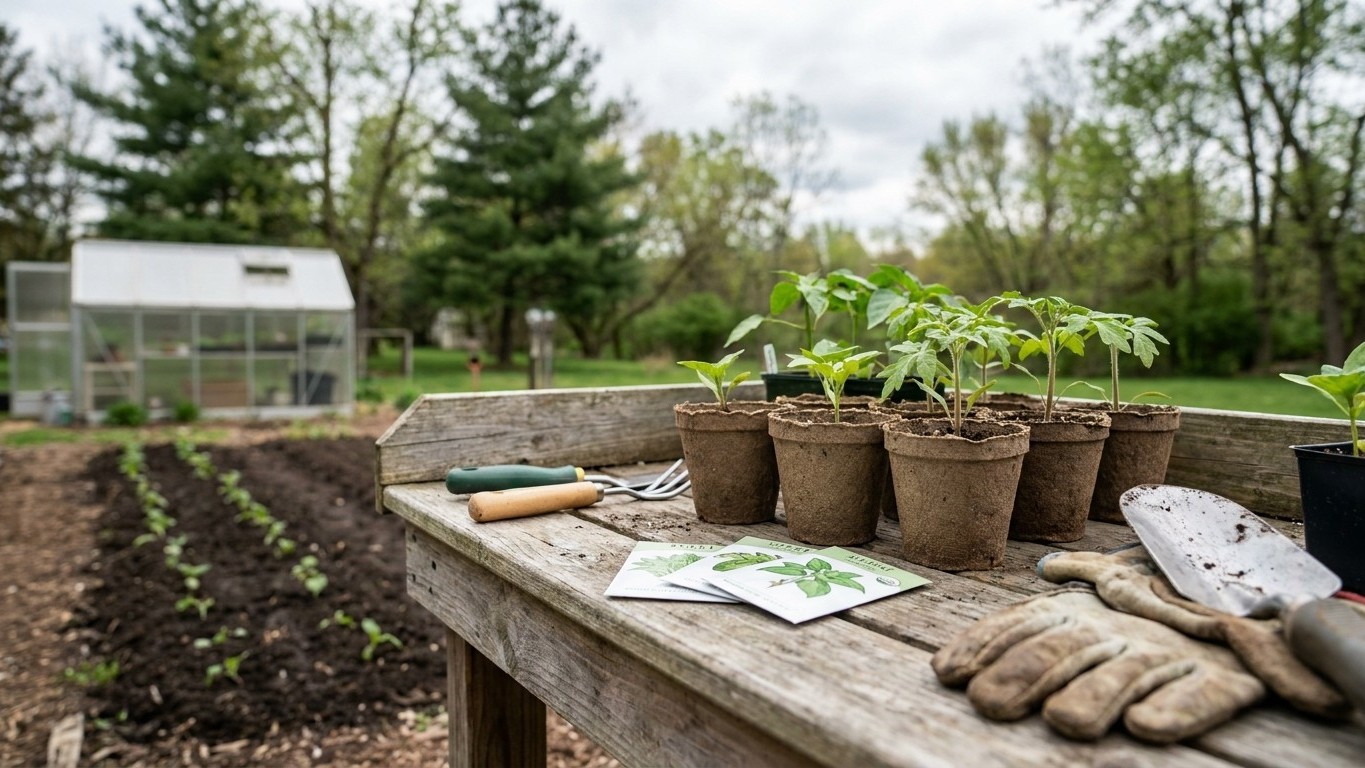

April in Wyoming sits weeks ahead of the last frost, which lands between May 7 and May 18 across most of the state. That means the ground itself is still the limiting factor: hardy greens, peas, onion sets and bare-root stock can go in where soil is workable, but anything warm-season stays indoors or under cover until the frost window closes.
What goes in the ground in April

The calendar says spring. The soil, and the freeze data, say otherwise. NOAA’s 1991-2020 Climate Normals for station USW00024018 put the last spring freeze somewhere between May 7 and May 18, which means every day in April falls solidly inside the frost-risk period for most of the state. That single fact should govern the whole month’s planting decisions, not the mild afternoon that tempts you outside with a flat of seedlings.
What actually tolerates this window is a short, specific list. Hardy greens, spinach, arugula, and mature kale, shrug off light frost and can go into workable soil now. Peas are built for this: cool soil and a chilly night don’t bother them the way heat does later. Onion sets and shallots go in early because they want a long cool start, and radishes germinate fast enough to slip in between cold snaps. Bare-root fruit trees, cane berries, and asparagus crowns also belong in this window, since they’re planted while still dormant, before buds break, regardless of air temperature.
What doesn’t belong outside yet is everything warm-season: tomatoes, peppers, squash, beans, melons. Soil that feels merely cool to the hand is often too cold for these roots to function, and a single hard freeze after transplanting can wipe out weeks of work. Cold frames and low tunnels are the honest workaround here, letting you push hardy greens and brassica transplants a little earlier by trapping heat and blocking wind, but they don’t turn April into May.
The elevation caveat matters more in Wyoming than in most states. At around 6,000 feet, the frost-free season runs roughly 130 days, and at higher elevations frost is possible in any month of the year. A gardener in a low valley might get away with a slightly earlier transplant; a gardener a few thousand feet up should treat the whole month as frost territory and plan accordingly.
What to start under cover
Indoor seed-starting in April should be counted backward from that same May 7-18 frost window, not forward from the date on the wall. Take the number of weeks a seed packet recommends starting before the last frost, then count back from whichever end of that window matches your elevation and local microclimate. A gardener in a colder pocket should lean toward the later end, May 18, when doing that math; a warmer valley floor can plan closer to May 7.
Tomatoes, peppers, eggplant, and other slow warm-season crops are the priority for indoor starts right now, since they need real size on them before they can handle outdoor conditions. Squash, cucumbers, and melons grow fast enough that they’re often better started only a couple of weeks before transplant, so starting them alongside tomatoes usually backfires. Cool-season transplants like broccoli, cabbage, and lettuce can also go under cover this month, and some can move to a cold frame sooner than the tender crops.
Two mistakes show up every season. Start too early, and you end up with rootbound, leggy plants sitting on a windowsill for weeks longer than they should, stressed before they ever touch soil. Start too late, and you run headlong into that roughly 130-day frost-free season at elevation, leaving warm-season crops with too little time to mature before the first fall frost arrives, which lands between September 24 and October 5 in the same NOAA data. Neither mistake is fatal on its own, but in a short season either one eats into the harvest window you’re counting on.
What is ready to pick
Outdoors, April offers little. The garden itself is barely waking up, and nothing planted this season has had time to mature. What’s actually on the table this month is mostly what survived the cold or what’s been kept indoors.
Overwintered kale, spinach, and leeks left under snow or row cover are often the first real harvest of the season, sweetened rather than ruined by the cold they’ve been through. Anything held in a cold frame through late winter, mâche, hardy lettuce, some early greens, can start producing pickable leaves as daylight lengthens. Indoors, sprouts and microgreens fill the gap entirely on your own schedule, ready in days rather than months, and they’re worth leaning on heavily while the outdoor garden catches up.
The other job this month is triage on what’s in storage. Squash, potatoes, and onions held over winter should get a hands-on check: any squash going soft at the stem end, any potato sprouting eyes further than a light trim can handle, any onion gone papery and sunken needs pulling and using before it takes the crop around it down with it. A five-minute check now saves a whole bin later.
The jobs that matter this month

April is a working month more than a planting month in Wyoming, and the list is longer than it looks. Soil prep tops it: as soon as ground is workable, not muddy, working in compost or aged manure now gives it weeks to integrate before warm-season transplants go in after the frost window closes. Testing soil pH and nutrient levels this early also gives you time to correct deficiencies before the growing season is in full swing, rather than guessing later why a crop underperformed.
Dormant pruning of fruit trees and cane berries should be wrapped up before buds break, since cuts made after growth starts cost the plant more energy and invite disease into fresh wounds. This is also the last comfortable window to order seed, since popular varieties, especially short-season types bred for high-elevation gardens, tend to sell out by the time everyone else remembers to order.
Mulch management deserves attention now too. Where winter mulch was piled heavy for insulation, pulling it back gradually as soil warms lets beds dry out and warm up without shocking emerging perennials. Compost piles benefit from a turn as temperatures rise, since microbial activity picks back up and a turn now speeds up material that’s been sitting inert all winter.
Round out the month with the unglamorous maintenance: cleaning and sharpening tools before the heavy planting season demands them, repairing raised beds, trellises, and fencing while the garden is still mostly empty, and mapping out crop rotation so nightshades, brassicas, and legumes don’t land in the same bed two seasons running. None of this shows up in a harvest photo, but skipping it costs real time in May and June.
What not to do in April
The most common mistake this month is planting by the thermometer instead of the calendar of frost dates. A warm, sunny afternoon in the 60s can feel like planting weather, but the last frost date for the region, May 7 to May 18, hasn’t arrived yet, and a single cold night after transplanting can undo weeks of indoor growing. Soil temperature lags well behind air temperature, so a warm day doesn’t mean warm soil, and warm-season roots planted into cold ground often just sit and rot rather than grow.
A related error is pulling back winter protection too soon after a mild stretch. Row covers, mulch layers, and cold frame lids removed during a warm week leave tender growth exposed when temperatures drop again, which they reliably do in April at Wyoming elevations. Keep protection in place, or at least within easy reach, until you’re solidly past the local frost window.
Nitrogen timing trips people up too. Feeding a heavy dose of nitrogen fertilizer this early, before plants have real root systems or active growth to use it, tends to feed weeds and leach past dormant roots rather than help anything. Wait until plants are actively growing, and lean on slow-release organic matter worked into soil now rather than a fast synthetic feed applied too soon.
Checking this against your own county
A statewide frost window is a starting point, not an instruction specific to your yard. Wyoming’s elevation swings from river valleys to mountain benches change frost timing by weeks, not days, and the difference between the northern and southern parts of the state can be just as significant. A garden at 4,500 feet and one at 7,500 feet are not working from the same calendar, even a few counties apart.
Before committing to any date in this article, check it against local conditions through the University of Wyoming Extension, which tracks county-level planting guidance and frost data closer to your actual elevation and microclimate.
Common questions
Can I plant tomatoes outside in Wyoming in April?
No. The last spring frost falls between May 7 and May 18 across most of the state, and tomatoes have zero frost tolerance. Start them indoors in April and transplant only after that window has passed for your elevation.
Is it too early to direct-sow peas in April?
No, peas are one of the better bets for April. They tolerate cool soil and light frost, and a spring sowing timed to the workable soil rather than a fixed date usually performs well.
What USDA hardiness zone is most of Wyoming in?
The USDA Plant Hardiness Zone Map places Wyoming across a wide range, roughly 3a to 6a, driven mainly by elevation. That range reflects the average annual extreme minimum temperature only, so check your specific location rather than assuming a single zone applies statewide.
Why does elevation matter so much for April planting in Wyoming?
At around 6,000 feet, the frost-free season runs only about 130 days, and higher elevations can see frost in any month. That compresses the whole growing calendar and makes season-extension tools like cold frames and row covers far more useful than in lower, milder regions.
Gardeners who plant by the Moon can check the April 2027 moon planting calendar, a tradition rather than a proven method.