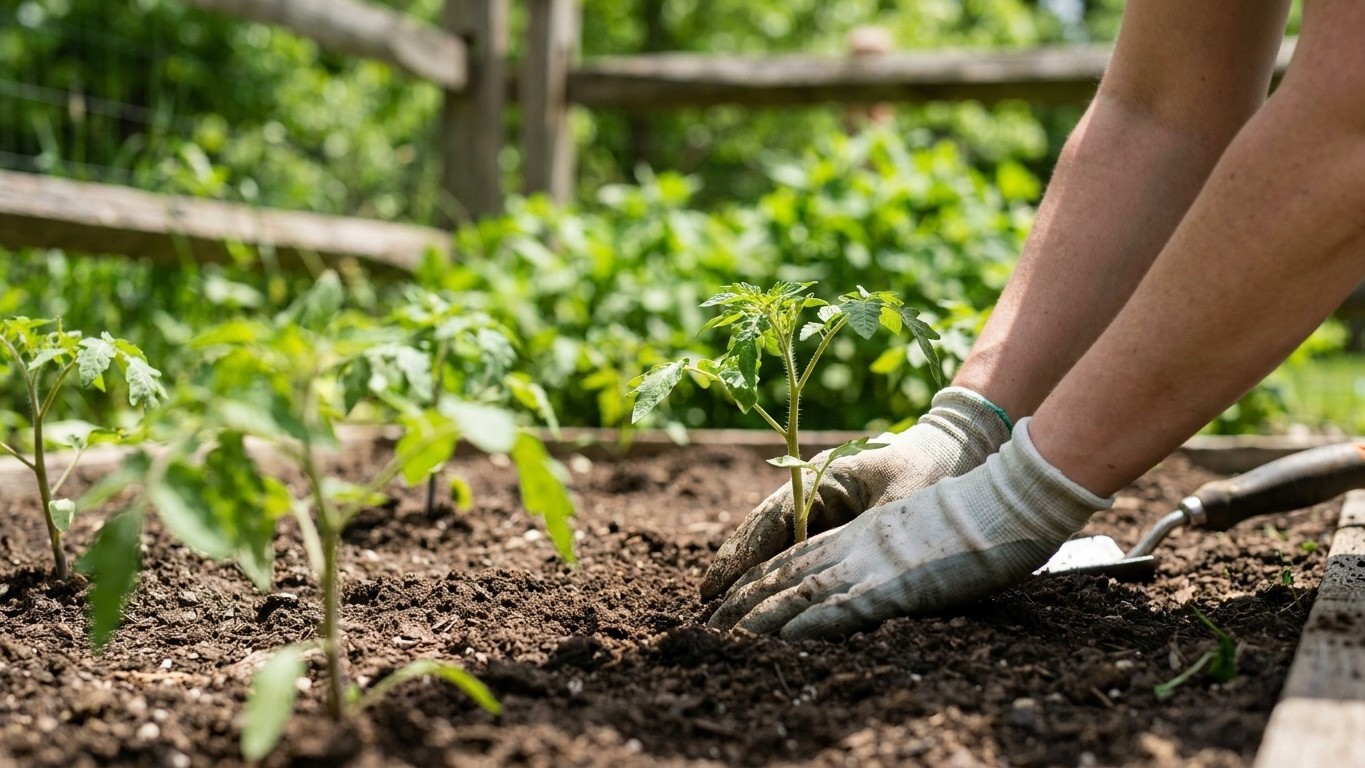

June is the pivot month in Yukon gardens: cold-hardy crops go straight into open ground with little worry, while anything tender still needs a buffer against frost that, on average, lingers into the first days of the month. Peas, brassica greens, and alliums are safe bets from day one. Tomatoes, squash, and other heat-lovers wait for soil and air to genuinely settle, which in most Yukon locations means the back half of the month, not the front.
What goes in the ground in June
The average last spring frost for the Whitehorse area falls on June 5, according to Environment and Climate Change Canada’s climate normals. That single number hides a harder truth: it’s a mean date, not a guarantee. In roughly half of all years on record, frost has landed after June 5, sometimes well after. Treat it as the midpoint of a risk window, not a green light stamped on the calendar.
That’s why soil temperature and local exposure matter more than the date on the wall. A south-facing raised bed against a wall warms up faster than open, low-lying ground where cold air pools overnight. Gardeners working the second kind of site should push their tender plantings back regardless of what the calendar says.
Crops that shrug off a light frost and can go into open ground through June without much drama:
- Peas, both shelling and snap types, sown directly as soon as the ground can be worked
- Spinach, lettuce, and other quick salad greens
- Kale, and other brassica greens grown for leaves rather than heads
- Radishes, for a fast first harvest
- Carrots and beets, direct-sown once the soil has dried enough to crumble
- Onion sets, shallots, and leek transplants
Tender crops are a different calculation entirely. Tomatoes, peppers, squash, beans, cucumbers, and corn all need soil that has actually warmed through, not just an afternoon that felt pleasant. In a place carrying a Canadian hardiness zone rating of 1b, one of the coldest ratings the national system assigns, these crops rarely go straight into open ground even in June without some form of cover. Hardened-off transplants set out under cloches, walls of water, or floating row cover fare far better than direct-sown seed of the same crops, which often simply rots or sits dormant in cool soil.
What to start under cover
Most of the heavy indoor seed-starting for Yukon’s short season happens earlier in spring, well before the last frost window opens. By June, the question under cover shifts from “how do I get a head start” to “how do I keep the season moving.” That means counting forward and backward at the same time: forward from today, and backward from the first fall frost, which averages August 25 at the Whitehorse station.
Do the arithmetic for any fast crop before sowing it. A radish or loose-leaf lettuce that matures in around a month can still be started under cover in early June and transplanted out in time to produce well before the fall frost window opens in late August. A crop that needs 90 days to mature is a much tighter fit, and pushing it past mid-June risks running out of season before the cold returns.
Cold frames, low tunnels, and unheated greenhouses earn their keep this month by giving tender transplants a buffer against a cool night while the outdoor soil finishes warming. Tomato and pepper starts that were begun indoors weeks earlier often go into these structures before they ever touch open ground.
The two failure modes to watch for are opposite problems. Sow too early under cover with no plan for hardening off, and starts get leggy and rootbound sitting in small containers waiting for outdoor conditions to catch up. Sow too late, especially for anything with a longer days-to-maturity number, and there simply isn’t enough runway left before the first fall frost mean arrives to bring the crop to a useful harvest.
What is ready to pick
June harvests in Yukon lean on what went into the ground the moment the soil opened up, plus whatever survived the winter outright. Rhubarb, if it’s an established planting, is often the first real harvest of the season, sending up stalks well before most other crops have caught up. Chives and other perennial herbs follow close behind.
From early direct sowing, radishes are usually the first annual crop off the bed, sometimes ready within a few weeks of sowing. Loose-leaf lettuce and spinach sown as soon as the ground thawed give a first cutting mid-month, and mesclun mixes grown under a cold frame or low tunnel often run a full harvest ahead of anything left uncovered.
Asparagus, where a bed has been established for a couple of seasons, comes into its own during this window as well, and cutting stops once the spears thin out so the plant can build energy for the following year.
This is also a good moment to walk through whatever potatoes, squash, or onions were held over from the previous season in storage. By early summer, stored potatoes are often starting to sprout at the eyes, squash skins may be softening, and onions can go soft at the neck. Sort through the bins now, use anything showing early signs of turning, and don’t wait for a bad one to spread rot to its neighbors.
The jobs that matter this month
Long daylight is the defining feature of a Yukon June, and it changes the rhythm of garden work. Growth is fast once conditions are right, but so is soil drying out, so a steady watering rhythm matters more here than it might in a shorter-daylight climate further south. Check soil moisture by hand rather than by the calendar, especially in raised beds, which dry out faster than ground-level plots.
Mulch goes down now to hold that moisture and to keep soil temperature from swinging too wildly between a cool night and a long, bright day. A couple of inches around brassicas, alliums, and root crops pays off through the rest of the season.
Peas and any early climbing crop need support in place before they sprawl, not after. Staking or trellising a pea row once it’s already flopped over costs far more time than setting the structure up when the vines are still a few inches tall.
Succession sowing keeps the harvest window open. A short row of radishes or loose-leaf lettuce every couple of weeks through June means a steady supply rather than one glut followed by a gap. Given how tight the frost-to-frost window runs at this hardiness rating, that kind of staggered planting matters more here than in milder zones.
Pest scouting starts in earnest as things warm. Cutworms can take down young brassica and lettuce transplants overnight, and aphids build up quickly on tender new growth once temperatures climb. Checking the undersides of leaves every few days catches both before they do real damage.
What not to do in June
The most common mistake this month is trusting the air temperature over the soil. A run of warm, bright days can feel like summer has arrived, but soil several inches down often lags well behind the air, especially in shaded or low-lying beds. Tender crops set into ground that hasn’t caught up tend to sit and sulk rather than grow, and a late frost on top of that can finish them off entirely. Wait for the soil itself to feel workable and warm, not just the afternoon air.
A related error is pulling row covers or opening cold frames too early after a mild stretch. Because the average last frost is only a midpoint and roughly half of years see frost fall later than June 5, a week of pleasant weather early in the month is not proof the risk has passed. Keep protection in place a bit longer than feels necessary, and remove it gradually rather than all at once.
Timing nitrogen wrong is the third recurring problem. Heavy feeding on young transplants before their root systems are established pushes soft, lush top growth that is far more vulnerable to a cool night than a plant that’s been allowed to establish more slowly. Hold off on a strong nitrogen feed until plants have settled in and show real new growth, then apply it in line with what the crop actually needs going forward.
Checking this against your own county
Everything above is anchored to a single reference point, the Whitehorse A weather station, and Yukon is far too large and varied a territory for one station to speak for all of it. Elevation, latitude, and distance from any moderating water body all shift these frost windows by weeks in either direction. A garden at higher elevation or further north should expect both a later spring frost and an earlier fall one than the averages given here.
For a planting calendar tuned to a specific location, the federal Agriculture and Agri-Food Canada site is a solid starting point: https://agriculture.canada.ca/en.
Common questions
Is it safe to plant tomatoes outside in Yukon in June?
Only with some form of protection in most cases. Given the Canadian hardiness zone rating of 1b for the Whitehorse reference area, and an average last frost of June 5 that still leaves real risk afterward, tomatoes generally do better set out under a cloche, wall of water, or row cover through at least the first half of the month.
What is the last frost date in Yukon?
At the Whitehorse A station, the average last spring frost is June 5, based on Environment and Climate Change Canada’s climate normals. That’s a mean date, not a safe cutoff: frost has occurred after that date in roughly half of recorded years.
What hardiness zone is Yukon?
The Whitehorse reference area sits in Canadian hardiness zone 1b, using Natural Resources Canada’s own system, which is built on seven climate variables rather than the single minimum-temperature measure used by the USDA scale. The two systems don’t convert directly onto one another.
Can you still start seeds in June in Yukon?
Yes, for fast crops. Counting backward from the average first fall frost of August 25, there’s still enough runway in June to start quick greens, radishes, and other short-season crops under cover for a useful harvest before the cold returns.