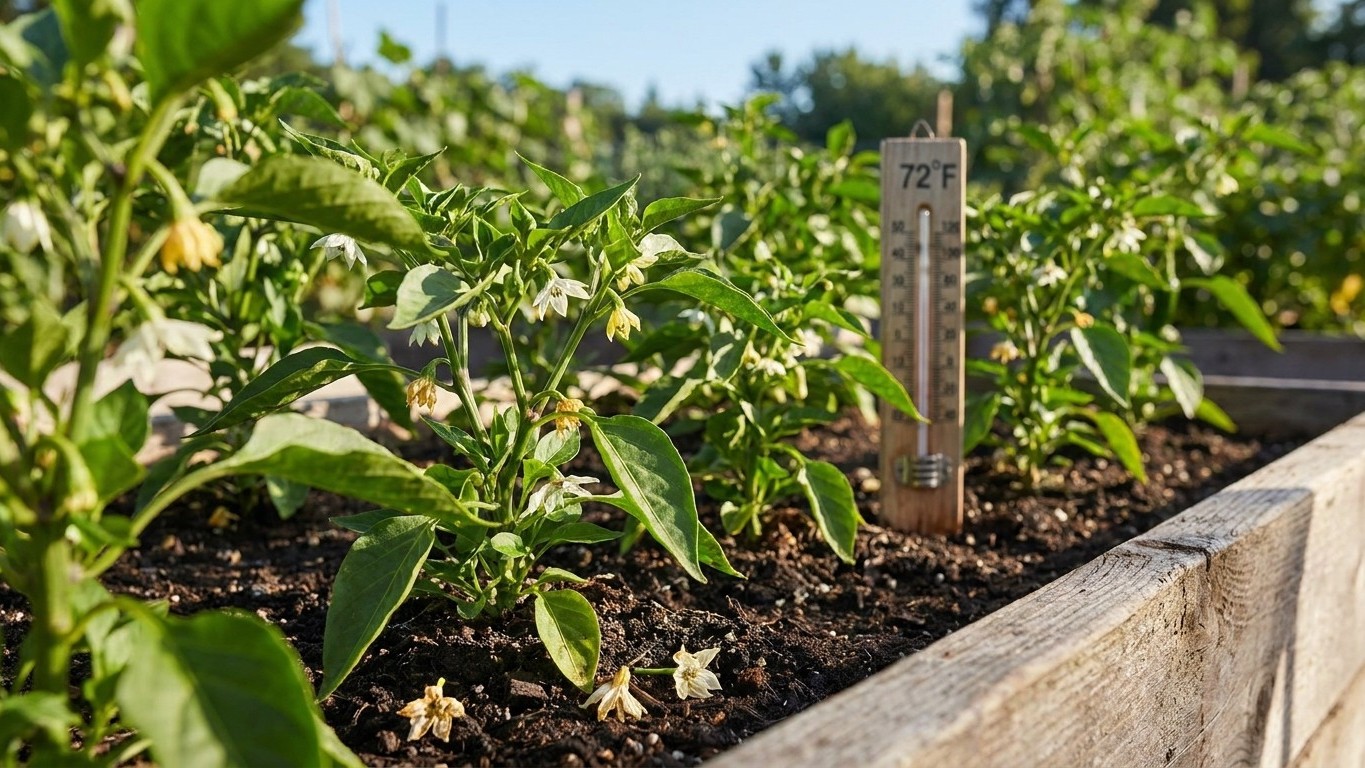

Pepper seed goes into trays indoors 8 to 10 weeks before the transplant date, and that transplant date is set by two things: the last spring frost and soil hitting 60°F. Near Fargo, the last frost typically falls between May 4 and May 15, which points to an indoor seed-starting window running from roughly late February through mid-March. Gardeners elsewhere in the state should pull their own county’s frost record before locking in a date, since local conditions can shift that calendar by a week or two either way.
The short answer
Fargo averages 11.7 days a year at 90°F or hotter, based on NOAA’s 1991-2020 climate normals. That figure measures the number of days that actually reach that heat, not the season’s average temperature, and the distinction matters. A summer can look mild on paper and still cost a gardener a batch of pepper flowers on the handful of afternoons that spike past 90°F. In North Dakota, those hot stretches tend to land in July, which is exactly when peppers started 8 to 10 weeks earlier and transplanted in mid-to-late May are typically flowering.
Utah State University Extension is direct about the mechanism: pepper fruit set fails at both ends of the temperature range, not just the hot one. Nights below 55°F trigger the same blossom drop as days above 90°F, and either failure can strike plants that otherwise look perfectly healthy. That’s the half of the picture growers miss when they plan strictly around the last frost date and assume the danger is over once the calendar reaches June. A cool overnight low in late spring or early summer can undo weeks of steady growth just as effectively as a heat wave.
This is also where the published record for North Dakota runs out. NOAA’s climate normals give a solid number for days above 90°F, but they don’t publish summer overnight minimum temperatures for home garden planning, and no other source cited here fills that gap. There’s no responsible way to estimate those night lows from the state’s latitude, from how far north it sits, or from how cold the winters get. A state with harsh winters doesn’t automatically get cool summer nights every year, and a rough January says nothing reliable about conditions on a July night when pepper flowers are open. The only accurate approach is to measure actual overnight temperatures at the garden site during flowering, using a basic min-max thermometer or a simple garden sensor placed near the pepper bed rather than relying on a regional guess.
Put together, North Dakota gardeners are working with one documented variable (11.7 days a year above 90°F) and one variable that has to be tracked locally (how often nights fall below 55°F while plants are flowering). Both push toward the same outcome, fewer peppers filling out on the vine, so watching both ends matters more than fixating on the heat alone.
When to start seed here
The seed-starting date comes from working backward off two fixed points: the last spring frost and the moment soil warms to 60°F. Here’s how that arithmetic plays out for a North Dakota garden.
- Start with the local frost date. Near Fargo, NOAA’s 1991-2020 climate normals place the last spring frost between May 4 and May 15. That range comes from the airport weather station, and gardens outside town, especially low-lying or rural sites, often see frost linger one to two weeks past that airport reading.
- Add a soil-temperature check. The frost date alone isn’t enough to move forward. Peppers need soil at 60°F before transplanting, and cold spring soil can lag well behind air temperature, sometimes by a week or more, even after frost risk has passed. Pushing a soil thermometer 2 to 4 inches deep and checking it in the morning settles the question instead of guessing.
- Set the transplant date at whichever comes later. If the last frost falls around May 10 but the soil doesn’t hit 60°F until May 20, the transplant date is May 20, not May 10. Rushing peppers into cold soil ahead of schedule stunts growth even when the air temperature already looks fine.
- Count back 8 to 10 weeks for the indoor sowing date. From a mid-to-late May transplant target, counting back 8 weeks lands in late March, and counting back 10 weeks lands in mid-March. Gardeners aiming for the earlier end of the transplant window should sow toward the earlier end of that same 8-to-10-week range; those planning a later, safer transplant can sow a bit later too.
- Adjust for your own county, not the airport reading. Since rural and suburban frost dates typically run one to two weeks later than the reference station, gardeners outside the immediate Fargo area should shift this whole schedule later by that same margin rather than sowing strictly off the May 4 to May 15 window.
None of that arithmetic is unique to North Dakota, but the two local inputs, a mid-May-ish frost window and spring soil that’s slow to warm, are what push most gardeners in this state toward an indoor sowing date in mid-to-late March rather than the January or February start common in warmer climates.
What goes wrong here
- Blossom drop during a hot spell. When daytime highs climb past 90°F, even for just a couple of days in a row, open flowers and small buds drop instead of setting fruit. This shows up most on the 11.7 days a year that Fargo-area summers typically hit that mark. The plant itself usually keeps growing fine; it’s the flowers open during the heat spike that are lost. Providing afternoon shade during a forecast heat spike, or simply expecting a gap in fruit set during a hot week, is the practical response, since there’s no way to force an open pepper flower to hold through 90-plus-degree heat.
- Blossom drop during a cool night. The same failure happens at the opposite end once nights fall below 55°F, which can occur even after the last spring frost has passed, particularly during a cool stretch in late May or June. Since this site doesn’t track summer night minimums for North Dakota, the only reliable defense is checking actual overnight lows at the garden site during flowering with a basic thermometer, then using row cover on nights that look likely to dip low.
- Sunscald on exposed fruit. Strong summer sun combined with thin foliage, often from over-pruning or from wind stripping leaves, leaves fruit exposed to direct sun and causes pale, papery patches on the skin. Leaving foliage intact to shade developing fruit, rather than pruning peppers back hard the way some gardeners handle tomatoes, prevents most of this damage.
- Blossom-end rot. Dark, sunken patches on the bottom of the fruit usually trace back to inconsistent watering rather than a true calcium shortage in the soil. Wide swings between bone-dry stretches and a heavy soak, common when a North Dakota summer alternates dry weeks with sudden rain, disrupt the plant’s ability to move calcium into developing fruit. Steady, even watering paired with mulch to hold soil moisture level is the fix that actually addresses the cause.
Common questions
Can I Start Pepper Seed too early in North Dakota?
Yes. Starting more than 10 weeks before the transplant date usually produces leggy, rootbound seedlings that stall once they finally go into the garden. Since North Dakota’s transplant window typically lands in mid-to-late May, an indoor start much earlier than mid-March gives plants more indoor time than they can put to good use.
Should I go by the calendar date or the soil temperature?
Soil temperature settles it. The May 4 to May 15 frost window is a useful starting point, but pepper roots don’t check a calendar, they need 60°F soil regardless of whether that threshold is reached before or after the average last frost date.
Does a cold North Dakota winter mean cooler summer nights too?
Not reliably. Winter severity and summer overnight lows aren’t the same measurement, and there’s no published data here linking one to the other. The only accurate way to know whether nights are dropping below 55°F during flowering is to check the actual overnight temperature at the garden site that season.
What if my county’s frost date is different from the Fargo reference?
Use your own county’s record when you have it. The May 4 to May 15 window comes from the Fargo airport weather station, and rural or suburban sites often see frost risk extend one to two weeks beyond that reference point, so shifting the whole seed-starting schedule later is the safer approach outside the immediate Fargo area.