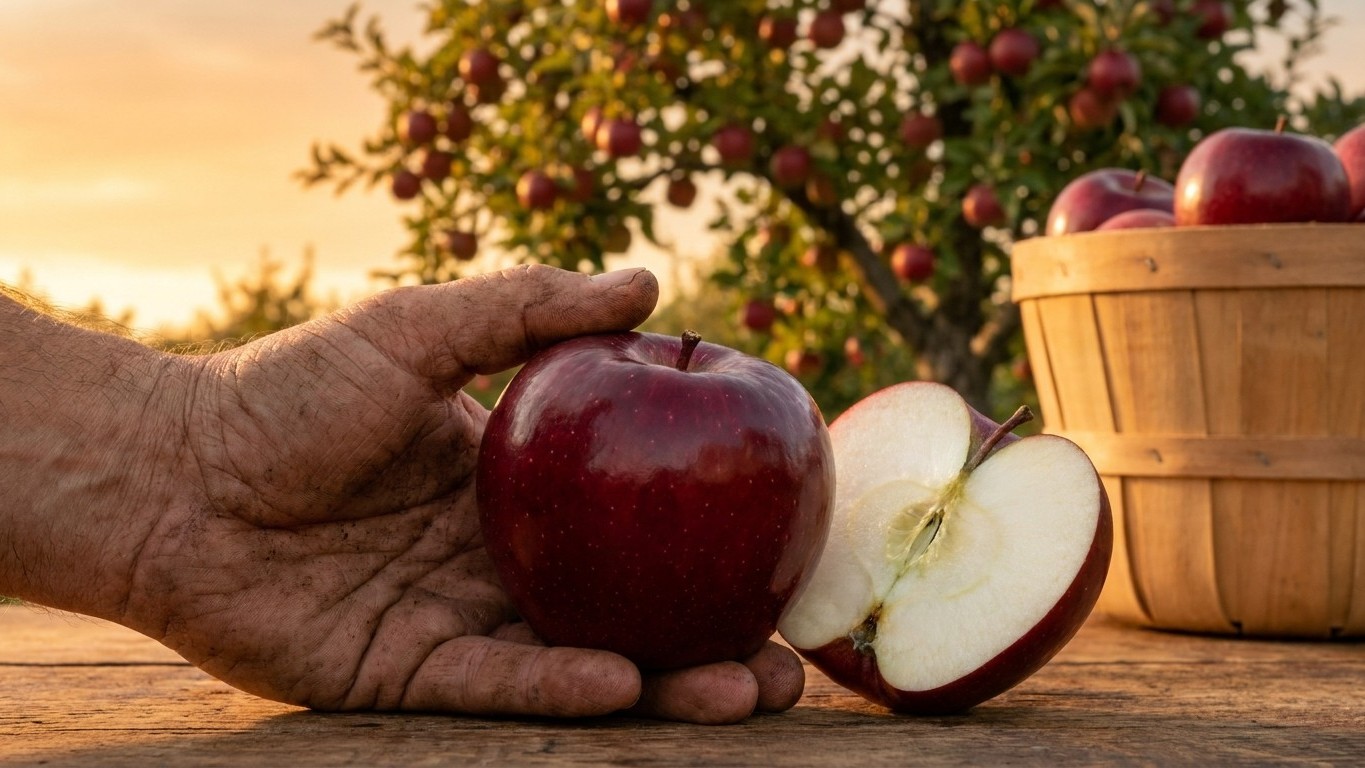

Spartan apples typically ripen mid to late September into early October. Because the whole crop tends to color and sweeten at roughly the same pace, most home growers find they can pick the tree clean in a single pass rather than working through it week after week the way they might with an early-season variety. That single-pick habit, along with what the fruit is actually good for and how it holds up in storage, is what determines whether this variety fits a given yard.
What Honeycrisp actually is

- When it ripens: mid to late September into early October
- What it tastes like: sweet-tart and distinctive, with white, crisp flesh
- What it’s good for: fresh eating
- How long it keeps: up to nine months in controlled atmosphere
This is a dessert apple, meaning it was bred and selected for eating out of hand rather than for cooking down or pressing into cider. The skin colors 90 to 100 percent dark red blush over a lighter background, so a well-finished fruit looks nearly solid red on the tree, which is part of why the crop tends to look “ready” all at once even before every apple has fully matured internally. Fruit size runs medium to large, generous enough that a single apple makes a real snack rather than a two-bite afterthought.
The flavor is where this variety earns its keep. It’s described as sweet-tart and distinctive, paired with flesh that’s genuinely crisp and white rather than the softer, more granular texture some older dessert varieties fall into by mid-storage. That crunch matters for how it’s used: there’s no note here about this variety being suited to baking or sauce, so the intended role is fresh eating, and that’s the lens to plant it through.
Storage life is the other number worth sitting with. Up to nine months in controlled atmosphere is a long window for a dessert apple, on par with the longer-keeping varieties in most collections. That figure assumes commercial controlled-atmosphere conditions, which regulate oxygen and temperature far than a home refrigerator, so a grower storing fruit at home should expect a shorter practical window even while enjoying the same crisp texture at pick time.
Will it grow where you are
Cold hardiness
A published hardiness zone range isn’t available in the data behind this page, so rather than guess at a number, the honest answer is: check with a local nursery or extension office before ordering a tree, since they’ll know which apple varieties reliably overwinter in your specific county. Zone claims on plant tags vary by rootstock and by how the tree was hardened off in its first year or two, which is one reason a single zone number printed on a label can be misleading anyway.
Winter chill needs
Chill hours, the accumulated cold below about 45°F that a fruit tree needs before it will break dormancy and flower properly, aren’t published for this variety either. That’s a real gap for a mid to late-season apple, since chill requirement is usually the harder filter for gardeners in warmer climates to clear. A variety that ripens into early October, as this one does, is more often bred with a colder-climate orchard in mind than a mild-winter one, but without a stated chill figure, that’s an inference from timing rather than a documented number. Growers in the Deep South, coastal California, or other low-chill regions should treat this as an open question and confirm performance with a local grower before committing a spot in the yard to it.
What to plant beside it
Nearly all apple varieties crop better with a compatible partner planted nearby, since a lone tree relying only on its own pollen tends to set a lighter crop even when it technically can self-pollinate to some degree. For this variety, no specific list of compatible pollinator varieties is published in the data available here, and no note is given about sterile pollen either way.
That absence matters more than it might seem. Without a documented pollination partner or a confirmed bloom overlap, the safest move for a grower is to plant this apple within range of at least one other apple variety, or a flowering crabapple, that blooms at a similar time in your climate. A local nursery can usually match bloom windows for your area, and a general apple pollination chart is a useful place to start narrowing down candidates before you commit to specific varieties.
Because parent varieties cannot pollinate their own seedlings, and because compatibility depends on bloom timing overlapping in the same week or two, the pairing question really is a local, tree-by-tree decision rather than something a catalog description can settle in the abstract. If a specific pollination partner list becomes available for this variety, it should list compatible varieties one at a time, since that’s the information a grower actually needs standing at a nursery counter.
Growing it well

Disease exposure
No disease resistances are claimed for this variety in the available data. That’s useful information on its own: it means a grower shouldn’t assume built-in protection against common apple problems like fire blight, apple scab, or cedar-apple rust, and should plan on the same watchfulness and standard orchard sanitation that any unrated apple variety needs, rather than expecting the tree to shrug off a wet spring the way a scab-resistant selection might.
Growth habit
Habit specifics, including whether this variety tends toward an upright, spreading, or compact form, aren’t documented in the facts available for this page. Mature size is set by rootstock choice rather than by the variety itself, so a grower planning tree spacing needs to know which rootstock a nursery is grafting onto before estimating how much room the tree will eventually need in the yard.
Biennial bearing tendency
Whether this apple leans toward biennial bearing, the pattern where a tree produces a heavy crop one year and a light one the next, isn’t stated in the source data either. As a general practice across most apple varieties, thinning young fruit down to one apple per cluster in a heavy-set year helps even out production and reduces limb strain, and it’s a reasonable habit to adopt here even without a documented biennial tendency specific to this variety.
Picking it and keeping it
The harvest window runs mid to late September into early October. Because the fruit tends to color up together, a grower doesn’t need to revisit the tree over several weeks the way they might with a variety that ripens unevenly; one thorough picking session, timed to the window, generally clears the crop.
Knowing the exact day to pick, rather than just the general month, comes down to reading the fruit itself:
- Lift and twist a sample apple gently upward with a slight rotation; if it separates cleanly from the spur with little resistance, the crop is ready
- Cut one open and check the seeds; apples ready for harvest generally show seeds that have turned from pale green to a darker brown
- Check the ground color on the shaded side of the fruit, away from the red blush; a shift from green toward a yellow-green background usually confirms maturity
Storage conditions
This variety keeps up to nine months in controlled atmosphere, a storage method that manages oxygen, carbon dioxide, and temperature simultaneously and is generally only practical at a commercial scale. In a home refrigerator, expect a meaningfully shorter window, since standard refrigeration slows ripening but doesn’t halt it the way controlled atmosphere does. Storing the fruit unwashed, away from ethylene-producing produce like bananas, and checking periodically for soft spots will help stretch whatever storage life a home setup can manage.
Common questions
When should I pick this apple?
Plan for a window running mid to late September into early October, then confirm timing on the tree using the lift-and-twist test alongside seed and ground color rather than relying on the calendar alone.
Does this variety need a pollination partner?
No specific pollinator list is published for this variety, but like nearly all apples it will likely crop better with a compatible partner blooming nearby. Check a local pollination chart or nursery for varieties that overlap in bloom time in your climate.
How long does it keep in storage?
Up to nine months under controlled atmosphere conditions. A home refrigerator won’t match that timeline, so expect a shorter practical window without commercial storage equipment.
Is it resistant to common apple diseases?
No resistances are claimed for this variety, so it’s worth treating it as unprotected against fire blight, scab, and similar issues and managing it with standard orchard practices.
What is this apple best used for?
Fresh eating. The sweet-tart flavor and crisp white flesh point toward snacking and dessert use rather than cooking or baking applications.