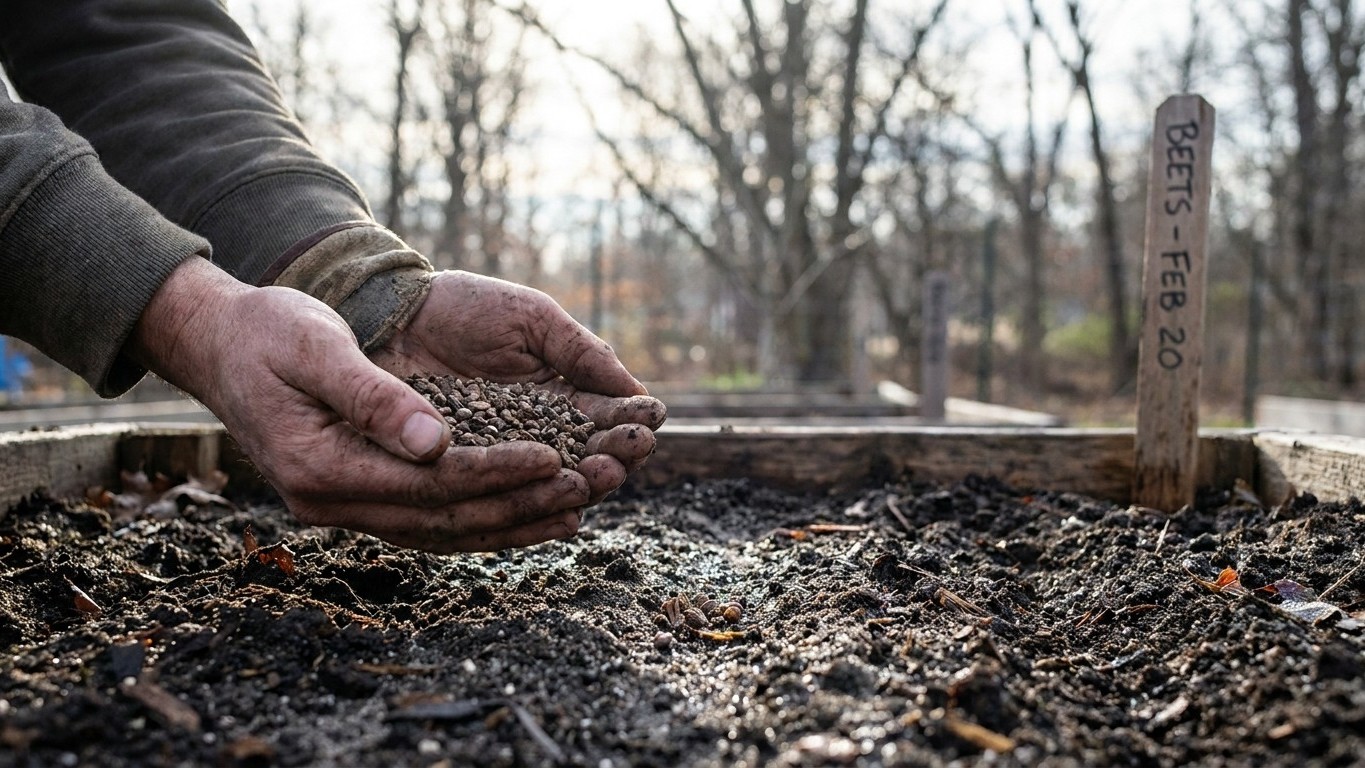

In most of Vermont, the window for sowing beets falls between mid-April and early May, roughly two to three weeks ahead of the last spring frost, which NOAA climate data places between April 30 and May 10 for the Burlington area. Gardeners in the Green Mountains or the Northeast Kingdom should push that window later, since their last frost date typically lags well behind the valley floor.
The short answer
Vermont’s official state soil, the Tunbridge series, tells you a lot about what a beet root runs into once it’s in the ground. It’s a Spodosol, the kind of sandy, acid soil that forms under conifer stands, and USDA’s own representative numbers for its surface horizon show 79 percent sand, 21 percent clay, and 0 percent silt, with a surface pH around 3.5 and drainage rated well drained. That combination of texture and pH matters more than the calendar in a lot of Vermont backyards.
Beets, according to Utah State University Extension, want deep, sandy, well-drained soil that’s rich in organic matter, amended with no more than 1 inch of composted material per 100 square feet. The drainage half of that equation lines up with Tunbridge ground reasonably well. The pH half doesn’t. A surface reading of 3.5 is strongly acid, well outside the range where beets grow a clean, sweet root, and that number reflects a natural, undisturbed forest floor rather than a dug and amended garden bed. The organic matter figure USDA records for this series, around 75 percent, points the same direction: that’s a raw litter layer, not the crumbly, worked topsoil in a raised bed or tilled row. Once a gardener breaks ground, limes if needed, and works in compost, the number in a soil test kit will look nothing like the mapped value.
None of this describes any single garden. Vermont carries hundreds of mapped soil series across its river valleys, hillsides, and old pasture ground, and the Tunbridge series is a statewide reference point, not a diagnosis for a specific yard. A plot near the Connecticut River or in the Champlain Valley clay belt can run heavier and less acid than the state soil; a hillside lot scraped down to subsoil during construction can behave like almost nothing on the map. A soil test remains the only way to know the actual pH and organic matter sitting under a specific row of beets.
On the heat side, the published figures here don’t include a count of how many days a year any Vermont station tops 90 F, and that number isn’t something to guess at. What is documented is the mechanism: Utah State Extension notes that heat above 85 F combined with water stress is what turns a beet root woody. Vermont’s summers run cooler and shorter than most of the country’s beet-growing regions, which works in the gardener’s favor, but the risk isn’t zero, and it isn’t about air temperature alone. It shows up when heat and dry soil hit the plant at the same time, which is a soil-management problem as much as a weather one.
The six weeks that decide it here
Sowing beets two to three weeks ahead of the last frost date puts the first six weeks of growth into a fairly predictable stretch of Vermont spring, roughly the second half of April through the end of May in the milder parts of the state, later at elevation. Since beets are sown directly in the ground rather than transplanted, that first six-week stretch starts the moment seed goes into soil, and it’s also the stretch Utah State Extension flags as the one where water stress causes premature flowering, better known as bolting.
Vermont spring doesn’t run one way. Snowmelt and frequent rain through what locals call mud season keep ground wet early, but that wet pattern doesn’t hold steady. Dry, windy stretches slide in between rain systems, and a sandy, well-drained soil like the Tunbridge series sheds that moisture fast. A bed that looked saturated after a weekend storm can be dry three inches down within days once the sun and wind get at it. That swing, wet one week, dry the next, is exactly the condition that puts young beet seedlings under water stress without a gardener necessarily noticing, because the soil surface can still look damp while the root zone has already dried out.
That’s where the bolting risk sits in Vermont: not in a single dry summer, but in the gaps between spring rain events during those first six weeks after sowing. A garden on heavier, clay-rich ground holds moisture longer through those gaps and buffers the swings better. A garden closer to the sandy, fast-draining end of the spectrum, closer to the state soil’s texture, needs a more deliberate watering routine during that early stretch, because the soil itself won’t hold the reserve.
Timing the harvest end of the calendar matters too. Beets typically need somewhere between 60 and 80 days from seeding to harvest, counted from the day seed goes into the ground, not from any transplant date. A late-April sowing in the milder valleys lands harvest in the cooler part of summer before the season’s warmest, driest stretch has much chance to build up. Pushing the sowing date later, especially at elevation where the frost-free window is already shorter, compresses that margin and raises the odds that the back half of the root’s growth runs into a hotter, drier patch of summer.
What goes wrong here
- Acid surface soil stunts the root. The Tunbridge series shows a surface pH near 3.5, far more acid than beets tolerate well, and untested Vermont ground on the acidic end of the range produces small, tough roots even with perfect watering. The remedy is a soil test before sowing and lime worked in ahead of time if the reading calls for it, not after the beets are already struggling.
- Fast-draining sand triggers bolting. Sandy, well-drained ground, the kind the state soil represents, loses surface moisture quickly between rain events during the critical first six weeks after sowing. Utah State Extension is specific that this early water stress is what pushes beets to flower prematurely instead of building a root. The remedy is a watering schedule that doesn’t wait for the plant to show wilting, plus a layer of mulch to slow evaporation between rains.
- A compressed season at elevation runs out of days. Gardens in the Green Mountains and the Northeast Kingdom sit well behind the Champlain Valley on frost timing, and stacking a late sowing on top of an already shorter season leaves less room for the 60 to 80 days beets need before a fall frost closes things out. The remedy is sowing at the earlier end of the recommended window in these areas rather than the later end.
- Heat and dry soil together make roots woody. This is a separate failure from bolting: it happens later in the season, when temperatures push past 85 F while the soil has also gone dry, and it produces a root that’s tough and fibrous rather than tender. The remedy is consistent soil moisture through any hot stretch and mulch to buffer the root zone, since the plant is already past the bolting-prone seedling stage by then.
Common questions
Should I sow beets before or after the last frost date in Vermont?
Before. The window that works across most of the state is two to three weeks ahead of the last frost, which NOAA’s climate data places between April 30 and May 10 in the Burlington area. Beet seed tolerates cool spring soil better than the young plant tolerates a late compressed season, so sowing early within that range beats waiting.
Does Vermont’s soil need lime before beets go in?
Often, yes, if the ground runs on the acidic end. The state soil’s representative surface pH sits around 3.5, well below what beets need to grow a clean root, though that figure describes an undisturbed forest surface, not a worked garden bed. A soil test on the actual bed is the only way to know whether lime is needed and how much.
What’s the difference between bolting and a woody root?
Bolting happens early, when water stress in the first six weeks after sowing pushes the plant to flower instead of forming a root. A woody root shows up later, when heat above 85 F combines with dry soil during root development. Both trace back to water management, but they happen at different points in the season and call for different attention.
How much later should Green Mountain or Northeast Kingdom gardeners sow compared to Burlington?
No specific date shift for those regions is published in the frost data cited here, only that their last frost date runs substantially later than the Champlain Valley’s April 30 to May 10 window. Gardeners in those areas should track their own local last frost date rather than borrowing Burlington’s, and sow at the earlier end of the two-to-three-week-before-frost window once they know it.