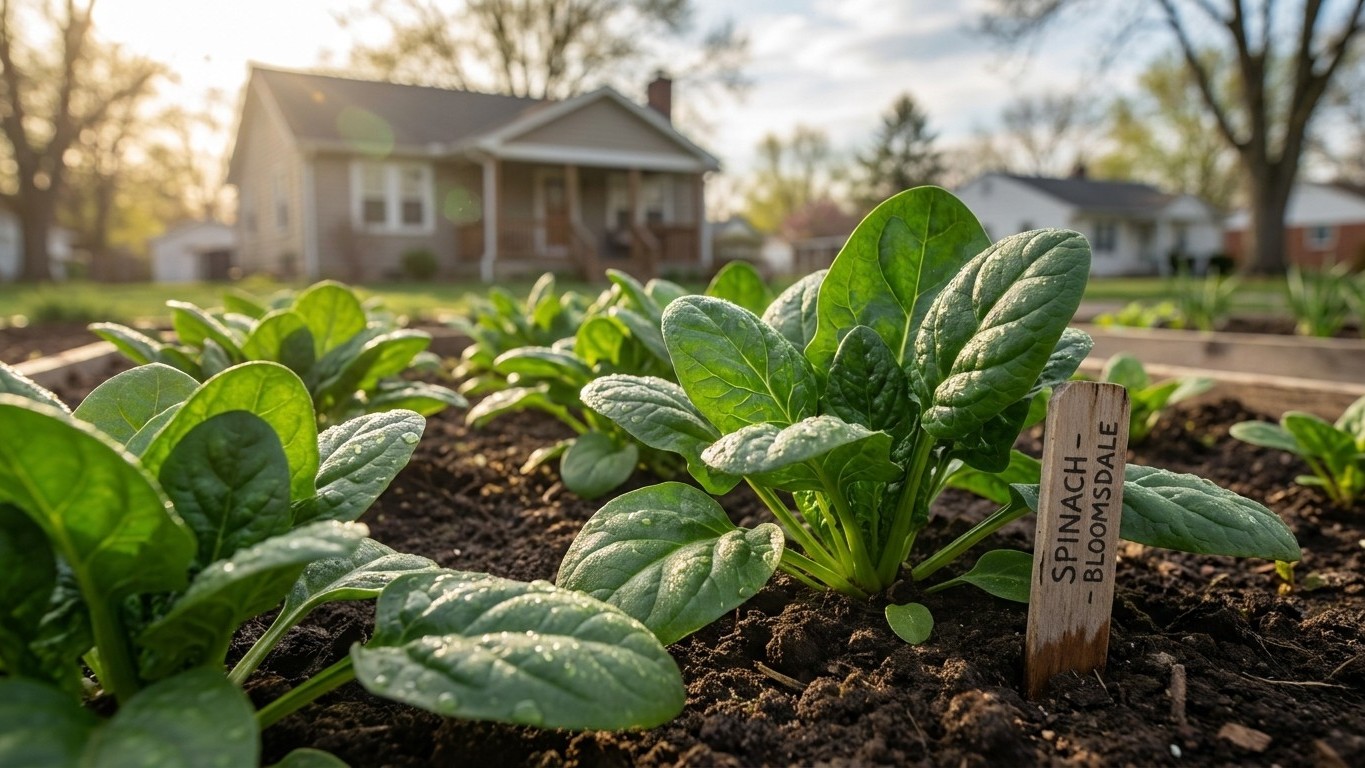

Spinach in North Carolina bolts fast for two reasons at once: the state’s long summer days push it toward flowering just as the heat climbs past its comfort zone. In the Piedmont, that means a spring sowing typically runs its course by late May, and a fall crop has to thread a narrow gap between soil that’s still too warm to germinate and the season’s first hard frost, which is why knowing When to Sow Autumn Spinach in North Carolina matters so much. So Will Spinach Bolt Early in North Carolina? The short answer, and the reasons behind it, are worth unpacking in detail.
The short answer
On the longest day of the year, the Charlotte area holds 14 hours and 23 minutes of daylight. That number matters more than most gardeners realize. Spinach flowers, or bolts, in response to long days combined with warm temperatures. It doesn’t wait for a heat wave to make that decision. As the days stretch past 13, then 14 hours heading into June, the plant’s internal clock reads that stretch as a signal to stop making leaves and start making seed stalks. A mild, cloudy summer doesn’t change that signal. Day length alone can trigger the shift, regardless of whether the thermometer cooperates.
So which is doing the damage here, the day length or the heat? Both, and they arrive together. North Carolina’s Piedmont averages 35 days a year at or above 90 degrees. Spinach starts losing quality once temperatures push past 75 degrees, and that threshold isn’t just about slower growth. Above 75, the leaves also turn bitter, so the same number marks both a growth ceiling and a flavor cutoff. By the time day length alone might be enough to trigger bolting, the region’s early heat has usually already gotten there first. The two pressures overlap almost completely in a typical Piedmont spring, which is why the window feels so short.
Seed catalogs and county fact sheets often name specific varieties, including Bloomsdale, Melody, Teton, and Olympia, as options for southern gardens. Genuine days-to-maturity figures for these varieties aren’t published in the data this article relies on, so no variety should be treated as a way to buy extra time against day length or heat. The safer approach is to plan around the calendar and the thresholds themselves rather than a seed packet’s promise, then adjust based on how a particular bed performs.
None of this means spinach isn’t worth growing in North Carolina. It just means the crop belongs to the cooler bookends of the year, not the middle of it. Gardeners who treat it as a quick, cold-season leaf crop, sown early and harvested before the heat and daylight catch up, tend to get a clean crop. Those who try to stretch it into a summer green usually end up with tall, bitter stalks instead.
How long the spring window really is
- Start with the frost date. NOAA’s 1991-2020 climate normals put Charlotte’s last spring frost between March 23 and April 5, using the standard 30 to 70 percent freeze-probability band.
- Back up two to three weeks from that date for sowing. That places a typical spinach sowing in the first half of March for most of the Piedmont, a bit earlier on the coastal plain and later in the mountains.
- Cool soil in early March favors germination and early leaf growth. This is the easy part of the window, and it’s short.
- Heat builds quickly from there. With an average of 35 days a year reaching 90 degrees or more, the Piedmont’s spring doesn’t ease into summer, it accelerates into it. Afternoon soil and air temperatures commonly push past the 75-degree growth ceiling well before the calendar reaches June.
- Day length is climbing at the same time. By mid-May, daylight is already well on its way toward the June peak of 14 hours and 23 minutes, adding bolting pressure on top of the heat.
- Put those two pressures together and the usable spring window, from sowing to the point where quality drops and stalks start forming, runs roughly eight to ten weeks. That’s the entire spring opportunity for this crop in a typical Piedmont year, not a rough estimate padded for safety.
The autumn crop, and when the soil lets you sow
Fall spinach in North Carolina isn’t blocked by cold. It’s blocked by heat that lingers in the soil long after the air starts to feel like fall, and then, once that clears, by a frost date that arrives faster than gardeners expect.
Soil that’s still too hot to sow into
Spinach seed germination drops once soil temperatures rise above 80 degrees. That threshold, not an air-temperature reading, is what actually delays fall sowing in this region. With 35 days a year averaging 90 degrees or higher, Piedmont soil often holds onto summer heat well into late August, sometimes longer in a dry year, since bare or lightly mulched soil sheds heat slowly. Gardeners who sow the moment the calendar says “fall” frequently get poor or patchy germination for exactly this reason. Waiting for the soil itself to cool, rather than trusting the date on a seed packet, is the more reliable approach here.
The frost that closes the season
The first fall frost in the Charlotte area arrives between October 30 and November 8, based on the same NOAA climate normals used for the spring date. Utah State University Extension’s guidance for the crop is to sow 50 to 75 days before the date you want to harvest, since no separate days-to-maturity figure is published for spinach. Counting back from a harvest target in early November puts the sowing window somewhere between mid-August and mid-September. Overlap that with the soil-temperature obstacle above, and the realistic sowing period narrows toward the back half of that range, closer to early or mid-September for most Piedmont gardens, with the coastal plain likely needing to wait a little longer for soil to cool and the mountains able to start a bit earlier.
Checking this against your own county
Every figure above is built around the Charlotte area, and North Carolina’s geography doesn’t sit still across the state. The Blue Ridge Mountains to the west run several weeks behind the Piedmont in spring, which pushes both the last frost and the safe fall sowing date later. The coastal plain warms earlier and holds heat longer into fall, shifting things the opposite direction. A gardener in Asheville and a gardener in Wilmington are working with different calendars even though both are technically in the same state.
N.C. Cooperative Extension maintains county offices across the state, and they’re the source to check before locking in a sowing date. Find your local office through N.C. State Extension, and ask specifically about frost dates and fall soil temperatures for your county rather than relying on statewide averages.
Common questions
Can shade cloth extend the spring spinach harvest in North Carolina?
Shade can lower leaf temperature somewhat, but it doesn’t change day length, which is the other half of what triggers bolting. It may buy a few extra days near the end of the window rather than weeks.
Is fall spinach more reliable than spring spinach in the Piedmont?
Many gardeners find it so, since the crop is moving from warm conditions toward cool ones rather than the reverse, and the day-length pressure is easing instead of building. The trade-off is the narrower sowing window created by warm soil.
Does mulching help spinach germinate in late summer heat?
Light-colored mulch or a shade cover over the seedbed can help soil shed heat faster, which matters given that germination drops once soil passes 80 degrees. It doesn’t replace waiting for a genuine cooling trend.
Why do seed packets list different days-to-maturity for the same variety?
Packet figures vary by seed company and growing conditions, and no maturity data for named varieties like Bloomsdale, Melody, Teton, or Olympia appears in the extension research behind this article. Treat packet numbers as a rough guide, not a fixed countdown, and rely on the sowing-window math above instead.