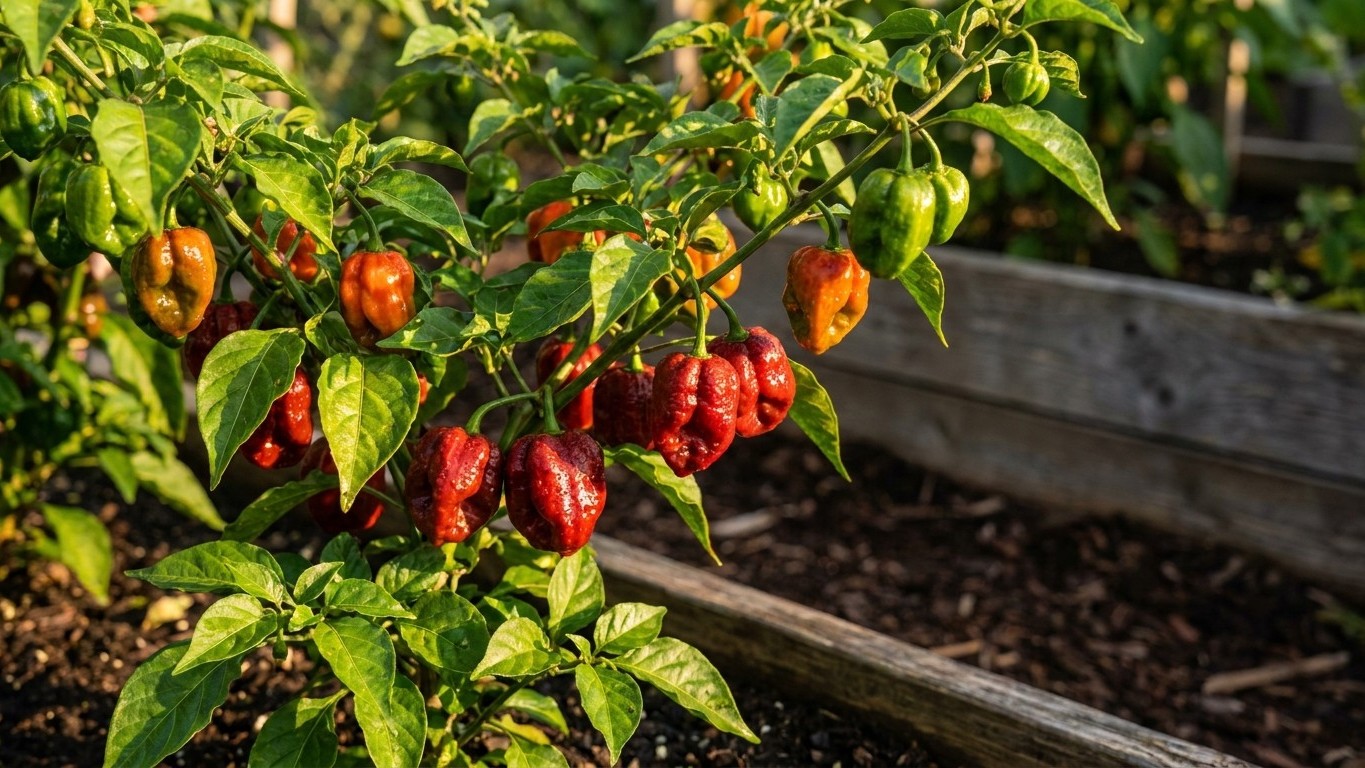

Scotch Bonnet is a hot pepper, full stop, and that single word does more to set expectations than the name itself. Clemson Cooperative Extension lists it among its recommended home-garden hot peppers, and no measured Scoville figure exists for it, so the honest answer to “how hot” is: hotter than a jalapeno, unpredictably so, and dependent on how stressed the plant gets in your yard this summer.
What Kind of Pepper Is the Scotch Bonnet, Exactly?
Before anything else, know the category. Clemson Cooperative Extension classifies Scotch Bonnet simply as a “hot pepper” on its recommended cultivar list for South Carolina home gardens, the same list that groups bell peppers, jalapenos and cayennes by type rather than by marketing name. That classification matters more than it sounds. It tells a gardener this isn’t a sweet stuffing pepper and it isn’t a mild pickling variety. It’s built for heat and for small-quantity use in the kitchen.
What the source does not say is worth stating plainly, because filling that gap with a guess would do a reader a disservice. Neither Clemson Cooperative Extension nor NC State Extension publishes a days-to-maturity figure for Scotch Bonnet specifically, nor a fruit size, nor an expected yield per plant. Most cultivars on these extension lists get that treatment: named, typed, sometimes described in a sentence, but not measured in detail the way a handful of headline varieties are. A gardener who knows that upfront can plan around it instead of chasing a number that doesn’t exist.
One distinction deserves its own sentence. Some pepper plants sold at garden centers are grown purely for ornamental foliage and colorful fruit display, and those are not food. Scotch Bonnet is an edible culinary pepper, grown for the kitchen, not the porch planter. Reading the plant tag before eating anything from a pepper plant is not overcautious. It’s basic kitchen safety.
How Hot Is a Scotch Bonnet Pepper, Really?
Type tells you the range before any number does. A bell pepper carries no heat at all. A jalapeno sits in the moderate zone. A habanero, and Scotch Bonnet belongs in that same fiery family by reputation and use, sits at the extreme end alongside cultivars bred specifically to test heat tolerance. But naming a Scoville number for Scotch Bonnet itself would be inventing data that no extension publication has measured or released.
Only two figures exist anywhere in the university record on pepper heat that’s relevant here. The Carolina Reaper averages 1.64 million Scoville Heat Units, and jalapenos run between 2,500 and 8,000. Those numbers exist because someone measured those specific cultivars in a lab. Scotch Bonnet has no equivalent published figure, and pretending otherwise, even by estimation, would mislead a reader into thinking the heat is fixed and predictable.
It isn’t. NC State Extension’s own language on hot peppers generally is the most useful sentence a grower can hold onto: fruits are edible “but spiciness is unpredictable in intensity.” That’s not a hedge, it’s a description of how capsaicin actually works. Heat stress and drought stress concentrate capsaicin production in the fruit, so a plant that struggles through a dry, hot July will produce noticeably hotter peppers than the same cultivar grown in a mild, well-watered season. Two plants from the same seed packet, grown ten feet apart with different watering habits, can taste meaningfully different by harvest. That’s the mechanism worth understanding, rather than a number worth memorizing.
Growing Conditions: What the Scotch Bonnet Needs
What’s Published, and What Isn’t
Here the record is thin, and it’s better to say so than to pad it. Clemson Cooperative Extension’s listing gives the type, hot pepper, and its place on a recommended cultivar roster. It does not specify whether Scotch Bonnet is compact, container-friendly, disease-resistant, or bred for a particular tolerance the way some named cultivars are singled out for heat or drought resistance. Beyond “hot pepper,” no growing trait for this specific cultivar is documented in the available extension material.
Days to maturity falls into the same gap. Across the pepper cultivars covered in university extension recommendations, only a single one carries a published days-to-maturity number. Scotch Bonnet is not that one. The number that will actually apply to a specific plant is the one printed on the seed packet in hand, because that figure reflects the seed source’s own trial data for that batch, not a generic industry average. Trust the packet over any outside estimate.
The One Rule That Applies to Every Pepper
Regardless of cultivar or published data, one constant holds across the entire pepper family: this is a warm-soil crop. Soil that’s still cold from spring stalls root development for weeks, even if the air temperature feels warm enough to a person standing in the yard. A pepper transplanted too early doesn’t die outright most of the time, it just sits there, sulking, while a plant set out two weeks later in warmer ground catches up and passes it by midsummer. For the specifics on timing that transplant and on starting seeds indoors early enough to have strong seedlings ready, the guide to transplanting peppers outdoors and the seed-starting timeline for peppers cover the mechanics in more depth than belongs here.
Taste and Kitchen Use: What to Do With It
Flavor and use track the type more reliably than the cultivar name does, and that’s the honest way to describe Scotch Bonnet in the kitchen. Bell peppers are sweet and hold their shape roasted or stuffed. Banana peppers are mild and built for pickling. Jalapenos go into fresh salsa, poppers, and quick pickles. Cayennes get dried and ground into powder. Habanero-type peppers, fruity and intensely hot, get used in small quantities, a single fruit often flavoring an entire pot of sauce or a jar of hot sauce.
Scotch Bonnet’s type classification as a hot pepper places it in that last category of use: a little goes a long way, and it’s a pepper meant for sauces, marinades, and dishes where heat and a fruity, tropical note are the point rather than a side effect. That said, no extension source provides a cultivar-specific tasting note for Scotch Bonnet the way NC State Extension describes some other varieties with phrases like “sugary sweet flavor” or “no heat but the prolific production of a habanero pepper.” Inventing a tasting note here that isn’t in the record would be the one claim a careful reader could catch and rightly distrust. What can be said honestly is the type-level description: a hot pepper used sparingly, valued for heat and aromatic quality rather than bulk eating, and best judged fresh from your own plant rather than from a jar bought off a shelf.
Common questions
Is Scotch Bonnet the same as habanero?
They’re closely related in reputation and both fall into the extreme-heat category of peppers, but the available extension sources here classify Scotch Bonnet simply as a “hot pepper” without drawing a direct equivalence to habanero cultivars. Treat them as related but distinct until a source states otherwise.
Why do some Scotch Bonnet peppers taste hotter than others from the same plant?
Capsaicin concentration responds to stress. A fruit that develops during a hot, dry stretch typically carries more heat than one that grows during milder, well-watered conditions, even on the same plant.
Can I grow Scotch Bonnet in a container?
No published extension data confirms whether this cultivar is bred or suited for containers specifically. Standard pepper container guidance, a pot with adequate depth and drainage, applies as a general starting point until cultivar-specific information becomes available.
How do I know if a pepper plant is ornamental rather than edible?
Check the plant tag or seed packet before eating anything. Ornamental pepper varieties are sold and bred for colorful foliage and fruit display, not for the kitchen, and they are a distinct category from culinary cultivars like Scotch Bonnet.
Related guides
- Poblano Pepper: When to Plant the Tomatoes That Ripen All at Once
- Serrano Pepper: When to Plant the Tomatoes That Ripen All at Once
- Basket of Fire Pepper: When to Plant the Tomatoes That Ripen All at Once
- Tula Pepper
- Long Slim Cayenne Pepper
- Fooled You Pepper
- Valencia Pepper: When to Plant the Tomatoes That Ripen All at Once