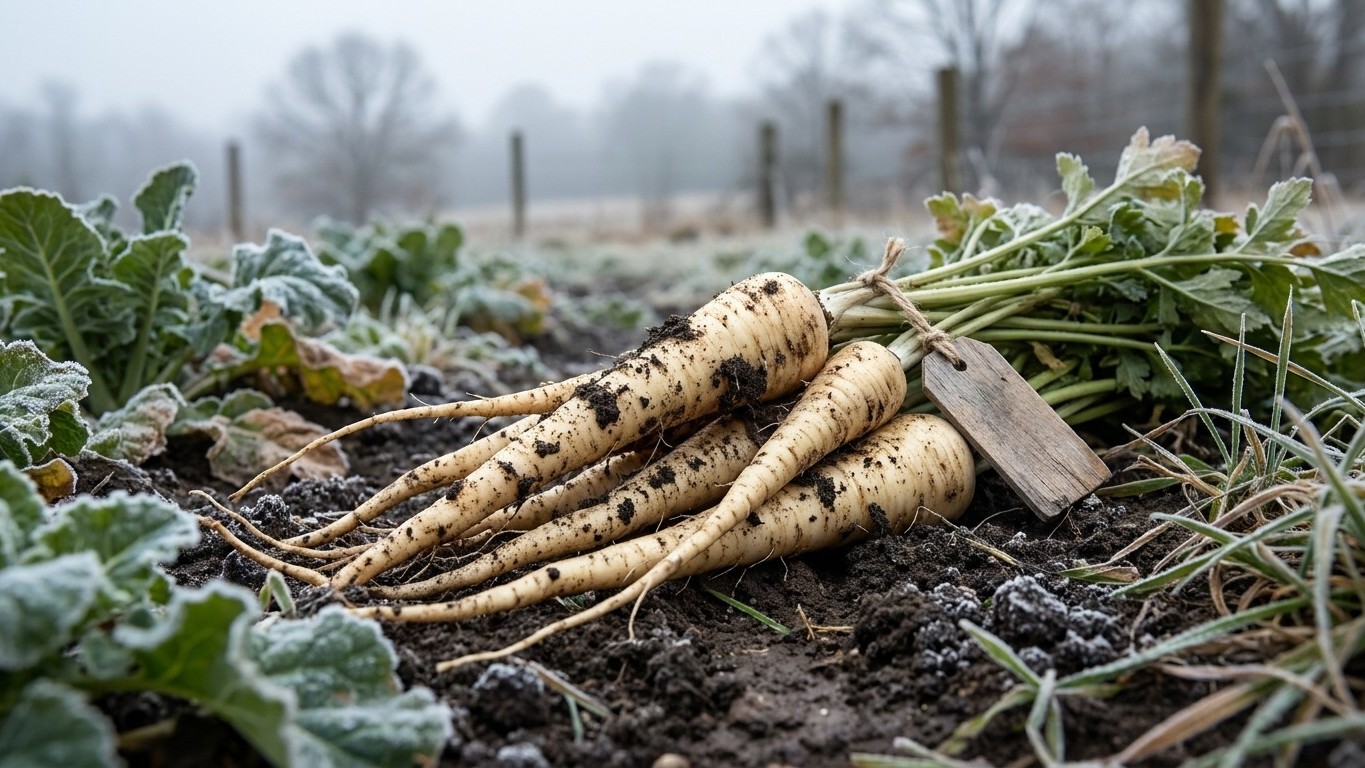

Yes, parsnips left in Alberta soil through autumn frosts will sweeten, not just grow. The province’s winters bring the sustained cold that converts stored starch into sugar, a process Utah State University Extension ties to frost exposure itself rather than to any hardiness-zone rating. Calgary’s coldest-month average minimum sits at 8.2°F, cold that lasts far longer than the few frosty nights sweetening actually requires. The real question for Alberta gardeners isn’t whether frost arrives. It’s whether the growing season is long enough to get a root worth sweetening in the first place.
The short answer
Does this territory deliver several frosty weeks, or just a light dusting before spring reasserts itself? That’s the question that decides everything here, and Calgary’s numbers answer it without ambiguity. The mean daily minimum for the coldest month comes in at 8.2°F. That’s not a record low pulled from one unlucky night. It’s the average low across the whole month, which means cold this deep is routine, not exceptional, in a typical Alberta winter.
That figure matters because sweetening in a parsnip is a chemical reaction, not a calendar event. Cold temperatures trigger the root to break down stored starch into sugars, a defense against cell damage that happens to make the vegetable taste noticeably better. Utah State University Extension is clear that this needs several weeks of cool, frosty weather, not a single overnight dip. A place that gets one or two light frosts and then warms back up will grow a perfectly fine parsnip that never quite gets sweet. Alberta isn’t that place. With a coldest-month average low sitting eight-plus degrees above freezing on the wrong side of the thermometer, the cold here is sustained enough to do the job repeatedly, not just once.
This is also the point where a lot of gardeners reach for the wrong number. Hardiness zone ratings describe whether a perennial plant’s roots or crown survive winter dormancy underground. They say nothing about whether a biennial root vegetable sitting in the top foot of soil gets enough frost exposure to sweeten. A comfortable zone rating and several frosty weeks are two different measurements answering two different questions, and mixing them up is the single most common mistake gardeners make when judging whether their parsnips will taste good. Alberta’s answer stands on its own data: a coldest-month minimum of 8.2°F is well within the range needed for repeated, sustained frost exposure, not a marginal or borderline case. The starch-to-sugar conversion here has plenty of cold to work with, provided the root reaches usable size before that cold arrives, which is a separate arithmetic problem covered next.
Does the season fit?
- Sowing date: Parsnips go directly into the ground, since they don’t transplant well, and the recommended timing is 2-3 weeks before the last spring frost. Calgary’s mean last spring frost falls on May 21, which puts a workable sowing window around late April through the first week of May.
- Germination lag: Parsnip seed is notoriously slow, taking 14 to 21 days to emerge. A gardener who sows in late April or early May won’t see seedlings until mid-to-late May, and it’s worth marking the row, because bare-looking soil for three weeks tempts a lot of people into digging it up and re-sowing unnecessarily.
- Maturity window: From that seeding date, 100 to 120 days brings maturity to somewhere between early August and late September, depending on exactly when the seed went in and how the season runs.
- First fall frost: Calgary’s mean first fall frost lands on September 16, which sits inside or just past that maturity window rather than well ahead of it.
- The fit: The season fits, but not with room to spare. Roots sown at the early edge of the window, in late April, reach maturity comfortably before the first frost and get weeks of cold exposure before a typical harvest. Roots sown in early May, closer to the recommended cutoff, mature right around frost time, which still works but leaves less buffer if the season runs cool or wet.
Both figures are means, not guarantees. In one year out of two, the actual last frost falls later than May 21, and the first fall frost arrives later than September 16 as well, so the window can run longer or shorter than this arithmetic suggests. Gardeners in upland or northern parts of the province, away from the Calgary station itself, should expect that window to run behind these dates rather than ahead of them.
What goes wrong here
- Forked roots from heavy or stony ground: Parsnips push a single taproot straight down, and any rock, clay pan, or compacted layer splits it into forks. Utah State University Extension recommends deep sandy soil, and where the native soil runs heavy, double digging the bed before sowing, working it a full spade deep or more, so the root meets no obstruction on its way down.
- Forked roots from overwatering: This is a separate cause from soil texture, and the two get confused often. Inconsistent or excessive watering encourages the root to branch rather than run straight, even in soil that’s otherwise loose enough. Even, moderate watering through the season, without long dry spells followed by a heavy soak, keeps the taproot growing in one direction.
- A season that runs out before maturity: Sowing late, past the first week of May, or losing weeks to a cold, slow spring pushes maturity dangerously close to the first fall frost with no buffer left. Sowing at the early edge of the recommended window, as soon as the soil can be worked in late April, buys back that margin.
- A winter too mild to sweeten: Not a widespread risk given Calgary’s cold numbers, but sheltered urban yards, south-facing beds against a heated foundation, or unusually mild microclimates can run several degrees warmer than the surrounding area. Where that’s suspected, leave the roots in the ground through more than one hard frost before harvesting rather than pulling them at the first light freeze.
Common questions
Can parsnips survive an Alberta winter left in the ground?
The root itself tolerates freezing soil well, which is exactly why leaving it in place through frost is standard practice for flavor. The published figures here don’t cover whether a full Alberta winter of continuous ground-freeze without snow cover damages the crop, so treat late-autumn harvest timing, rather than full overwintering, as the tested approach.
Should parsnip seed go in before or after the last frost?
Before. The recommended timing is 2-3 weeks ahead of the mean last spring frost, which for the Calgary reference station means sowing in late April to the first days of May, well before the May 21 average last-frost date.
Why did my parsnips fork even in loose soil?
Check watering history before blaming the soil. Forking has two distinct causes, heavy or stony ground and overwatering, and loose soil only rules out the first one. Uneven watering, especially long dry spells followed by heavy soaking, can split a taproot even in a well-prepared bed.
How long after sowing before parsnip seedlings appear?
14 to 21 days. That’s a long, slow germination compared to most garden vegetables, and rows can look completely bare for two to three weeks after sowing. Mark the row and be patient rather than assuming the seed failed and re-sowing early.