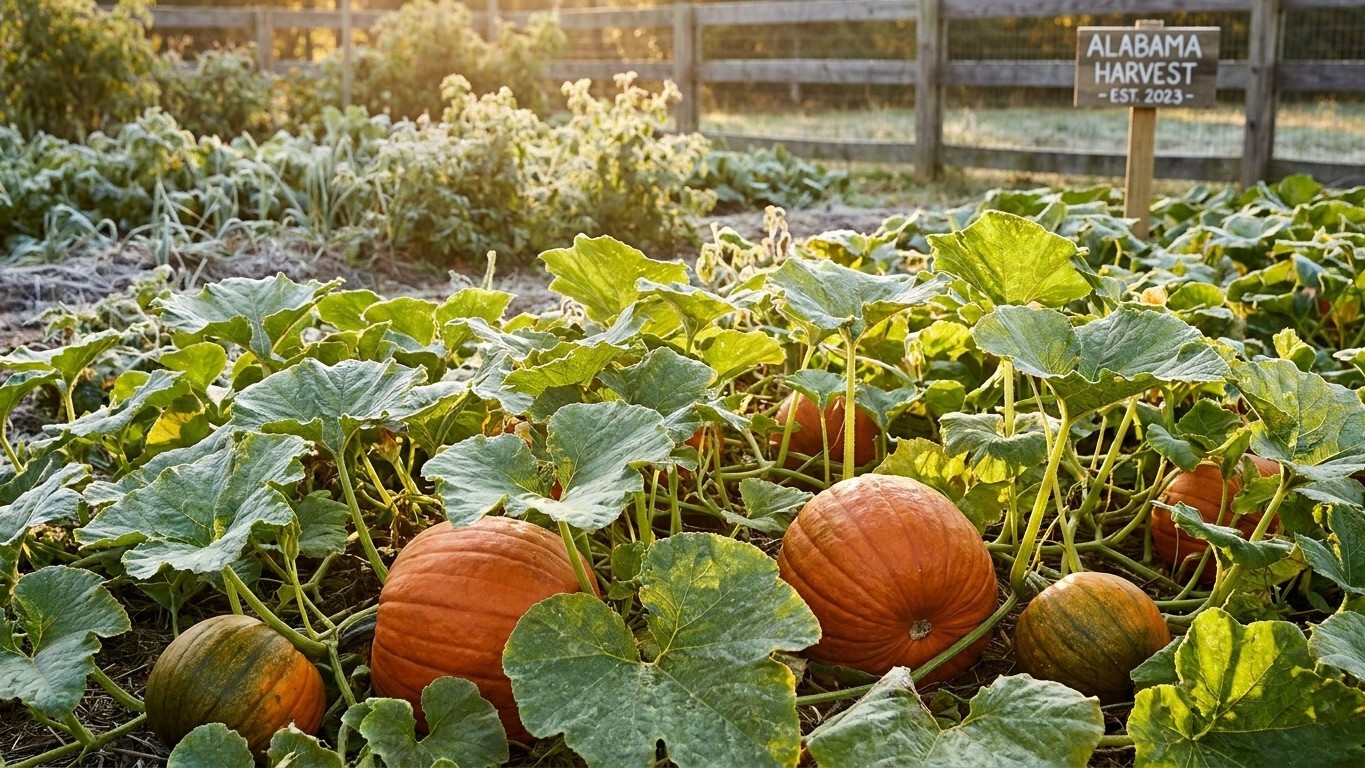

Yes, but the margin is thinner than most Indiana gardeners assume. A pumpkin needs 45 to 55 days from the moment a female flower opens until the rind hardens fully, and the state’s first fall frost typically lands between October 21 and October 30. Work backward from that window and the flowering deadline falls in late summer, not early fall. Miss it, and the vine runs out of season before the fruit finishes coloring.
The short answer
Start with the frost date and count backward, because that’s the only order that makes sense for a fruit whose clock starts at flowering, not at planting. Indiana’s first fall frost falls somewhere between October 21 and October 30, based on the 1991 to 2020 climate normals recorded at the Indianapolis station. That’s a nine-day spread, not a fixed line on the calendar, and the difference between the early and late edge of that window can decide whether a slow-to-color fruit makes it.
A pumpkin needs 45 to 55 days after a female flower opens to reach full maturity, according to Utah State University Extension. Not 45 to 55 days from seed. Not from transplant. From the flower. That distinction changes the whole planning exercise, because seed can sit in cool soil for weeks before germinating, and a vine can run for a month before the first female blossoms even appear.
Do the subtraction both ways and a real window emerges. Fifty-five days back from October 21, the earliest edge of the frost range, lands around August 27. Forty-five days back from October 30, the latest edge, stretches to September 15. So the last realistic date for a flower to open and still finish ripening sits somewhere between late August and mid-September, depending on where in Indiana the garden sits and which end of that 45-to-55-day range a given fruit needs.
Location matters more than most seed packets admit. Southern Indiana runs earlier in spring and later in autumn than the north by a fortnight or more, which pushes that flowering deadline later for growers near the Ohio River and earlier for growers up near the Michigan line.
| Region | Spring frost tendency | Fall frost tendency |
|---|---|---|
| Indianapolis (reference) | April 9 to April 21 | October 21 to October 30 |
| Southern Indiana | Earlier, by two weeks or more | Later, by two weeks or more |
| Northern Indiana | Later than the reference | Earlier than the reference |
Treat the whole calculation as a window, never a single day. A grower who plans to the exact center of the frost range and gets a colder-than-normal October has already lost the buffer that made the plan work in the first place.
When to sow here
- Mark the last spring frost window first. For the Indianapolis reference station, that’s April 9 to April 21. This date matters for tender transplants, but it is not the number that governs pumpkin seed.
- Wait for the soil, not the calendar. Pumpkin seed needs soil at 65°F to germinate reliably, and soil temperature climbs well behind air temperature. A stretch of frost-free, sunny days can still leave the top few inches of ground too cold for seed, so a soil thermometer tells the real story better than the last frost date does.
- Keep row covers ready if planting on the early edge. Purdue notes there remains roughly a 10% chance of a 32°F event after the published spring date, so growers who sow before soil has firmly settled at 65°F should have covers on hand rather than assuming the frost season is closed.
- Use covers to buy time, not to skip the wait. Row covers can effectively buy about two weeks, warming the soil underneath faster than open ground would warm on its own. That’s two weeks of head start toward the 65°F mark, not two weeks of exemption from it.
- Adjust for where in Indiana the garden sits. Southern growers typically reach workable soil temperatures earlier than the Indianapolis reference; northern growers reach them later. Neither shift is precise enough to put a date on here, but the direction matters when comparing notes with a gardener two counties away.
- Once seed is in, shift attention to the flowers, not the calendar. The 45-to-55-day clock only starts when the first female blossoms open, so the sowing date is really just the setup for the number that actually decides the harvest.
What goes wrong here
- A late flower that never colors. A vine that starts slow, gets set back by a cool June, or simply flowers later than average can push pollination past that late-August-to-mid-September deadline. The fruit sets, swells some, and then frost arrives with the rind still green or only half-turned. The remedy is tracking flowering dates against the local frost window from the start of the season, not waiting until October to notice the color hasn’t come.
- A fruit caught by frost before it cures. Even a pumpkin that flowered on time can get caught if the season runs short or the fruit set later than the earliest blossoms. Utah State University Extension’s guidance is to harvest with the stem attached before frost and store the fruit where it will not freeze; no storage temperature or keeping time is published beyond that, so growers shouldn’t borrow a number from squash or another crop and assume it applies here.
- A vine that dies back before the skin hardens. Insect pressure late in the season, particularly from squash bugs and cucumber beetles, can defoliate a vine before the rind has fully cured, leaving fruit exposed and soft-skinned right when it needs protection most. Indiana growers dealing with either pest should check the state-specific guides on squash bugs and cucumber beetles for identification and timing, since prevention early in the season does more good than treatment in September.
Common questions
Is it too late to plant pumpkins in Indiana in July?
It depends on the variety’s maturation needs and how early July it is, but the math gets tight fast. Working backward from the October frost window and the 45-to-55-day flowering clock, a vine planted in early July has to reach its first female flowers within a few weeks to have any real margin. A soil thermometer and a close eye on the first blossoms matter more here than the calendar date alone.
What happens if a pumpkin doesn’t fully color before frost?
A frost-nipped vine stops feeding the fruit, and a pumpkin that’s still mostly green when that happens generally will not finish ripening off the vine the way a tomato might. Harvesting before frost, with the stem intact, and storing where the fruit won’t freeze is the guidance available here; no further ripening timeline beyond that point is published.
Does a row cover change the flowering deadline?
Not directly. A row cover buys time earlier in the season by warming soil faster, which can mean seed goes in a couple of weeks sooner. But once the vine is flowering, the 45-to-55-day clock and the fixed fall frost window are what they are. The cover’s benefit is upstream of that math, not a substitute for it.
Does southern Indiana really have more growing time than the rest of the state?
Yes, by a meaningful margin. Southern Indiana runs earlier in spring and later in autumn than the north by two weeks or more, which effectively widens the flowering window on both ends. A grower near the Ohio River has more room for a late-flowering vine than a grower near the Michigan line working from the same seed packet.