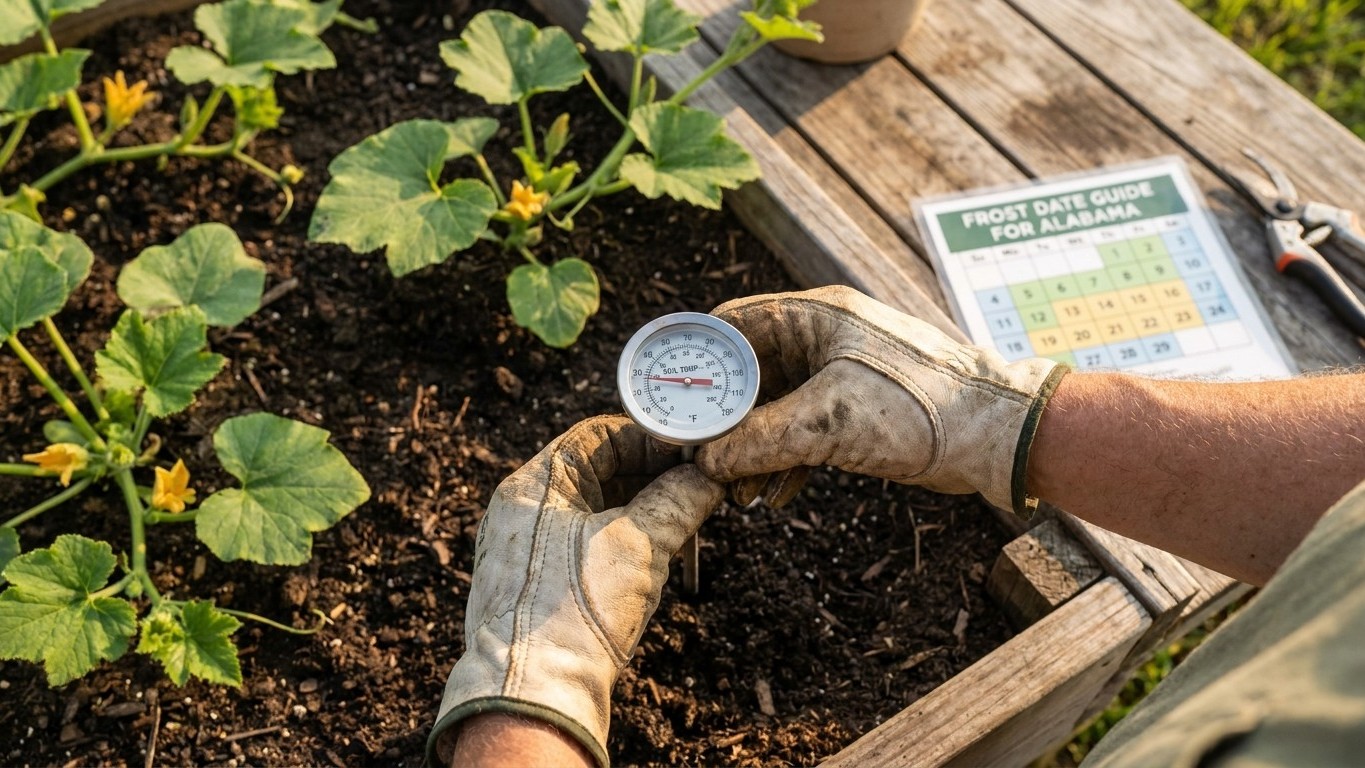

Sow pumpkin seed directly in the garden once soil temperatures hold at 65°F, which in Maryland typically lands in mid-to-late May regardless of what the calendar says about the last frost. Gardeners in central Maryland and the Piedmont usually plant between mid-May and early June; Eastern Shore growers can often start a bit earlier, while Western Maryland’s higher elevations tend to wait until closer to June. That window leaves enough runway for pumpkins to flower, set fruit, and harden a rind before the state’s first fall frost arrives in late October or early November.
The short answer
Maryland’s growing season closes out when the first fall frost settles in, and NOAA’s 1991-2020 climate data puts that date between October 26 and November 5 across the state. That ten-day spread matters more than it looks, because the entire pumpkin timeline gets built backward from it.
Pumpkins need 45 to 55 days from the moment a female flower opens to the moment the fruit is fully mature and the rind has hardened, according to Utah State University Extension. Not from the day seed goes in the ground. Not from when the vine starts running across the bed. From flowering. That distinction changes everything, because a vine can look full and healthy in late August while every flower on it is still weeks away from opening.
Run the numbers against Maryland’s frost window and a clear cutoff shows up. Pair the earliest frost date (October 26) with the longer end of the maturation range (55 days), and a flower needs to open by roughly September 1 to have a real shot at ripening. Pair the latest frost date (November 5) with the shorter end of the range (45 days), and that cutoff stretches out to around September 21. The real deadline for flowering sits somewhere inside that three-week span, depending on which part of the state a garden sits in and how far along a given fruit already is.
That’s a window, not a single date, and it shifts by region. Western Maryland’s mountain counties, Garrett and Allegany, tend to see frost weeks earlier than the rest of the state, which pulls the flowering cutoff earlier too. The Eastern Shore runs milder and buys a few extra days on the back end.
The practical upshot: a flower that opens after the third week of September is a long shot almost anywhere in Maryland. Fruit that sets from those late blooms will most likely still be green, or barely starting to turn, by the time frost finally shuts the vine down. That’s exactly why the sowing decision, covered next, carries so much weight. Seed that goes into the ground too late leaves no way to force flowering earlier, no matter how well the vines get tended through summer.
When to sow here
Sowing pumpkins isn’t governed by the last frost date at all. It’s governed by soil temperature, and those two numbers don’t move together. Maryland’s last spring frost falls between April 3 and April 16, but the soil at seed depth takes considerably longer to climb into the range pumpkins actually need. Air warms fast on a sunny April afternoon; the ground underneath it lags for weeks, holding onto winter’s chill long after the thermometer says spring has arrived.
| Region | Last Spring Frost | First Fall Frost | Typical Sowing Window |
|---|---|---|---|
| Central Maryland & Piedmont | April 3 to April 16 | October 26 to November 5 | Mid-May to early June |
| Eastern Shore | Milder, tends toward the early side of the statewide range | Milder, tends toward the later side of the statewide range | Can start slightly earlier within the mid-May window |
| Western Maryland (Garrett, Allegany) | Later, often weeks behind the statewide range | Earlier, often weeks ahead of the statewide range | Late May into early June, with less margin |
- Mark the last frost window. April 3 to April 16 is when the air stops freezing in most of the state, but treat that as a reference point, not a planting signal.
- Let the ground catch up. Soil warms slower than air, especially in heavy or shaded beds, so counting on the frost date alone tends to end with seed rotting in cold, wet soil instead of germinating.
- Check for 65°F before dropping seed. That’s the threshold Utah State University Extension sets for pumpkins, and in Maryland it usually isn’t reached until several weeks after the April frost date has passed, typically landing sowing in mid-to-late May.
- Use row covers to move the date earlier. A row cover trapped over the bed warms the soil underneath faster than open ground, and gardeners who use them can often get seed in roughly two weeks earlier than they otherwise could.
- Target mid-May through early June statewide. Lean earlier on the Eastern Shore, later in Western Maryland’s higher elevations, where both frost and soil warming lag behind the rest of the state.
The gap between the frost date and the 65°F soil threshold is the part most gardeners underestimate. It isn’t a few days; in an average year it runs closer to a month. Pushing seed into the ground early just because the air feels warm rarely pays off, since cold, damp soil is a slower way to lose a pumpkin crop than frost ever is.
What goes wrong here
- A flower opens too late to color up. Once a bloom opens past the third week of September, the fruit it sets rarely gets the full 45 to 55 days it needs before frost arrives. The fix is working backward from sowing: get seed in by early June at the latest so vines have time to flower well within that window, instead of hoping a late bloom catches an unusually mild fall.
- An early frost catches fruit still on the vine. Maryland’s first frost is itself a range, October 26 to November 5, and fruit on pace for the later end of that window can get caught if frost lands on the early side instead. Cover vines with a sheet or row cover on any night frost is forecast, and if the fruit already has a hard rind, harvest it with the stem attached rather than risk losing it overnight.
- The vine dies back before the rind hardens. Powdery mildew, drought stress, and pest pressure from squash bugs and cucumber beetles can all shut a vine down early, stopping fruit development before the skin has toughened enough for storage. Keeping vines watered through late summer and watching for early pest damage buys the extra weeks a fruit needs; see this site’s guides to squash bugs and cucumber beetles in Maryland for how to spot and manage both.
- Fruit gets pulled too early out of frost anxiety. A pumpkin picked before its rind has hardened won’t finish ripening off the vine the way a tomato might. If frost isn’t imminent, let the fruit sit as long as possible; Utah State University Extension’s guidance on storage goes no further than keeping mature fruit somewhere it won’t freeze, without naming an exact temperature.
Common questions
Can I still sow pumpkins in June in Maryland?
Early June sowing can still work in much of the state, especially on the Eastern Shore where frost arrives later, but it leaves less margin for error. A June 1 planting needs the vine to flower within roughly twelve weeks to stay ahead of the September flowering cutoff, which is possible but doesn’t leave much room for a slow or stressed start.
What happens if my pumpkin vine flowers in October?
A flower opening in October, after Maryland’s typical cutoff, is very unlikely to produce a mature, hardened pumpkin before frost. The fruit may set and grow for a couple of weeks, but frost will most likely kill the vine before the 45 to 55 days Utah State University Extension describes have had a chance to pass.
How do I know when soil has reached 65°F?
A soil thermometer pushed a few inches into the bed, checked in the morning before the sun has warmed the surface, gives the most reliable reading. Relying on the calendar alone risks sowing into soil that’s still too cold, even weeks after the last frost has already passed.
Should I harvest pumpkins before frost even if they’re not fully orange?
If a hard freeze is imminent and the rind has already hardened, it’s better to harvest with the stem attached than to lose the fruit to frost damage. A fruit that’s still soft-skinned and green, though, isn’t going to improve after picking; Utah State University Extension’s only stated guidance is to keep harvested fruit somewhere it won’t freeze.