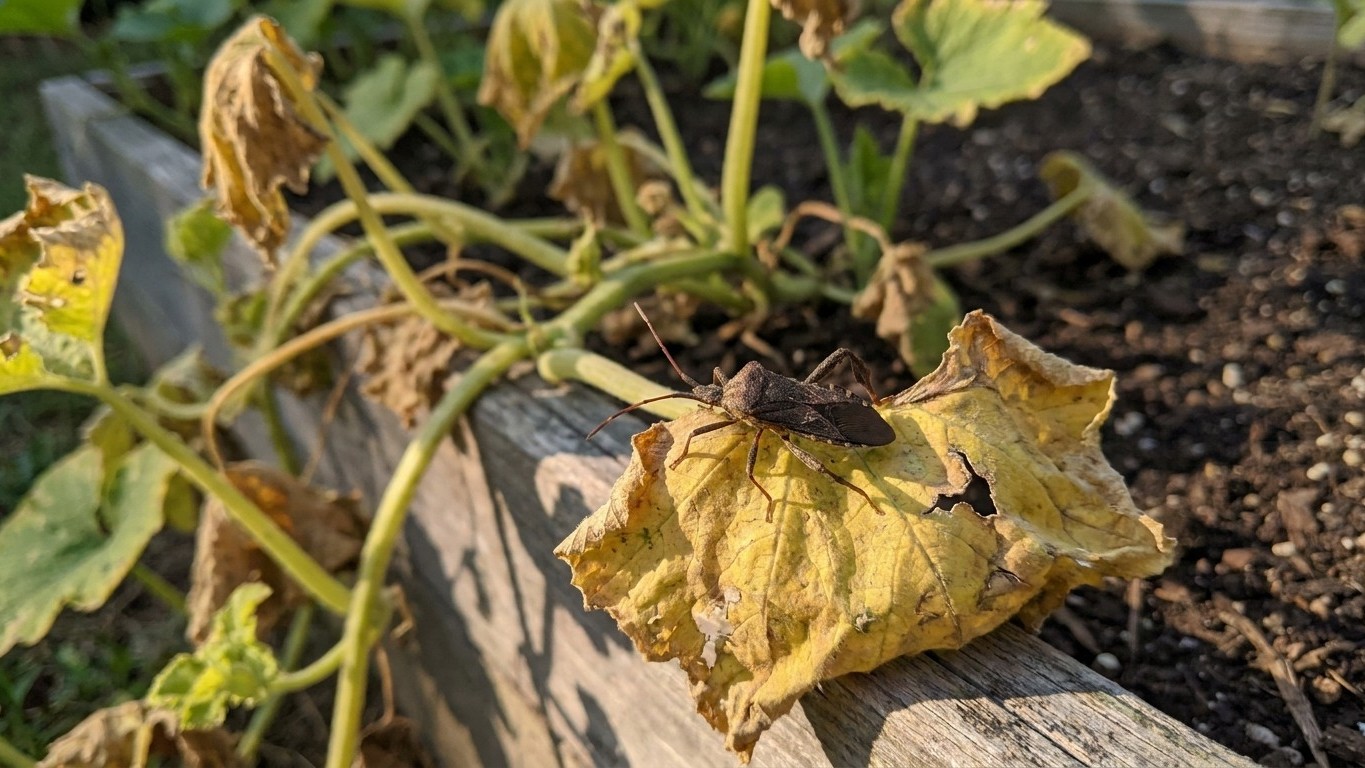

Squash bugs typically appear in Maryland gardens in late May to early June, as soon as squash and pumpkin vines start to spread, and their numbers build steadily through summer, peaking in late July and August. The most effective way to stop them is a combination of early detection, physical removal of eggs, and timing your planting to avoid the insect’s heaviest activity window. Waiting until you see wilted leaves is usually too late.
Maryland’s Growing Season and the Squash Bug Timeline

Maryland sits in a humid, mid-Atlantic climate with a frost-free growing season that generally runs from mid-April through late October, depending on whether you’re gardening in the cooler mountain counties of Garrett and Allegany or the warmer Eastern Shore and southern counties near the Chesapeake Bay. Squash bugs (Anasa tristis) overwinter as adults in leaf litter, wood piles, and garden debris, then emerge once temperatures consistently sit above 70 degrees Fahrenheit during the day.
In most of the state, that means the first adults show up between mid-May and early June. They head straight for young squash, pumpkin, zucchini, and cucumber plants to feed and lay eggs. A single generation takes about six weeks from egg to adult, so Maryland’s long summer allows for two full generations in a typical year, sometimes a partial third if fall stays warm. That second generation, arriving in late July or August, is usually the one that does the most visible damage because plant populations are already stressed from the first wave and from summer heat.
Southern Maryland and the Eastern Shore, where the growing season stretches a few weeks longer than in the western counties, tend to see squash bug activity persist later into September. Gardeners in Frederick, Washington, and Garrett counties usually get a slightly shorter window, but the insect’s basic biology doesn’t change much across the state; only the calendar shifts by a couple weeks.
Why Squash Bugs Thrive in Maryland Gardens Specifically
The mid-Atlantic’s combination of humid summers and clay-heavy soils that hold moisture creates dense vine canopies, exactly the sheltered, shaded environment squash bugs prefer for hiding during the hottest part of the day. Backyard gardens with straw mulch or old boards left near squash beds give adults a place to overwinter close to next year’s food source, which is one reason infestations tend to return to the same garden year after year if debris isn’t cleared out each fall.
How to Identify Squash Bug Damage Before It Spreads
Squash bugs are gray-brown, roughly five-eighths of an inch long, with a flattened, shield-shaped body. They’re often confused with stink bugs, but squash bugs move faster and cluster specifically at the base of squash-family plants rather than roaming across a wide range of crops.
The eggs are the easiest early warning sign, and they’re distinctive enough that missing them is really a matter of not looking. Females lay clusters of bronze-colored, oval eggs in neat rows on the undersides of leaves, usually in the V formed by leaf veins. A single cluster can hold a couple dozen eggs, and one female lays several clusters over her lifetime. Checking the undersides of leaves once a week starting in late May catches most infestations before they become unmanageable.
Once nymphs hatch, they’re gray with black legs and cluster together, feeding in groups on the same leaf. As they mature, they turn a duller brownish-gray closer to the adult color. Both nymphs and adults use piercing mouthparts to suck fluid out of leaves and stems, which causes a distinctive damage pattern: yellow speckling on leaves that progresses to browning and wilting, starting at the point of feeding and spreading outward. Left unchecked, an infested plant can wilt entirely within a week or two, especially younger plants with less established root systems.
Squash bugs also transmit a bacterial pathogen called cucurbit yellow vine decline, which causes sudden wilting that can look similar to squash vine borer damage but progresses faster and affects the whole plant rather than a single vine. If you see plants collapsing suddenly in mid-summer despite adequate watering, squash bug feeding combined with this pathogen is a common culprit in the region.
What Actually Stops Squash Bugs in Maryland Gardens
Control works best as layered strategy rather than a single fix, because squash bugs are resistant to a lot of general-purpose approaches once they reach adulthood.
Row covers put in place at planting time and left on until flowering begins are one of the most reliable physical barriers, since they block adults from reaching young plants during the highest-risk window in late May and June. Covers need to come off once flowers open, though, so pollinators like bees can reach the blossoms; squash and pumpkin plants depend heavily on insect pollination to set fruit.
Hand-removal of egg clusters is tedious but effective, especially in a home garden where the total plant count is manageable. Scraping eggs off leaves with a fingernail or piece of tape and dropping them into soapy water prevents an entire generation from hatching. Doing this weekly from late May through July, right through the first generation’s egg-laying period, meaningfully reduces the second-generation population in August.
Trap crops offer a lower-effort alternative for larger gardens. Squash bugs show a strong preference for certain varieties, particularly blue hubbard squash, over zucchini or cucumbers. Planting a small border of hubbard squash around the main crop draws adults away from the plants you actually want to harvest, and then that trap crop can be removed and destroyed once it’s covered in bugs, taking a large chunk of the population with it.
Sanitation between seasons matters more than most gardeners expect. Squash bugs overwinter in plant debris, mulch, and any wood or cardboard left near the garden bed. Clearing out dead vines at the end of the season, rather than letting them sit through winter, removes the shelter adults need to survive Maryland’s cold months. Rotating squash-family crops to a different part of the yard each year also helps, since overwintering adults tend to emerge close to where they spent the previous summer.
Beneficial insects play a role too, though it’s a limited one. The tachinid fly Trichopoda pennipes parasitizes squash bug adults and is present naturally in Maryland, but it rarely provides complete control on its own. Encouraging general garden biodiversity, avoiding broad-spectrum insecticide sprays that kill beneficial insects along with pests, gives these natural predators a better chance to keep populations in check over multiple seasons.
When Insecticidal Treatment Makes Sense
Insecticidal soap and neem oil can knock back nymph populations if applied directly to clusters early, while the insects are still soft-bodied and gathered in groups. Adults have a tougher exoskeleton and are much harder to kill with these lower-impact options, which is part of why early-season monitoring for eggs and young nymphs matters more than trying to treat adult populations later in summer.
For gardeners dealing with heavier infestations, products containing pyrethrins or carbaryl are labeled for squash bug control and available at garden centers, but they should be applied in the early morning or evening when bees aren’t actively foraging, since squash flowers are open for pollination during the day. Following label instructions on timing and reentry intervals matters, both for pollinator safety and because repeated use of the same chemical class can lead to resistance over time.
Preventing Next Year’s Infestation
Because squash bugs overwinter locally rather than migrating in from elsewhere, a bad year in a Maryland garden often sets up a bad year the next season unless the cycle gets interrupted. Removing all cucurbit plant material at the end of the season, tilling the soil where squash grew to expose any hiding adults to winter cold, and avoiding leaving mulch piles or boards near the garden bed through winter all reduce the local overwintering population.
Staggering plantings so not every squash plant flowers at the same time can also spread out the pest’s impact, giving later plants a chance to establish before peak squash bug activity hits in August. Some Maryland gardeners have also found success starting squash indoors a few weeks early and transplanting larger, more established seedlings outside, since bigger plants tolerate feeding damage better than young ones just breaking ground.
None of these methods eliminate squash bugs completely from a region where they’re firmly established, but consistent early monitoring combined with sanitation and physical barriers keeps most home gardens productive through the season without relying on heavy chemical intervention.
Related guides
- Squash bug in Delaware: When It Shows Up and What Stops It
- Squash bug in Massachusetts: When It Shows Up and What Stops It
- Squash bug in Michigan: When It Shows Up and What Stops It
- Squash bug in Missouri: When It Shows Up and What Stops It
- Squash bug in Wisconsin: When It Shows Up and What Stops It