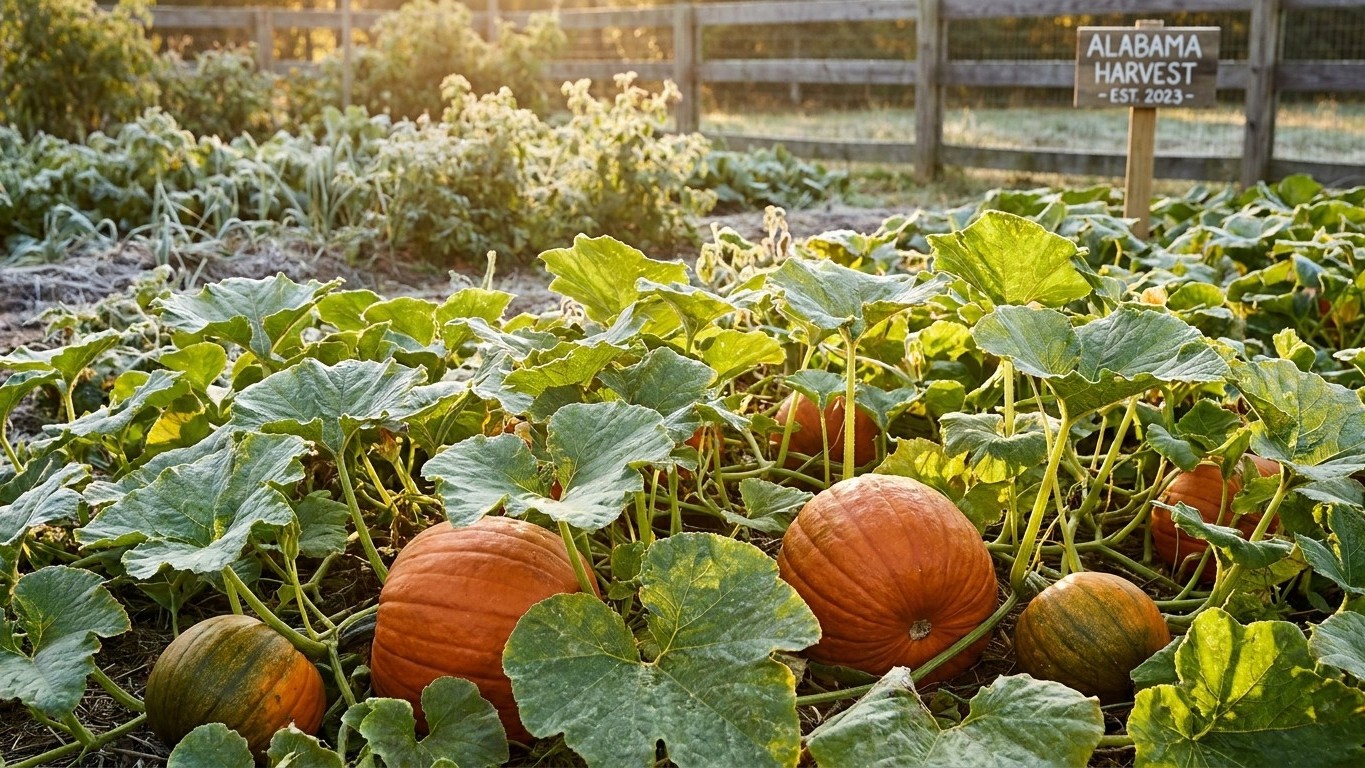

In most of Massachusetts, a pumpkin flower needs to open by mid-to-late September to have any real shot at coloring up before frost. Miss that window and the vine keeps working, but the fruit runs out of season. The math is unforgiving: count back from first frost, not from the day you dropped seed in the ground.
The short answer
Start with the frost date. Across the state, the first fall freeze arrives anywhere from November 3 to November 14, based on 1991-2020 NOAA climate normals for the Boston area. That’s the mildest spot in Massachusetts, sitting right on the water, so treat that window as the generous end of the calendar, not the rule. Inland towns, hill towns, and anywhere away from the coast tend to freeze earlier in fall and thaw later in spring.
Now work backward. A pumpkin needs 45 to 55 days from the moment a female flower opens and gets pollinated to the moment the fruit is fully mature, according to Utah State University Extension. That’s the figure the whole calendar hinges on, and it starts at flowering, not at seeding, not at transplanting. A vine can look lush and healthy for weeks before it ever sets a flower, and none of that early growth counts toward the clock.
Run the subtraction against the frost window. If frost lands on the early side, November 3, a flower needs to open by roughly September 9 to September 19 to finish in time, depending on whether that particular fruit needs the full 55 days or the shorter 45. If frost holds off until November 14, the cutoff slides later, somewhere between September 20 and September 30. Stitch those two scenarios together and you get a realistic flowering deadline somewhere in the first three weeks of September for most of the state, with a little more room near the coast and less room inland.
That’s the honest answer to whether Pumpkins Ripen Before Frost here: they can, but only if the flowering happens on schedule. A pumpkin that sets fruit in early September has a comfortable margin. One that sets fruit in early October is racing a clock it’s likely to lose, because even the fastest-finishing fruit needs 45 days minimum, and there simply isn’t 45 days left between early October and a November frost in a bad year. The plant doesn’t know the calendar. It just keeps flowering as long as it’s alive, which is exactly why so many home gardens end up with a pile of green pumpkins in late October.
When to sow here
Sowing date is where most of this gets decided, months before frost is even a conversation. The trap is treating the last spring frost date as the green light. It isn’t. Soil needs to reach 65°F before pumpkin seed will germinate reliably, and soil warms far slower than air. The last spring frost in Massachusetts falls between April 1 and April 8 on the coast, and inland spots run later than that. But 65°F soil doesn’t show up right after the air stops freezing. Bare ground lags behind air temperature by weeks, sometimes well into May, because soil holds onto cold long after the last frosty night has passed. Sowing by the frost date alone, ignoring the soil, is the single most common timing mistake with this crop.
- Check soil, not the calendar. Push a soil thermometer four inches down in the planting bed. Don’t sow until it reads 65°F on multiple mornings in a row, not just one warm afternoon.
- Expect a gap after last frost. Because soil warms weeks slower than air, the 65°F mark typically lands well after that April 1 to April 8 last-frost window, not on top of it. Treat the frost date as the start of the countdown, not the finish line.
- Use row covers to close the gap. Floating row cover over the bed traps daytime heat and can buy roughly two weeks on soil warming, letting you sow that much earlier than bare, uncovered ground would allow.
- Count forward from sowing to flowering. Pumpkins don’t flower the day they germinate. Vines need weeks of vegetative growth before the first female flowers appear, so factor that stretch in before you even get to the 45-to-55-day maturation clock.
- Work backward from your target flowering date. If flowers need to open by mid-September for fruit to finish before frost, and the plant needs roughly six to eight weeks of growth before it flowers, sowing in late May to early June is the realistic target for most of the state, once soil has actually warmed.
The arithmetic only holds together if each step is in the right order: soil temperature first, then sowing, then weeks of vine growth, then flowering, then the 45-to-55-day fruit clock, then frost. Skip the soil-check step and everything downstream shifts later than planned.
What goes wrong here
- A late flower that never colors. This is the most common failure in a Massachusetts backyard: fruit sets in late September or worse, October, and simply runs out of daylight and warmth before the rind turns fully orange. The remedy is upstream, not downstream, meaning there’s little to do once it’s happened except pull the vine’s energy toward the fruit already on it by pinching off new flowers from late August onward, so the plant isn’t wasting resources starting fruit that has no mathematical chance of finishing.
- A fruit caught by frost while still green or pale. Even a fruit that started on schedule can get clipped by an early freeze if the season runs short. Watch the forecast in the two weeks before the earliest end of the frost window, and if a hard freeze is coming with fruit still unfinished, harvest anyway with the stem attached rather than leave it exposed. A pumpkin cut before frost, even slightly underripe, keeps better than one that’s been frozen on the vine.
- Vine dies back before the skin has hardened. Powdery mildew, borers, or an early cold snap can kill foliage while the rind is still soft. A soft rind bruises and rots fast in storage. If the vine collapses early, harvest what’s on it, cure the fruit somewhere dry and out of direct sun for a week or two, and check daily for soft spots before deciding whether it’s worth keeping. Squash bugs and cucumber beetles are common culprits behind early vine decline in this region; see our dedicated pages on squash bugs in Massachusetts and cucumber beetles in Massachusetts for how to spot and manage them before they take the vine down early.
Common questions
Can I still harvest a pumpkin that’s mostly green when frost is forecast?
Yes. Cut it with the stem attached before the freeze hits rather than risk losing it entirely. It won’t be as sweet or as long-keeping as a vine-ripened fruit, but a partially colored pumpkin harvested ahead of frost is usually salvageable, while one left on a frozen vine typically isn’t.
Does the coast really get more growing season than inland Massachusetts?
Based on the NOAA data for the Boston area, yes, the coast tends to see later first frosts and earlier last frosts than inland towns and the Berkshires. That means the flowering deadline discussed above should be treated as the earlier end of the range if you’re gardening away from the water.
How long can I store a mature pumpkin after harvest?
Utah State University Extension’s guidance is limited on this point: it recommends keeping harvested pumpkins somewhere they won’t freeze, without publishing a specific storage temperature, humidity level, or keeping-time figure. Beyond frost protection, that source doesn’t specify further, so treat storage as a frost-avoidance question rather than a precise shelf-life number.
What if my flowers are opening on time but fruit still isn’t sizing up?
Check pollination first. A flower opening on schedule doesn’t guarantee a fruit sets; poor pollination is a separate problem from timing and is worth ruling out before assuming the season is simply too short.