
In Tennessee, pumpkins go into the ground once soil temperature holds at 65 F, typically several weeks after the last spring frost window of March 31 to April 12. Work backward from the first fall frost window (October 28 to November 8), and the target becomes clear: vines need to be flowering by early-to-mid September so the fruit has its full 45 to 55 days to mature and harden before cold shuts the season down.
The short answer
Start with the end date, because that’s what actually limits a pumpkin crop in Tennessee. The first fall frost typically lands somewhere between October 28 and November 8, based on 1991-2020 climate normals for this region. That’s not a single day you can circle on a calendar. It’s a probability band, and depending on where you garden inside that band, your real cutoff moves by more than a week.
Now count backward. A pumpkin needs 45 to 55 days after flowering, not after sowing, to reach full maturity with a hardened rind. That distinction matters more than almost anything else on this page. A vine can look loaded with green fruit in August and still fail if those flowers opened too late to finish the clock before frost arrives.
Run the math against the earlier end of the frost window first, since that’s the safer assumption for anyone who isn’t sure which side of the band their garden falls on. Fifty-five days back from October 28 lands in the first days of September. Forty-five days back from that same date lands around September 12 or 13. So if your first frost tends to arrive on the early side, the last flowers with any real shot at ripening need to open by roughly September 3 to September 13.
If your area tends to run later, closer to the November 8 end of the window, that cutoff stretches out. Fifty-five days back from November 8 lands around September 14; forty-five days back lands closer to September 24. Put the whole picture together and the safe flowering window across Tennessee runs from roughly the first week of September to about September 24, depending on which end of the frost band describes your specific location.
East Tennessee and the Cumberland Plateau complicate this further. Those areas run cooler and later in spring than the Nashville area, which pushes the entire calendar later on both ends. A gardener there isn’t just working with a later last frost. The whole growing season shifts, and cutting it close on the September flowering deadline carries more risk than it would in a warmer part of the state.
When to sow here
Sowing pumpkins isn’t governed by the frost date at all. It’s governed by soil temperature, and the two numbers don’t move together. Soil needs to hold at 65 F before seed goes in the ground, and that threshold arrives well after the air has already cleared frost risk. The soil lags the air by weeks, so treating the last spring frost date as your green light is a common way to lose seedlings to cold, wet ground that hasn’t caught up yet.
- Let the last spring frost window pass first. For most of Tennessee that’s March 31 to April 12, though East Tennessee and the Cumberland Plateau typically run later than that.
- Don’t sow yet. Air temperature clearing frost risk doesn’t mean soil temperature has caught up. The gap between the two is measured in weeks, not days, because soil holds cold longer than the air above it.
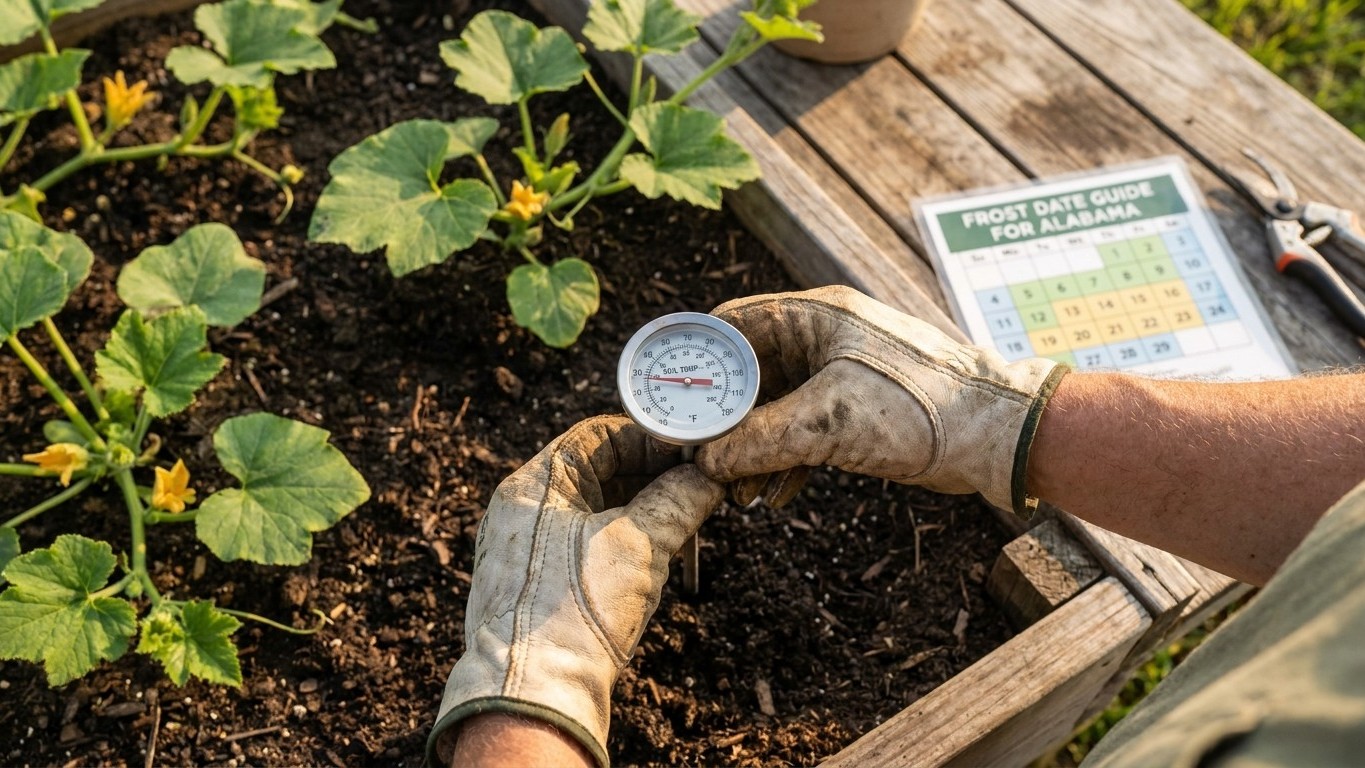
- Check soil temperature directly rather than guessing from the calendar. Seed goes in once it reads 65 F, consistently, not on a single warm afternoon.
- If you want to move earlier than that natural soil-warming schedule allows, row covers are the practical tool for it. They can buy roughly two weeks over bare, uncovered soil, which matters most for gardeners working against the later end of the fall frost window.
- Sow directly where the vine will grow. Pumpkins are a crop where working backward from your target flowering window (early-to-mid September, per the calculation above) against your actual soil-warming date tells you whether you have room to spare or whether row covers are worth the effort this year.
The arithmetic, in plain terms: last frost clears the air by early-to-mid April in most of the state, soil takes additional weeks beyond that to reach 65 F, and row covers can claw back about two of those weeks if the season is running tight. None of that changes when the pumpkin has to flower to beat the first fall frost. It only changes how much cushion you have to get there.
What goes wrong here
- A late flower that never colors up. This is the direct result of the math in the first section going unheeded. A flower that opens after the safe window, say late September in a normal year, is racing a clock it can’t win before an October or early-November frost. The remedy is sowing early enough, with row covers if needed, that flowering falls inside the September window rather than after it.
- A fruit caught green by frost. Even a flower that opens on time can be undone by an early hit within the October 28 to November 8 band. Since that’s a range and not a fixed date, treat the earlier end as the real deadline for planning purposes, and keep row covers or old sheets on hand to throw over vines if a cold night is forecast before the fruit has fully hardened.
- A vine that dies back before the skin hardens. Foliage loss cuts off the plant’s ability to keep feeding a fruit through its final weeks, which stalls the hardening process even if the calendar math was otherwise fine. Squash bugs and cucumber beetles are common causes of that kind of premature vine collapse in Tennessee gardens, and both have dedicated pages on this site covering identification and control.
- Harvesting too early or too late. Pull fruit with the stem attached and get it in before frost reaches it, but don’t rush a pumpkin off the vine before its rind has actually hardened just because the calendar is getting close. A soft rind at harvest won’t firm up in storage.
Common questions
Can I still sow pumpkins in Tennessee in July?
Run the math first. A July sowing needs to flower with enough runway left, 45 to 55 days, before the first fall frost window opens on October 28. That’s a tight margin in most of the state and tighter still in East Tennessee and the Cumberland Plateau, where the season runs later on both ends.
Does East Tennessee follow the same calendar as the rest of the state?
No. The Cumberland Plateau and East Tennessee are cooler and run later in spring, which pushes both the last frost date and the safe flowering window later than in Nashville and points west.
How do I know when soil has actually reached 65 F, rather than just guessing from the weather?
A soil thermometer, checked at the depth seed will sit, is the direct way to confirm it. Air temperature clearing the last frost window doesn’t tell you the soil has caught up, since the source material is explicit that soil lags air by weeks.
Is there a published number for how long pumpkins can be stored after harvest?
Not in the source used for this page. Utah State University Extension’s guidance covers keeping fruit somewhere it won’t freeze, but it doesn’t publish a storage temperature, humidity level, or keeping time, so that figure isn’t something to guess at here.