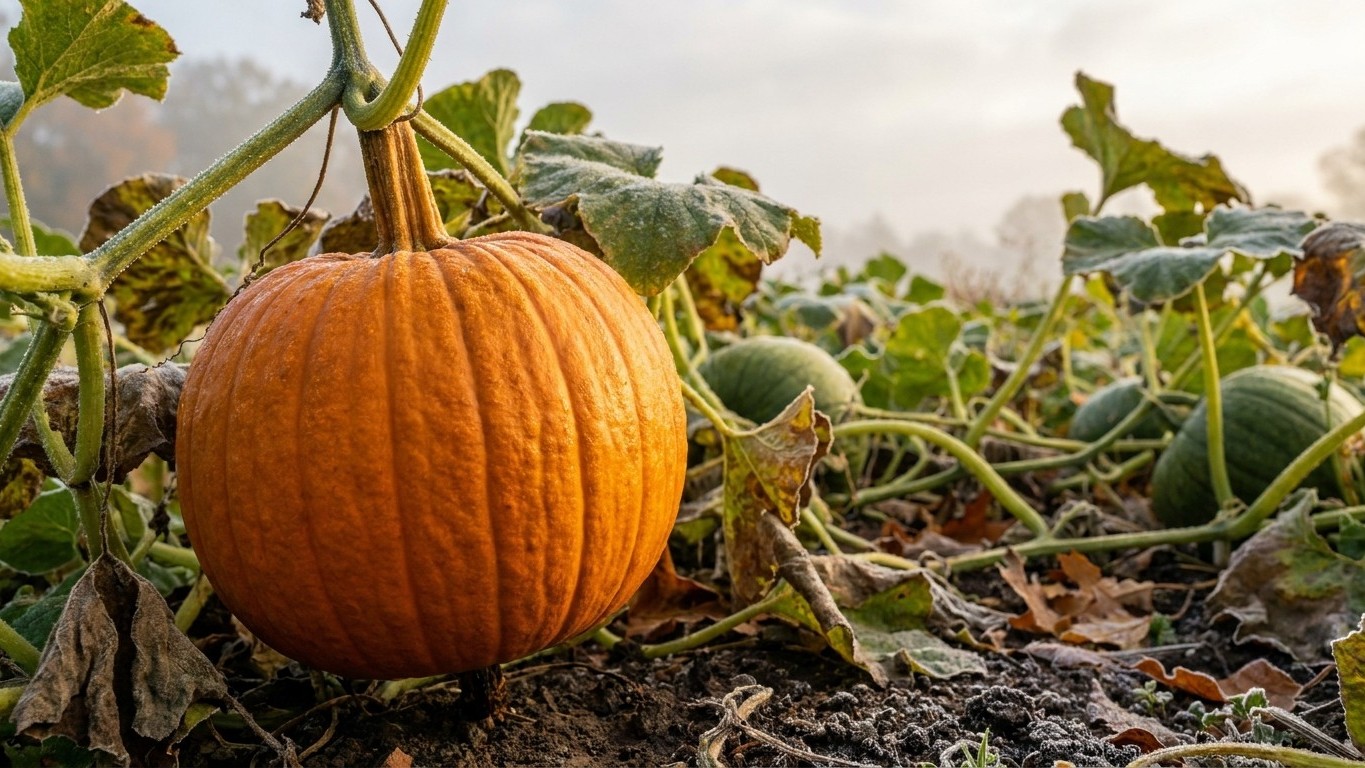

In most of Tennessee, the last pumpkin flowers that can still turn into a ripe fruit need to open before the third week of September. That’s because the first fall frost lands between October 28 and November 8, and pumpkins need 45 to 55 days after flowering, not after planting, to finish. Push a flower open later than that and you’re gambling on a green pumpkin.
The short answer
Start with the frost date, because everything else in this calculation works backward from it. NOAA’s climate normals for the middle Tennessee station put the first fall freeze somewhere between October 28 and November 8, depending on the year. That’s not a single day you can circle on a calendar. It’s a window, and your particular garden could land anywhere inside it, or slightly outside it if you’re up on the Cumberland Plateau or tucked into a cooler East Tennessee valley.
From that window, subtract the 45 to 55 days a pumpkin needs after its flower opens to ripen fully. Do the math on the early end of frost (October 28) and the slow end of maturation (55 days), and you land on roughly September 3 as the last safe flowering date. Do the math on the late end of frost (November 8) and the fast end of maturation (45 days), and you get closer to September 24. So the real answer isn’t a date. It’s a range: somewhere between the first week of September and the last week of September, the flowers on your vine need to have already opened and set fruit, or that pumpkin isn’t going to make it to orange before the cold arrives.
Notice what this range depends on. It has nothing to do with when you sowed the seed. A vine can sit and grow leaves for weeks before it throws its first female flower, and that flowering date, not the planting date, is the number that actually counts. Two gardens planted the same weekend can flower ten days apart depending on variety, sun, and how much stress the plants went through in a hot July. That’s why counting backward from frost using the flowering date is the only version of this calculation that holds up, and it’s the same logic behind figuring out Will Pumpkins Ripen Before Frost in Tennessee?. Counting backward using the seed packet’s “days to maturity” from sowing routinely gets people into trouble, because that figure usually assumes ideal, fast germination and early flowering that doesn’t always happen in a real backyard.
One more caution worth sitting with: the Cumberland Plateau and East Tennessee tend to run cooler and later in spring than the middle of the state, which pushes the whole schedule tighter on both ends. If you garden up there, treat the earlier end of every window in this article as the one that applies to you.
When to sow here
The mistake most people make is lining up planting day with the last spring frost date. Knowing exactly When to Sow Pumpkins in Tennessee requires more than that single date, since Tennessee’s last spring frost falls between March 31 and April 12, and pumpkin seed sown into cold, wet ground on that date will mostly rot or sulk. Pumpkins want the soil itself at 65°F, and soil doesn’t warm at the same pace as the air. It lags behind, sometimes by a good stretch of weeks, so treating the frost date as your green light skips a step that actually matters more.
- Mark the last spring frost window for your area, March 31 to April 12, as your floor, not your starting gun. Nothing goes in the ground before this window closes.
- Wait for the soil, not the calendar, to tell you it’s ready. A simple soil thermometer pushed a few inches down is the only honest way to know it’s hit 65°F. Air temperature swings day to day; soil temperature is the steadier signal.
- If you want to move earlier than bare soil allows, row covers can buy about two weeks of head start by trapping warmth over the bed. That’s the one legitimate way to shift this timeline forward without gambling on a false spring.
- Once the soil is warm and seed is in the ground, start counting toward flowering, not toward harvest. The clock that matters begins when the first flowers open, weeks after sowing, not on planting day itself.
- Work backward from your target flowering window (early to late September, per the short answer above) to sanity-check your sowing date. If your seed goes in so late that flowering can’t realistically happen before that window closes, that’s the signal to pick a faster-maturing variety or accept the risk.
What goes wrong here
Several pumpkin varieties turn up in Tennessee gardens each season, among them Connecticut Field, Jack Be Little, Casper, Cinderella, Baby Pam, Howden, Big Max, Long Island Cheese, and Jarrahdale. None of those names come with published maturity days, sizes, or colors here, and no figure should be assumed for any of them. Whatever variety ends up in the ground, the same three failures show up year after year in this climate.
- A late flower that never colors up. This happens when the first female flowers open after that mid-to-late September cutoff, leaving too few days before frost for the fruit to finish ripening. The remedy is prevention, not rescue: track your actual flowering date against the window in the first section, and if you’re already past it, treat next season’s sowing date as the fix rather than hoping this year’s fruit catches up.
- A fruit caught by frost before harvest. Even a pumpkin that colored on schedule can get nipped if it’s left on the vine past the first freeze event in the October 28 to November 8 window. Harvest with the stem attached before that frost arrives, rather than waiting for a “perfect” last day that might not come.
- A vine that dies back before the skin hardens. Powdery mildew, squash vine borer damage, or simple late-season stress can collapse foliage weeks before the pumpkin’s rind has toughened enough for storage. Without leaf cover, the fruit stops developing that hard shell. Once the vine is clearly failing, cut losses and pull fruit early rather than leaving it exposed to rot or insects, keeping in mind that pests like squash bugs and cucumber beetles have their own dedicated pages on this site worth checking if damage looks insect-related.
Checking this against your own county
Every number above comes from a single Middle Tennessee weather station, and frost dates shift the further you get from it. A garden in the Cumberland Plateau or the mountains of East Tennessee can see frost arrive noticeably earlier than the statewide window suggests, while parts of West Tennessee may run a little later. Before you lock in a sowing date, check your own county’s frost history and planting guidance through the University of Tennessee Institute of Agriculture Extension. Their county offices track local frost records and can tell you whether your garden tends to run ahead of or behind the averages used here, which matters more than any statewide number when you’re deciding how much room you actually have before the first freeze.
Common questions
Can I still get a ripe pumpkin if my flowers open in early October?
It’s tight. With frost arriving between October 28 and November 8, and pumpkins needing 45 to 55 days after flowering, an early October flower is racing the clock and may not finish before the cold hits, especially in the cooler eastern parts of the state.
Does the 45 to 55 day figure include the time the vine spends growing before it flowers?
No. That count starts the day the flower opens, not the day the seed goes in the ground. The weeks a vine spends putting out leaves before its first flower aren’t part of that window at all.
Is there a set temperature I should store pumpkins at after harvest?
That figure isn’t published in the source used for this page. The only guidance available is to keep harvested pumpkins somewhere they won’t freeze, without a specific temperature or humidity target attached.
Should I trust the last frost date or the soil thermometer when deciding to sow?
The soil thermometer. The last spring frost date (March 31 to April 12 here) tells you when the air stops freezing, but the soil can take weeks longer to reach the 65°F pumpkins actually need to germinate reliably.