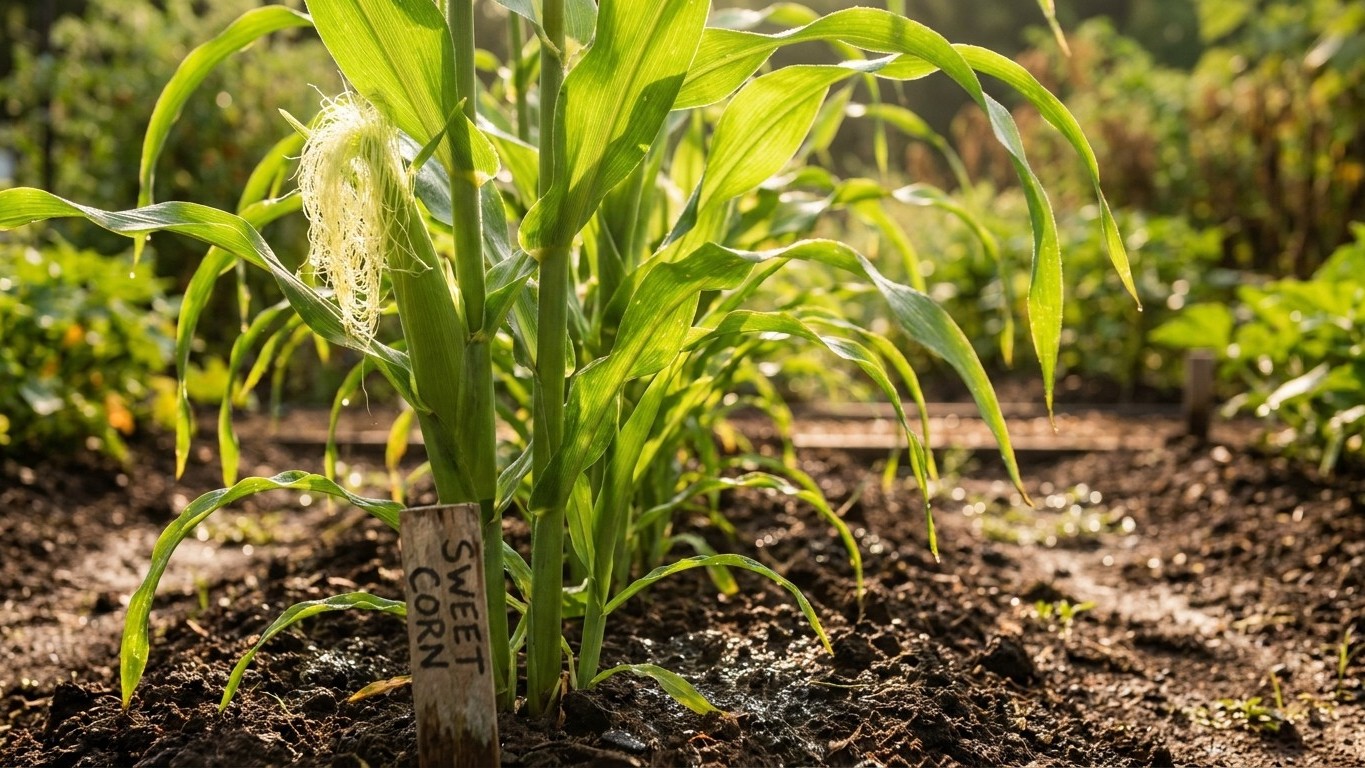

Yes, sweet corn can ripen across South Dakota, but the calendar gives less room than most gardeners assume. Soil needs to sit above 60°F before seed goes in, a mark that lands well after the last frost clears. From that planting day, the crop needs 60 to 90 days to reach harvest, and that window has to close before the first fall freeze. In most counties the math works out. Push toward a 90-day variety, though, and the season starts running thin.
The short answer
At Sioux Falls, the reference station NOAA’s National Centers for Environmental Information uses for climate normals, the last spring frost typically falls between April 29 and May 9, drawn from the 1991-2020 Climate Normals for station USW00014944. That date only marks when the air stops freezing. It says nothing about the ground. Sweet corn germinates reliably once soil holds above 60°F, according to Utah State University Extension, and that threshold arrives after the frost line clears, sometimes weeks after, depending on how much sun the bed gets and whether the spring runs cool or warm. Treating the last frost date as planting day is the single most common mistake gardeners make with this crop here.
On the other end of the season, the first fall frost at that same Sioux Falls station lands between September 24 and October 4. Whatever week the soil actually clears 60°F becomes the starting gun, and the clock runs until whichever week the first freeze arrives. In a typical year, that gap stretches to roughly four months, sometimes closer to four and a half. A crop that needs 60 to 90 days fits inside that window without much trouble, provided the soil warms on schedule and the planting isn’t pushed late by a wet, cold spring.
Summer heat matters too, though not the way most people think. Sioux Falls averages 13.8 days a year at 90°F or hotter. That’s not the average summer temperature, it’s the count of days that push the crop hard, driving water demand and stressing shallow-rooted plants. Sweet corn tolerates that load better than most garden vegetables and actually fills ears faster in a hot stretch, as long as watering keeps pace. The heat isn’t the risk in this state. The calendar is.
One caution matters more than any single date. The frost figures above come from an airport weather station. Suburban yards and rural gardens away from that pavement and those buildings typically see the last spring frost arrive later and the first fall frost arrive earlier, often by one to two weeks, and more at elevation. That shrinks the window on both ends at once. Anyone gardening outside the immediate Sioux Falls area should treat these dates as a starting reference, not a guarantee, and check local conditions before locking in a planting date.
Does a late variety fit here?
A 60-day variety
This is the safe choice for South Dakota. Once soil clears 60°F, typically in the back half of May or into early June depending on the spring, a 60-day variety reaches harvest by late July or early August. That leaves six to eight weeks of buffer before the first fall frost even under the tighter suburban timeline. There’s slack here for a cold snap, a slow week of germination, or a delayed planting without the crop running out of season. For most home gardens in the state, a shorter-season type removes the guesswork entirely.
A 90-day variety
The math gets tighter here. Ninety days from a planting date in late May or early June lands harvest in early September, close to the September 24 to October 4 frost window measured at the reference station. That leaves roughly two to three weeks of margin at Sioux Falls itself, and margin is exactly what disappears in outlying gardens. If the local frost arrives a week or two earlier than the airport average, and the planting date was already pushed back because the soil took longer to warm away from that pavement, a 90-day variety can run out of season before it finishes. For most South Dakota gardens outside the immediate Sioux Falls area, a 90-day type is a real gamble, and often it simply does not fit. A shorter-season variety is the more reliable bet statewide.
It helps to keep two different clocks separate here. The 60-to-90-day figure measures from planting to harvest and answers whether the crop fits the season at all. A second, much shorter clock runs from silk emergence to the day the ear is actually ready, and that one decides which week to pick within whatever harvest window the plant reaches. They answer different questions, and mixing them up is how gardeners end up either pulling ears too early or missing the ripe window entirely.
What goes wrong here
- Soil sown too cold. Seed planted before the ground holds steady above 60°F rots in the row or comes up thin and uneven, even if the calendar says the last frost already passed. The fix is a soil thermometer, not a calendar date: check the bed at planting depth for several consecutive days before putting seed in the ground.
- A variety too late for the season. A 90-day type planted on a normal schedule can still meet the first fall frost before it finishes filling ears, especially in gardens away from Sioux Falls where that frost tends to arrive earlier. The fix is choosing a 60-to-75-day variety unless the planting date is unusually early and the fall unusually long.
- Sweetness lost for reasons that have nothing to do with weather. Standard (su), sugary enhanced (se), and supersweet (sh2) types cross-pollinate if they tassel at the same time, and the result is starchy, disappointing kernels even in a garden that got every other detail right. The fix is timing plantings so the different types don’t tassel together, growing only one type in a given season, or planting each type in its own block of three or more rows rather than a single thin row.
Common questions
Can I plant sweet corn before the last frost in South Dakota?
No. Even after the air stops freezing, the soil usually needs more time to climb above 60°F, and seed planted into cold ground germinates poorly or rots outright.
What’s the safest sweet corn variety length for a South Dakota garden?
A 60-to-75-day variety leaves the widest margin before the first fall frost, particularly for gardens outside the immediate Sioux Falls area where frost tends to arrive earlier than the airport average.
How do I know when sweet corn is actually ready to pick?
Look for three signs together: dry, brown silks; husks that are still moist and green; and milky juice when a kernel is punctured. Any one sign alone isn’t a reliable call.
Why did my sweet corn come out starchy instead of sweet?
Most likely a cross-pollination problem rather than a weather problem. If su, se, or sh2 types tasseled at the same time nearby, the kernels lose their sugar profile regardless of how well the season otherwise went.