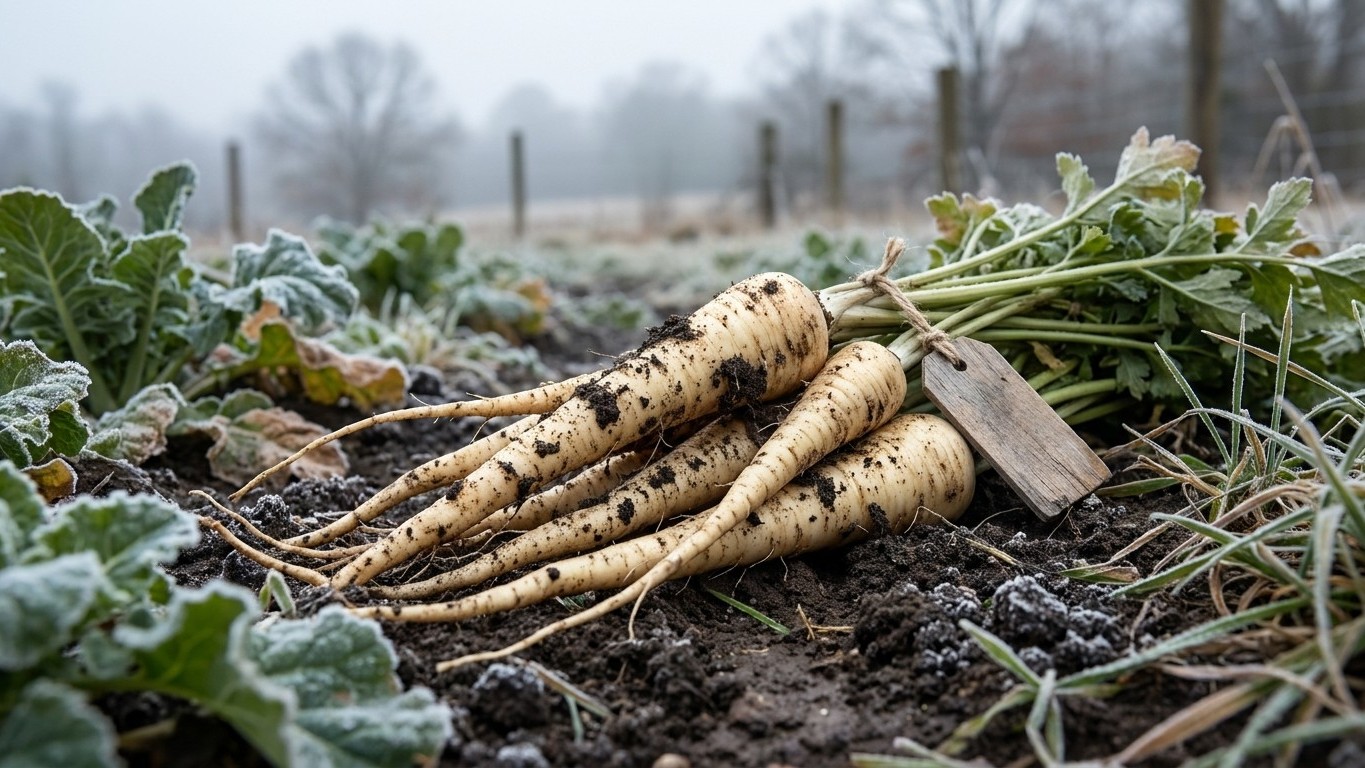

Yes, Vermont’s winters deliver the sustained cold exposure parsnips need to turn stored starch into sugar. Burlington’s coldest month averages a nightly minimum of 12.9°F, deep into freezing territory for weeks at a stretch, not just the odd light frost. That kind of sustained chill is exactly what pushes roots left in the ground toward sweetness. Whether any single garden actually gets there still depends on where in the state it sits and how the soil is prepared.
The short answer
Does this part of the country deliver several frosty weeks in a row, or just a handful of nights that dip below freezing before bouncing back? That’s the question that decides everything for a root crop that sweetens only through repeated cold exposure. In Burlington, the reference station for Vermont climate data, the coldest month averages a mean minimum of 12.9°F. That’s not a record low or a fluke overnight dip. It’s the average nightly floor across an entire month, which means freezing and hard freezing conditions repeat night after night, week after week.
That distinction matters because hardiness zone maps answer a different question. A hardiness zone tells you the coldest temperature a perennial plant is expected to survive in a given location, useful for deciding whether a rose bush or a fruit tree makes it through winter. It says nothing about how many frosty weeks a garden gets, or how consistently the ground stays cold enough to trigger the starch-to-sugar conversion inside a parsnip root. A location could sit in a comfortable hardiness zone for gardening in general and still never deliver the sustained frost exposure a parsnip needs to taste sweet rather than merely starchy.
Vermont doesn’t have that problem. A mean minimum of 12.9°F in the coldest month means the ground and anything left in it experiences real, repeated freezing, not a brief scare followed by a thaw. That’s the mechanism behind the sweetening: enzymes inside the root respond to sustained cold by breaking down starch reserves into simple sugars, and the process needs time under cold conditions, not a single overnight dip. Burlington sits in the mildest corner of the state, right on Lake Champlain, which moderates temperatures compared to inland valleys and higher elevations. If even this milder pocket of Vermont delivers a 12.9°F average nightly minimum in its coldest month, the rest of the state, including the Green Mountains and the Northeast Kingdom, runs colder still.
So the answer here isn’t a maybe. A parsnip grown in Vermont and left in the ground through the cold season will sweeten, not merely grow to size and stay bland. The climate does the part of the job that a gardener can’t control. What’s left to figure out is timing: whether the growing season itself gives the plant enough days to reach full size before that cold exposure begins.
Does the season fit?
- Start with the sowing window. Parsnips are sown directly in place, never transplanted, and the recommended timing is 2 to 3 weeks before the last spring frost. Burlington’s last spring frost falls between April 30 and May 10, which puts a reasonable sowing date somewhere in mid to late April.
- Account for slow germination. Parsnip seed is notoriously slow to sprout, taking 14 to 21 days to emerge. A gardener who sows in mid-April won’t see seedlings break the surface until early to mid May. Digging up the row and re-sowing because nothing seems to be happening after a week is the single most common mistake at this stage.
- Count forward 100 to 120 days from seeding, not from germination. That’s the maturity window the crop needs, and the clock starts the day seed goes into the soil. From a mid to late April sowing date, 100 to 120 days lands somewhere between late July and late August.
- Compare that against the first fall frost. Burlington’s first fall frost arrives between October 3 and October 13. Counting from a mid-April sowing to early October gives roughly 170 days of growing season, well beyond the 100 to 120 days the crop requires.
- Recognize what the surplus buys. Parsnips reach full size well before the first frost in Burlington’s climate, then simply sit in the ground through the cool weeks that follow, absorbing the frost exposure that turns starch to sugar. The season doesn’t just fit, it fits with margin to spare.
- Apply the caution for the rest of the state. Burlington’s numbers reflect the lake-moderated, mildest corner of Vermont. The Green Mountains and the Northeast Kingdom carry a later last spring frost and an earlier first fall frost, which shortens the growing window from both ends. A gardener there working with the same mid to late April sowing date has less room between reaching maturity and the ground locking up hard for winter, and should sow at the earliest safe date rather than waiting.
What goes wrong here
- Forked or split roots in heavy or stony ground. Much of Vermont’s soil sits over glacial till, dense with rock and clay in many valleys. A parsnip root pushing down through compacted or rocky soil splits around obstructions instead of growing straight. The remedy is to double dig the row to a full spade’s depth before sowing, breaking up compaction and removing stones, or work in enough sand and compost to loosen the top foot of soil where the root does its growing.
- Forked roots from overwatering. This is a separate cause from soil texture, and it’s easy to confuse the two. Excess water, especially inconsistent watering that swings between soaked and dry, encourages the root to branch rather than grow as one straight taproot. The fix is steady, moderate moisture through the growing season rather than heavy watering followed by neglect.
- A season that runs out before the root sizes up. This is a real risk in the Green Mountains and the Northeast Kingdom, where the frost-free window is shorter than Burlington’s. Sowing late, or sowing indoors and transplanting (which parsnips tolerate poorly since they’re a direct-sow crop), eats into the 100 to 120 days needed. The remedy is sowing at the very earliest safe date after the last frost risk passes, in full sun, so the plant has every available day to reach size.
- Pulling roots before the cold has done its work. This isn’t a Vermont-specific climate problem, since a 12.9°F average nightly minimum in the coldest month rules out a winter too mild to sweeten. But it’s a common impatience mistake anywhere: harvesting parsnips right after they reach size, before several weeks of hard frost have passed, gives a root that’s fully grown but still starchy rather than sweet. The remedy is simply waiting, mulching the row so the ground doesn’t freeze completely solid, and pulling roots through late fall and into winter as needed rather than all at once.
Common questions
What’s the earliest safe date to sow parsnips in Vermont?
In Burlington, sowing 2 to 3 weeks before the last spring frost (April 30 to May 10) puts seed in the ground around mid to late April. Gardeners in the Green Mountains or the Northeast Kingdom should expect a later safe window, since those regions see a later last spring frost than the lake-moderated Burlington area.
Do parsnips need frost to be sweet, or just cold soil?
They need sustained exposure to frost, specifically several weeks of cold weather after reaching full size, which converts stored starch into sugar. A single cool night or cold soil without freezing temperatures doesn’t trigger the same conversion. Vermont’s coldest month averages a nightly minimum of 12.9°F, which delivers that exposure reliably.
Can parsnips overwinter in the ground in Vermont?
Leaving roots in the ground through the early frosty weeks is exactly how they develop their best flavor. Mulching heavily over the row helps keep the ground workable so roots can still be pulled through late fall and into winter, rather than the soil locking completely solid before harvest is finished.
Does Vermont’s rocky soil ruin parsnip roots?
Rocky or heavy ground causes forked roots by deflecting the taproot as it grows down. Double digging the row to a full spade’s depth, or working in sand and compost to loosen the soil where the root develops, addresses this before it becomes a problem. This is a separate issue from forking caused by inconsistent watering, and both should be checked independently if roots come out split.