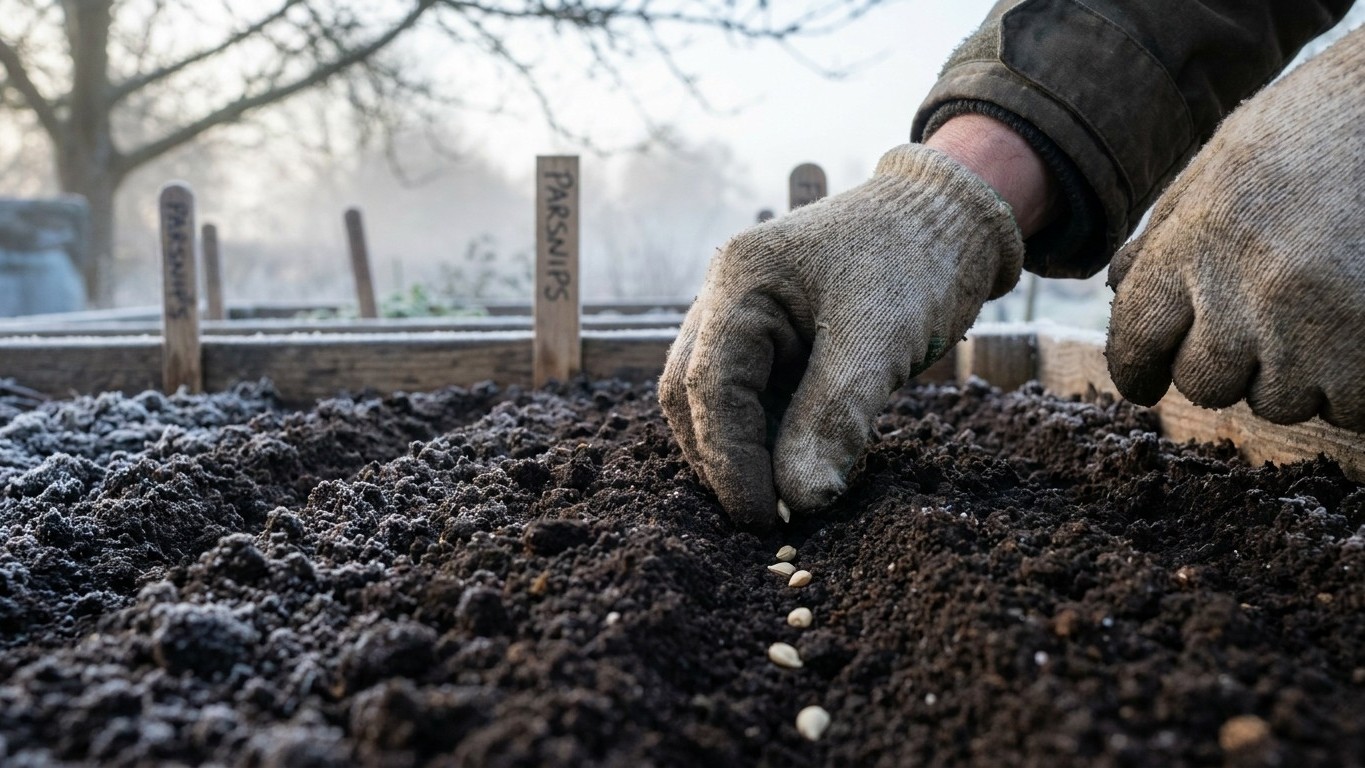

Sow parsnip seed directly in the ground 2 to 3 weeks before the last spring frost. Around Burlington and the Champlain Valley, that frost falls between April 30 and May 10, so seeding usually lands in mid-to-late April. Farther into the hills, the window shifts later. Get that timing right, and Vermont’s genuinely cold falls do the rest: this state delivers the frosty stretch parsnips need to turn stored starch into sugar.
The short answer
The question that actually decides parsnip flavor here isn’t the sowing date. It’s whether Vermont delivers enough sustained cold, after the roots mature, to trigger the sugar conversion parsnips are known for. The answer is yes, and it isn’t close. NOAA climate normals for Burlington (1991-2020) put the mean daily minimum for the coldest month at 12.9°F. That’s not a record low or a single cold snap; it’s the average nightly temperature across the coldest month of the year. A place that cold, on average, every night, for weeks at a stretch, has no trouble producing the kind of hard, repeated frost exposure that converts a parsnip root’s starch into sugar.
Here’s the distinction worth holding onto: a 12.9°F average low tells you Vermont is a serious winter-hardiness climate, but it doesn’t by itself confirm the sweetening happens. Sweetening is triggered specifically by the several weeks of frosty air, at or below freezing, that the root sits through after it reaches size and before you dig it. A gardener could live in a technically cold-hardy zone and still pull parsnips too early, before that frost exposure has done its work, and end up with a root that’s grown fine but tastes flat and starchy instead of sweet. The hardiness rating of a place and the frost exposure a specific crop actually experiences in the ground are two different measurements, and only one of them matters for parsnip flavor.
In Vermont’s favor: the first fall frost arrives early enough, October 3 to October 13 around Burlington, that there’s typically a long run of subsequent cold nights before the ground locks up hard for the season. That gives most gardeners weeks, not days, of frost exposure to work with before harvest becomes physically difficult. So the short answer is that a parsnip sown here at the right spring date will not just grow, it will sweeten, provided it’s left in the ground through that post-frost stretch rather than pulled the moment the first cold night hits.
Does the season fit?
- Set the sowing window. Parsnips go into the ground 2 to 3 weeks before the last spring frost. Near Burlington, the last frost falls April 30 to May 10, so subtracting 2 to 3 weeks puts sowing somewhere between roughly April 9 and April 26, depending on how cautious you want to be that year.
- Add germination time. Parsnip seed is notoriously slow. Count on 14 to 21 days before anything shows above the soil. Sown April 15, for example, seedlings might not appear until early May. This matters practically: don’t assume a bare row has failed and re-sow at day 10. Give it the full 3 weeks first.
- Count the days to maturity. The clock for the 100 to 120 days to maturity starts at seeding, not at germination. A row sown mid-April reaches maturity somewhere between late July and mid-August.
- Check that against the first fall frost. First frost near Burlington lands October 3 to October 13. Maturity in late July or mid-August leaves roughly 7 to 11 weeks of buffer before that first frost even arrives, comfortable room for a slow-maturing root crop, and buffer left over to sit through the frosty weeks afterward.
- Adjust for colder ground. The Champlain Valley numbers above are the mildest in the state. In the Green Mountains and the Northeast Kingdom, the last spring frost arrives later and the first fall frost arrives earlier, so this same arithmetic tightens. Gardeners in those regions should sow at the earliest safe date within the window rather than the latest, to keep the same margin before the ground closes in for the year.
What goes wrong here
- Forked roots from heavy or stony ground. Vermont’s soils run heavy and rock-laden in a lot of gardens, and parsnip taproots don’t tolerate obstacles well; they split around stones or compacted clay. Deep sandy soil is the crop’s stated preference; where the ground is heavy, it needs to be double dug to loosen it well below the depth the root will reach.
- Forked roots from overwatering. This is a separate cause from soil texture, not a variation of it. Roots sitting in consistently waterlogged ground also fork or rot at the tip. The fix is steady, moderate moisture rather than heavy soaking, especially once the taproot is established.
- The season runs out in colder pockets. In the Green Mountains and the Northeast Kingdom, a later last frost and an earlier first frost squeeze the 100 to 120 day window tight. Sowing at the earliest safe date, rather than waiting for extra certainty, is what keeps the math from failing outright in those areas.
- Harvesting before the frost has done its work. Vermont’s cold is not the limiting factor here, timing is. Pulling roots the day after the first fall frost, rather than weeks later, skips most of the sugar conversion the crop needs. Leave roots in the ground through several frosty weeks past that October frost date, mulching if needed to keep the ground workable, and dig later rather than earlier.
Common questions
Can you start parsnip seeds indoors in Vermont?
No. Parsnips are sown directly in place. The taproot doesn’t handle transplanting well, and disturbing it early tends to produce misshapen roots later. Vermont’s timeline works around a direct sowing date 2 to 3 weeks before the local last frost, not an indoor head start.
How long do parsnip seeds take to germinate in Vermont soil?
Expect 14 to 21 days. That’s slow compared to most garden vegetables, and it’s easy to assume the row failed. Mark the row clearly and wait out the full three weeks before deciding to re-sow.
When is the best time to harvest parsnips in Vermont for flavor?
After several weeks of frosty weather following the first fall frost, which falls October 3 to October 13 around Burlington. Roots pulled immediately after that first frost miss most of the starch-to-sugar conversion; roots left in the ground into late fall get the full benefit.
Do parsnips survive winter in the ground in Vermont?
They tolerate cold well, but Vermont’s coldest month averages a nightly low of 12.9°F, cold enough that the ground eventually freezes too hard to dig. Plan to harvest before deep freeze sets in, rather than counting on pulling roots through the winter months.