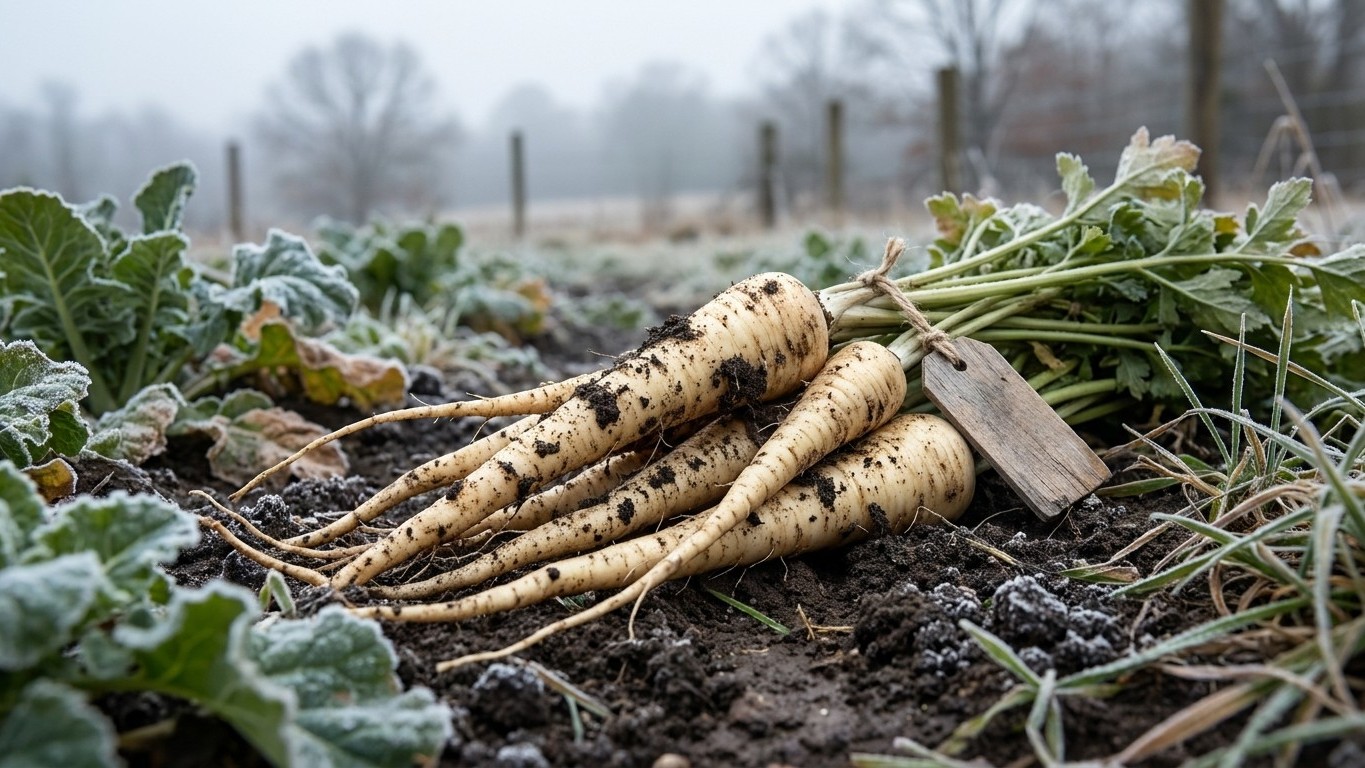

Yes. Wisconsin’s cold season runs deep enough, and long enough, to do what a parsnip needs most: turn stored starch into sugar through repeated exposure to frost. The state’s winter bite and its wide gap between first and last frost give this root crop exactly the kind of chilling it was bred to exploit.
The short answer
The number that settles this is the mean daily minimum of the coldest month at the Milwaukee reference station: 17.2°F. That figure comes from NOAA NCEI Climate Normals covering 1991-2020, and it matters because it describes something a hardiness zone map never captures on its own, which is how cold the air actually gets, night after night, once winter sets in.
A hardiness zone tells a gardener whether a perennial will survive the winter. It says nothing about whether a root vegetable pulled from that same ground will taste sweet. Those are two separate questions, and conflating them is the single most common mistake in cold-climate vegetable growing. Sweetening in a parsnip is a chemical reaction triggered by prolonged cold exposure at the root, not a side effect of surviving in a particular zone.
A mean minimum of 17.2°F in the coldest month means Wisconsin doesn’t flirt with frost, it lives in it for weeks at a stretch. That’s the condition Utah State University Extension points to when it explains that parsnips taste best after several weeks of cool, frosty weather, because that sustained chill is what converts the starch stored in the root into sugar. A single light frost barely nudges the process. Weeks of it, night after night, is what finishes the job.
Compare that to a milder state where the coldest month barely dips below the mid-30s. There, a parsnip left in the ground might survive the winter just fine and still come out starchy and bland, because the ground never gets cold enough, long enough, to force the conversion. Wisconsin doesn’t have that problem. Its winter is the kind that pushes the process all the way through, provided the roots are actually left in the ground to take the exposure rather than pulled too early.
So the answer isn’t just “it’s cold enough.” It’s that Wisconsin’s cold arrives with the duration parsnips are built to use. The soil matters too, and the sowing calendar matters, but the frost exposure itself, the part that most gardeners underestimate, is not in question here.
Does the season fit?
Parsnips are sown directly in the garden bed, not started indoors and transplanted, and the clock for maturity starts the day the seed goes into the ground. Utah State University Extension puts that window at 100 to 120 days from seeding, with the sowing itself happening 2 to 3 weeks before the last expected spring frost. Here’s how that lines up against Wisconsin’s own calendar.
- Last spring frost: NOAA NCEI 1991-2020 normals put this between April 16 and April 29 for the reference station. Sowing 2 to 3 weeks ahead of that puts seed in the ground somewhere between late March and mid-April, depending on where in that window a given spring falls.
- Germination: Parsnip seed is slow. It takes 14 to 21 days to come up, which means a gardener who sows in early April might not see a single seedling until late April. That delay is normal. Digging up the row and re-sowing because nothing has emerged after a week is the single fastest way to waste a growing season.
- Maturity countdown: Once germination happens, the 100 to 120 day clock is already running from the original seeding date, not from emergence. A seed sown in early April reaches maturity somewhere between mid-July and early August.
- First fall frost: The same NOAA NCEI normals put this between October 17 and October 29. That means Wisconsin’s parsnips are typically mature two to three months before the first frost even arrives.
- The sweetening stretch: That gap, roughly from early August to mid-October, is pure buffer. The root sits in the ground, fully grown, waiting for the cold to start its work. Once frost lands, the roots can stay in place through several more frosty weeks, right into the period when the coldest month’s 17.2°F average minimum takes hold.
Add it up and the fit isn’t tight. It’s generous. Even a late sowing, a slow germination, or a cool summer that stretches the maturity window toward 120 days still leaves weeks of slack before frost, and months of cold afterward. The lakeshore counties run a little behind the inland stations, since Lake Michigan delays the first fall freeze there, but even that delay doesn’t threaten the arithmetic. Southern Wisconsin’s inland ground typically freezes by early October regardless, and the far north freezes earlier still.
What goes wrong here
- Forked, split roots from heavy or stony ground. Wisconsin has plenty of clay-heavy soil, and a parsnip root pushing down through compacted or rocky ground will hit resistance and split into two or three legs instead of growing straight. Utah State University Extension recommends deep sandy soil for this crop, and when that’s not what a yard offers, the remedy is to double dig the bed before sowing, working the soil loose to a full spade’s depth so the taproot has a clear path down.
- Forked roots from overwatering. This is a separate cause with the same symptom. Too much water, especially inconsistent watering that swings from soggy to dry, encourages the root to branch instead of running straight. The fix is steady, moderate moisture rather than heavy soaking followed by neglect.
- A season that runs out before maturity. This is more of a risk in Wisconsin’s far north, where the frost-free window is shorter than the state average, and where a late sowing, slow germination, or a cool summer can push the 100 to 120 day countdown right up against the first fall frost. Sowing at the earliest safe date, right at that 2 to 3 week mark before the last frost, protects against this.
- A winter too mild to finish the sweetening. Not Wisconsin’s problem, given a coldest-month average minimum of 17.2°F, but worth naming because it’s the mistake gardeners transplant from warmer states make when they assume any frost will do. The conversion needs sustained cold exposure over weeks, not a single overnight dip, and Wisconsin’s winter supplies that without difficulty.
Common questions
Can parsnips be left in the ground all winter in Wisconsin?
Many gardeners do leave them in place through the coldest stretch, harvesting as needed once the ground can still be worked, since the sweetening continues as long as the roots are exposed to cold. Once the ground freezes solid, digging becomes difficult, so a layer of mulch over the row can keep the soil workable a little longer into the cold season.
Does the sowing date matter more than the soil type?
Both matter, but for different failures. A late sowing risks running the 100 to 120 day maturity clock too close to the first fall frost, particularly in the state’s shorter-season northern counties. Heavy or stony soil risks forked roots regardless of when the seed went in. Neither problem cancels the other out.
Why did my parsnips come up patchy after I sowed them?
Parsnip seed germinates slowly and unevenly, typically taking 14 to 21 days, and viability drops fast in old seed. A patchy stand is often just slow, staggered germination rather than a failed sowing, and re-sowing too soon on top of seed that’s still due to come up wastes both time and seed.
Is a hardiness zone rating enough to know if parsnips will sweeten in a given spot?
No. A zone rating describes whether a plant survives winter conditions, not how much frost exposure the root receives at ground level over time. The figure that actually predicts sweetening is the mean minimum temperature of the coldest month, which for the Wisconsin reference station sits at 17.2°F, sourced from NOAA NCEI Climate Normals.